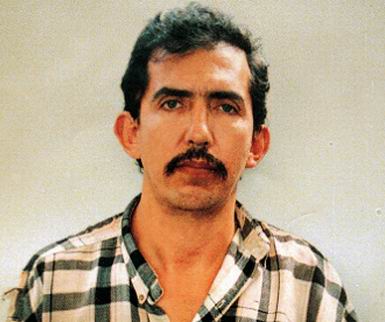
Daniel Camargo Barbosa
"El Monstruo de los Manglares / El Sádico del Charquito"
Camargo selected helpless, young, lower-class girls in search of work and approached them, pretending to be a foreigner who needed to find a Protestant pastor in a church on the outskirts of town. He explained that he had to deliver a large sum of money, which he showed them as proof, and he offered them a reward if they would accompany him to show him the way. He pretended that he was a stranger to the area, and hinted at the possibility of the girls getting a job at the factory. No one was suspicious of an older man accompanying a girl or young woman who could be his granddaughter. Carmago would then enter into the woods, claiming to be looking for a shortcut in order to avoid arousing suspicion in his victims. If the girls grew suspicious and drew back, he did not prevent them from leaving. Camargo raped his victims before strangling them, sometimes stabbing them when they resisted. After his victims were dead he left their bodies in the forest to be picked clean by scavengers. **Arrest** Camargo was arrested by two policemen in Quito on 26 February 1986 only a few minutes after he had murdered a 9-year-old girl named Elizabeth. The policemen were on patrol and approached him at the height of the avenue Los Granados, thinking that he was acting suspicious. They were surprised to find that he was carrying with him a bag containing the bloody clothes of his latest victim, and a copy of "Crime and Punishment" by Dostoyevsky. He was taken into custody and later moved to Guayaquil for identification. When he was arrested he gave a false name, Manuel Bulgarin Solis, but he was later identified by one of his rape victims who escaped. Daniel Camargo very calmly confessed to killing 71 girls in Ecuador since escaping from the Colombian prison. He led authorities to the dumping grounds of those victims whose bodies had not yet been recovered. The bodies had been dismembered. While he told the Ecuadorean authorities of the locations of the bodies and how the sadistic crimes were committed, he showed no feelings of remorse. After raping his victims, he had hacked, slashed and crushed the girls with a machete. He gave a cynical explanation for choosing children. He wanted virgins "because they cried"; this apparently gave him greater satisfaction. According to Camargo, he killed because he wanted revenge on woman's unfaithfulness. He hated them for not being what women are supposed to be. His victims were all virgins **Interview** In June 1986 Francisco Febres Cordero, a journalist for Hoy (Today) Newspaper, managed to arrange an interview with Camargo. It was difficult to get the interview due to the Police blocking all access to Camargo, and the fact that Camargo himself demanded a large fee before he would let himself be interviewed. The journalist pretended to be part of a group of psychologists that were allowed access to the prisoner, allowing him to ask Camargo questions without arousing his suspicion. Afterward Francisco Febres Cordero described him as highly intelligent, "He had an answer for everything and was able to speak of God and the Devil equally". Well-read, he cited Hesse, Vargas Llosa, García Márquez, Guimarães Rosa, Nietzsche, Stendhal and Freud, all knowledge that he acquired from a literary education during his time in prison on the Isle of Gargona. **Sentence** Camargo was convicted in 1989 and sentenced to 16 years in prison, the maximum sentence available in Ecuador. While serving his sentence in the Garcia Moreno de Quito jail, he claimed to have converted to Christianity. In this penitentiary he was imprisoned with Pedro Alonso Lopez ("the Monster of the Andes"), who is believed to have raped and killed more than 300 girls in Colombia, Ecuador and Peru. **Death** It was reported that in November 1994, he was murdered in prison by Luis Masache Narvaez, the cousin of one of his victims. **Daniel Camargo Barbosa** **Daniel Camargo Barbosa** was a psychothic, serial killer from Colombia, South America. It is believed that he raped and killed over 150 young girls in Colombia and Ecuador. Camargo's mother died when he was a little boy. He was raised by an abusive stepmother, who punished him and some times dressed him like a woman. Even though, it is believed that he raped and killed more than 80 girls in Colombia. Camargo was in a Colombian Prison, where he was convicted to 20 years in prison for raping and killing a nine-year-old girl. It was said that during this imprisonment in Colombia all the other prisoners were somewhat afraid of him because Camargo claimed to have pacts with the Devil. In 1984, he escaped from La Isla De La Gorgona Prison in a rudementary boat. When Camargo disappeared, the Director of Gorgona Prison said that "he had been eaten by sharks while swimming". Camargo had fled to Ecuador, where he embarked on a spree of rape and murder. In June 1988, Camargo was arrested in Quito, Ecuador for the murder of Gloria Andino, a twelve-year-old girl. He was linked to the crime by a fingerprint left on a candy-wrapper at the scene, this being the means by which he lured victims. Daniel Camargo very calmed confessed to killing 71 girls in Ecuador since escaping from the Colombian prison. He led authorities to the dumping grounds of those victims, whose bodies had not yet been recovered. The bodies had been dismembered. As he told the Ecuadorean authorities of the locations of the bodies and how the sadistic crimes were comited, he showed no feelings of remorse. After raping his victims, he had hacked, slashed and crushed the girls with a machete. He gave cynical explanation for choosing children. He wanted virgins "because they cried"; this apparently gave him greater satisfaction. According to Camargo, he killed because he wanted revenge on woman's unfaithfulness. He hated them for not being what women are supposed to be. His victims were all virgins. A journalist interviewed Daniel Camargo. The journalist describes Camargo as Brilliant. "He had an answer for everything and was able to speak of God and the Devil equally". Good reader, he cited Hesse, Vargas Llosa, Garcia Marquez, Guimaraes Rosa, Nietzche, Sthendal or Freud. When he was captured, in his briefcase was found together with his last victim's underwear, the book Crime and Punishment by Dostoyevsky. Camargo was convicted in 1989 and sentenced to 16 years in prison, the maximum sentence available in Ecuador. While serving his sentence in the Penal Garcia Moreno de Quito, he claimed to have converted to Christianity. In this penitentiary Daniel Camargo Barbosa was imprisoned with Pedro Alonso Lopes (AKA "the monster of the Andes"), who is believed to have raped and killed more than 300 girls in Colombia, Ecuador and Peru. It was reported that in November 1994 he was murdered in prison by Luis Masache Narvaez, the cousin of one of his victims. |