



Forensic & Criminological Matrix
| Parameter | Forensic Detail |
|---|---|
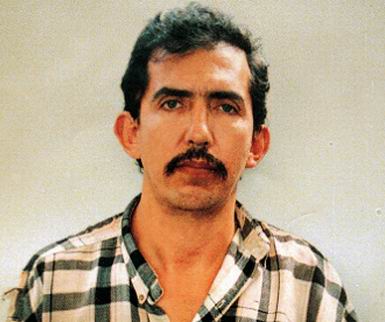
| Full Legal Name | Daniel Camargo Barbosa |
| Media Monikers | The Mangrove Monster, The Sadist of Charquito, The Virgin Slayer |
| Nationality | Colombian |
| Date of Birth | January 22, 1930, Anolaima, Cundinamarca, Colombia |
| Date of Death | November 13, 1994 (aged 64, stabbed to death in García Moreno Prison, Quito, by a relative of one of his victims) |
| Penal Status | Sentenced to Ecuador's statutory maximum penalty of 16 years imprisonment |
| Confirmed Murder Victims | 71 recovered bodies confirmed via forensic identification and detailed confessions |
| Estimated Victims | 150 to over 180 young girls across Colombia, Brazil, and Ecuador |
| Active Criminal Span | 1974 – 1986 (including an audacious escape from Gorgona Island Penitentiary in 1984) |
| Geographic Jurisdiction | Barranquilla and Bogotá (Colombia); Guayaquil, Machala, and Quito (Ecuador) |
| Lethal Weaponry / Mechanics | Mechanical asphyxiation via manual strangulation, ligature with victims' garments, mud suffocation |
| Victimological Profile | Impoverished schoolgirls and preadolescent virgins aged 8 to 17 |
| Primary Criminal Motive | Extreme psychopathic misogyny, paraphilic sexual sadism, and compulsive predatory dominance |
1. Criminological Genesis and Psychopathology
Daniel Camargo Barbosa is recognized by international forensic criminologists as one of the deadliest and most prolific child serial predators of the 20th century. His early life was severely compromised by abandonment and sadistic maltreatment at the hands of his stepmother, who forced him to dress in girls' clothing and inflicted extreme psychological and physical humiliation.
This developmental trauma forged an indelible hatred of females. Psychodiagnostic evaluations identified severe psychopathy, lack of empathy, narcissistic grandiosity, and compulsive sexual sadism directed specifically at young schoolgirls, whose purity and virginity he sought to systematically defile and extinguish.
2. Modus Operandi and Predatory Methodology
Camargo refined a deceptive persona of feigned helplessness to disarm public caution and secure compliance:
- The Vulnerable Elder Mask: Dressed modestly, carrying a Catholic bible or clutching folded handwritten postal envelopes, Camargo feigned illiteracy, lameness, and disorientation in busy bus terminals, school perimeters, and produce markets.
- Enticement and Luring: He approached young girls asking for assistance to decipher an address or promising coins in exchange for guiding him to a nearby store.
- Abduction to Wilderness Seclusion: He lured them into dense mangrove swamps, sugarcane plantations, estuary thickets, and arid scrublands along the Guayas River and coastal Ecuador.
- Sexual Torture and Ritual Degradation: Once isolated, Camargo overpowered the child, gagged her with school uniforms or undergarments, and subjected her to violent sexual abuse.
- Lethal Mechanics: To ensure silence, he manually throttled his victims, bound ligatures around their necks, or shoved their heads into muddy tidal waters. He concealed the corpses within tangled mangrove root clusters or shallow graves.
3. Escape from Gorgona Island and the Ecuadorian Spree
During the late 1970s, Camargo had been captured and sentenced in Colombia for multiple murders and rapes. He was dispatched to Gorgona Island, Colombia's maximum-security Pacific penal colony renowned as inescapable due to shark-infested currents and treacherous tides.
In November 1984, Camargo accomplished the impossible: constructing a crude raft from driftwood and vines, he navigated perilous oceanic currents to reach the mainland. Presumed drowned by Colombian authorities, he slipped undetected across the border into Ecuador.
In Guayaquil, Camargo resumed his predatory campaign with ferocious velocity, murdering over 70 schoolgirls in fewer than two years throughout the tidal mudflats and coastal mangroves.
4. Apprehension and Forensic Excavations
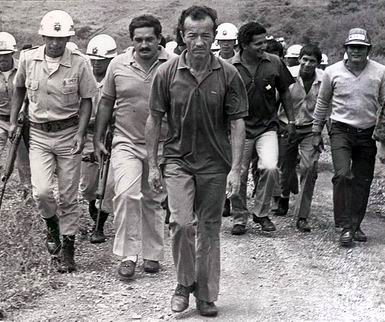
On February 26, 1986, alert police officers in Quito apprehended Camargo after observing him trailing a young girl. A search revealed stolen school supplies, children's clothing, and counterfeit identification documents. Subjected to sustained forensic interrogation, Camargo confessed in exhaustive detail to dozens of homicides.
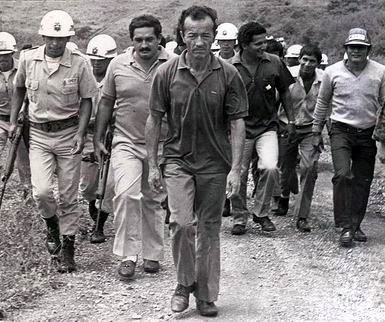
Over subsequent weeks, Camargo led detectives and forensic recovery teams through the Guayaquil mangroves, pinpointing the burial and skeletonized sites of 71 young girls. His admissions shocked Latin America, demonstrating an unprecedented volume of coordinated predatory violence.
5. Judicial Outcome, Incarceration, and Vigilante Justice
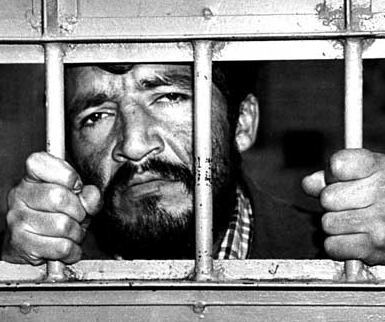
Under Ecuador's penal code at the time, which prohibited both capital punishment and life sentences, Camargo was sentenced to the maximum allowable statutory term of 16 years imprisonment in the maximum-security García Moreno Penitentiary in Quito.
On November 13, 1994, during morning recreation in the prison courtyard, fellow inmate Giovanny Noguera—a close relative of one of Camargo's young Ecuadorian victims—ambushed the 64-year-old serial killer with an improvised shiv, severing his carotid artery and terminating his life on the prison asphalt.