


Forensic & Criminological Matrix
| Parameter | Forensic Detail |
|---|---|
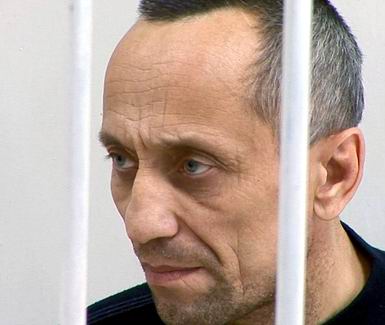
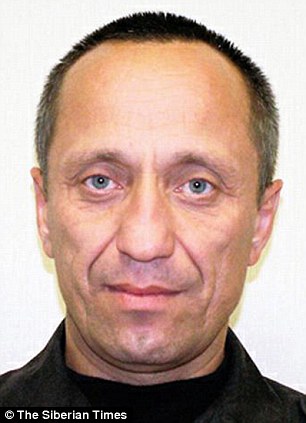
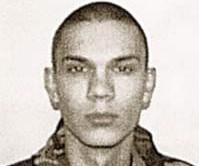
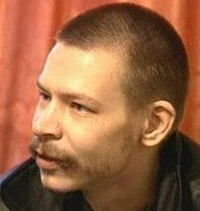
| Full Legal Name | Mikhail Viktorovich Popkov (Михаил Викторович Попков). |
| Criminal Moniker | The Werewolf of Angarsk (The Werewolf / Оборотень), The Angarsk Maniac. |
| Criminological Classification | Organized serial killer / Sadistic sexual predator / Necrophilic offender operating under the cover of law enforcement authority. |
| Active Killing Span | November 1992 – 2010 (nearly two decades of active predation across Siberia). |
| Geographical Theater | Angarsk, Irkutsk, and Vladivostok (Irkutsk Oblast and Primorsky Krai, Russian Federation). |
| Confirmed Fatalities | 83 proven murder victims (plus one seriously injured male police officer). Confessed to over 86 slayings, officially surpassing the lethal tolls of Andrei Chikatilo and Alexander Pichushkin. |
| Modus Operandi | Patrolled after dark utilizing marked police vehicles and official uniform to lower target defenses; lured solo women leaving nightlife venues with offers of safe transit, rerouted them into dense Siberian woodlands, sexually assaulted them, and executed them using axes, bats, screwdrivers, and butcher knives. |
| Forensic Signature | Staging and abandonment of nude corpses in freezing taiga conditions; post-mortem blunt-force cranial obliteration and twisted moralistic rationalizations of "social hygiene". |
| Psychiatric-Forensic Evaluation | Deemed fully sane and legally responsible; diagnosed with severe antisocial personality structure, pathological sexual sadism, and necrophilic deviance free from psychotic impairment. |
| Judicial Disposition | Sentenced across successive trials (2015, 2018, and 2021) to multiple terms of life imprisonment under maximum-security isolation (Torbeyevsky Tsentral / Black Dolphin). |
Introduction: The Siberian Predator
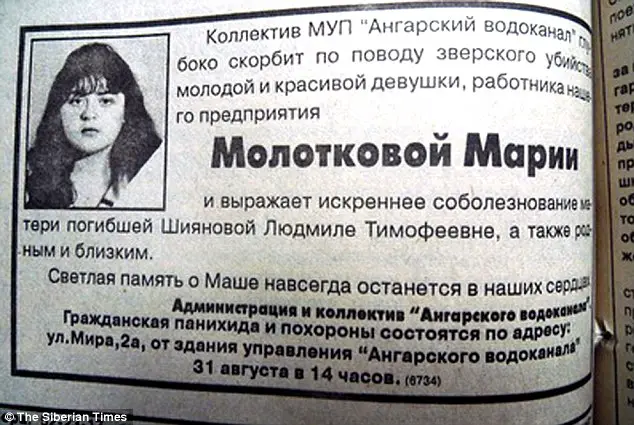
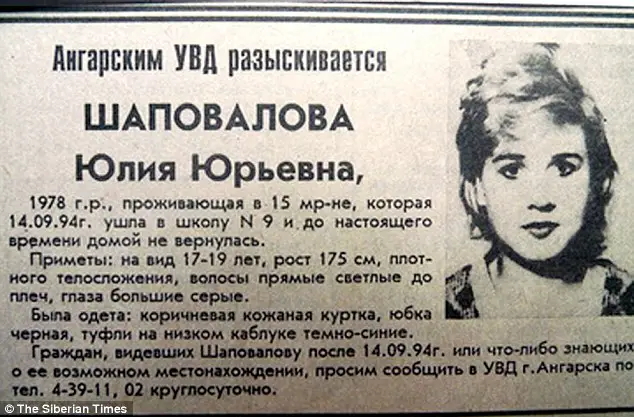
For nearly twenty years, the frozen birch forests flanking the industrial hub of Angarsk in eastern Siberia served as a clandestine dumping ground for human remains. Dozens of women aged between 16 and 40 vanished without a trace after leaving evening social gatherings, bus stops, or restaurants in sub-zero darkness. Months later, their frozen and mutilated remains were uncovered beneath melting snowbanks, bearing hallmarks of sadistic brutality.
The perpetrator orchestrating this sustained massacre was neither a drifter nor an alienated recluse, but a pillar of the local establishment: Mikhail Viktorovich Popkov, a sergeant and later junior lieutenant within the Angarsk municipal police department. Married, a devoted father, an accomplished biathlon competitor, and a decorated marksman, Popkov weaponized his badge and patrol cruiser as the ultimate predatory trap. With 83 court-confirmed homicides, Popkov holds the grim distinction of being the deadliest confirmed serial killer in modern Russian penal history.
Background and The Badge as a Shield
Born on March 7, 1964, in Belovo (Kemerovo Oblast), Popkov was raised in a typical working-class Soviet household. Following mandatory military service in the Soviet Armed Forces, he joined the militia in Angarsk. Within the department, Popkov was regarded as an exemplary officer—punctual, disciplined, sober, and remarkably calm under pressure. Colleagues nicknamed him "Iron Misha" due to his physical stamina and unflappable demeanor.
However, behind this mask of civic duty lay deep-seated hostility toward women, reportedly exacerbated in the early 1990s when he suspected his wife of infidelity. Unable to confront his domestic grievances directly, Popkov redirected his rage outward, initiating a systematic campaign of sexual violence and murder against women whom he arbitrarily deemed "morally compromised."
Modus Operandi and The Nocturnal Hunts
Popkov's predatory protocol was rigorously designed to eliminate suspicion:
- Target Selection and False Security: During off-duty night hours, Popkov prowled the dark streets of Angarsk driving his official police Lada or personal four-wheel-drive vehicle, frequently clad in full police uniform. He targeted women waiting alone for rides or walking home late at night.
- Abduction into the Taiga: Recognizing the police uniform as an assurance of protection in the turbulent post-Soviet era, victims willingly accepted his offers of transportation. Popkov would then steer off arterial roads into isolated forest tracts along the Baikal highway.
- Overkill and Execution: If a woman refused his advances or accepted a drink, Popkov interpreted her conduct as proof of "immorality." Brandishing a firearm, he forced his victims to disrobe, subjected them to prolonged sexual assaults, and bludgeoned or hacked them to death using tools stored in his trunk: felling axes, entrenching shovels, screwdrivers, baseball bats, or heavy metal pipes.
- Necrophilia and Forensic Countermeasures: Popkov regularly engaged in post-mortem necrophilia. Drawing upon his comprehensive forensic training, he collected spent casings, scrubbed identifiable trace evidence, and disposed of victims' personal belongings in distant industrial dumpsters.
Astonishingly, during daylight hours Popkov frequently served on the investigative task forces dispatched to document his own crime scenes, subtly redirecting suspicion away from potential law enforcement culpability.
Genetic Investigation and Capture
Throughout the 1990s and early 2000s, local authorities attributed the killings to fractured regional gangs or opportunistic drifters. It was not until 2002, when a specialized homicide task force spearheaded by federal investigators from Moscow reviewed the cold cases, that consistent tire tracks from a Niva all-terrain vehicle and overlapping DNA profiles confirmed a single serial predator.
The definitive breakthrough arrived through comprehensive DNA population screening. Investigators subjected more than 3,500 active and retired law enforcement personnel across the Irkutsk region to genetic testing. In March 2012, Popkov's DNA provided a flawless 100% match to biological samples recovered from multiple crime scenes.
On June 23, 2012, Russian federal agents intercepted Popkov aboard an eastbound train in Vladivostok, bringing an end to twenty years of catastrophic violence.
Trials, Mass Confessions, and Legal Aftermath
Following his apprehension, Popkov demonstrated an unsettling pride in his criminal record. In interrogation rooms, he calmly recounted dozens of previously unlinked homicides with clinical precision, framing his murders as an act of "cleansing" society of promiscuous women.
- First Trial (January 2015): Convicted of 22 murders and 2 attempted murders, resulting in his initial sentence of life imprisonment.
- Subsequent Confessions (2016–2018): While serving his sentence, Popkov admitted to an additional 60 murders committed between 1992 and 2010. Forensic recovery teams corroborated his accounts by exhuming skeletal remains, clothing, and weapons from the exact wilderness coordinates he provided.
- Second Trial (December 2018): Found guilty of 56 additional murders, incurring a second concurrent life term and the formal revocation of his police pension.
- Third Trial (June 2021): Convicted of two further murders, elevating his court-established toll to 83 victims.
Mikhail Popkov remains incarcerated under the highest-security custodial regime at Mordovia's Torbeyevsky Tsentral prison facility, where he will spend the remainder of his natural life.