




Forensic & Criminological Matrix
| Parameter | Forensic Detail |
|---|---|
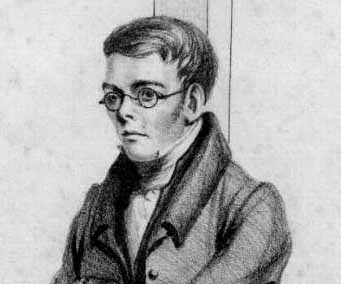
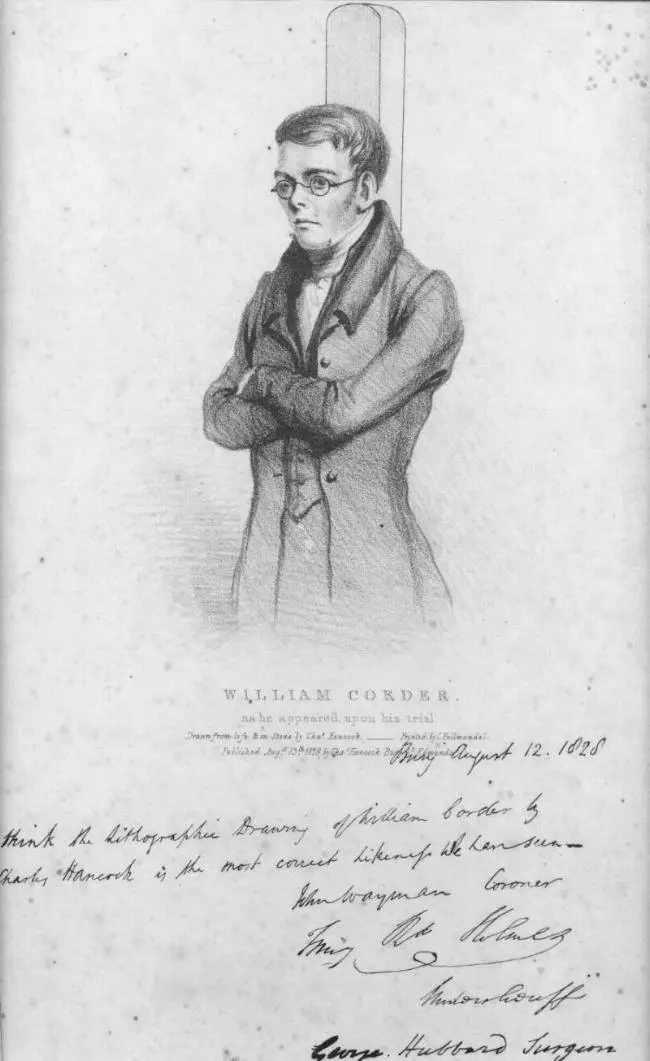
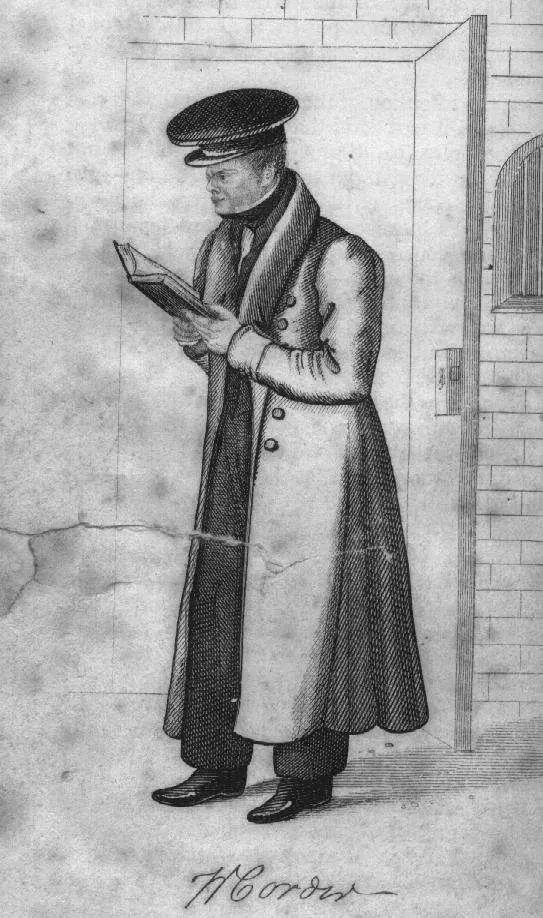
| Full Legal Name | William Corder |
| Historical Criminological Moniker | The Red Barn Murderer |
| Nationality | British |
| Date of Birth | 1803, Polstead, Suffolk, England |
| Date of Execution | August 11, 1828 (aged 25) |
| Execution Facility | Bury St Edmunds Gaol / Shire Hall, Suffolk |
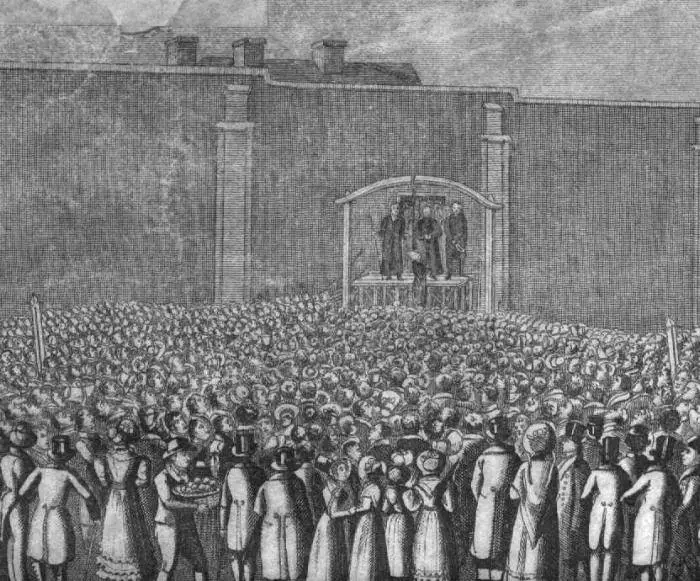
| Execution Method | Judicial public hanging before 7,000 spectators, followed by dissection and skinning |
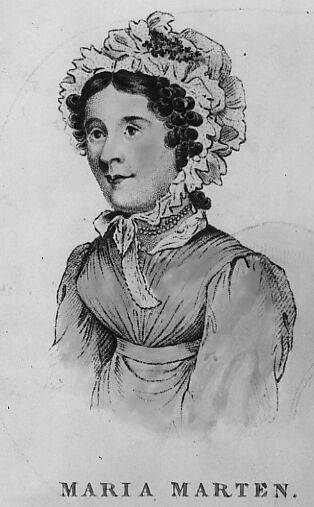
| Murder Victim | Maria Marten (aged 25, mole-catcher's daughter, pregnant with Corder's child) |
| Date of Murder | May 18, 1827 |
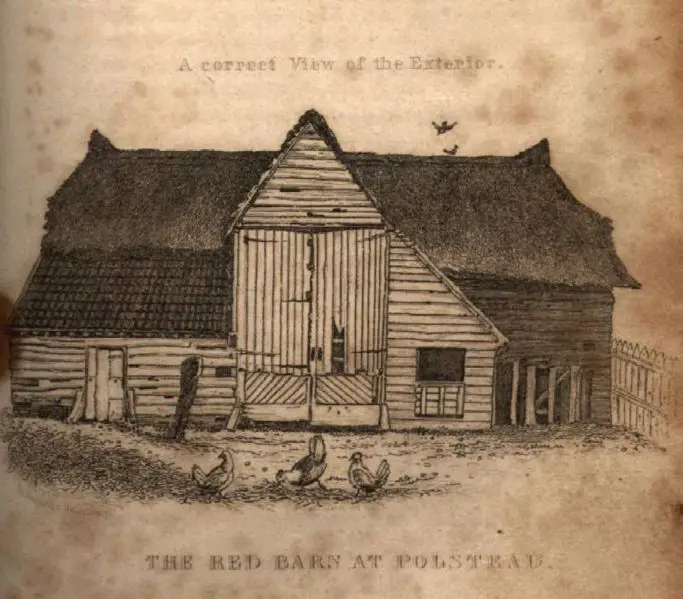
| Crime Scene | The Red Barn, Polstead, Suffolk |
| Weapons & Trauma Mechanism | Point-blank pistol gunshot to left cheek, thoracic stab wound with a walking sword, and ligature throttling via green silk neckerchief |
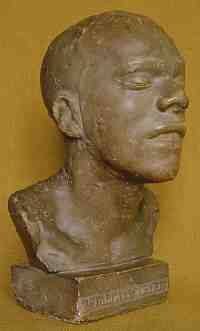
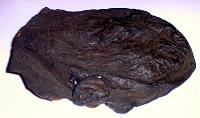
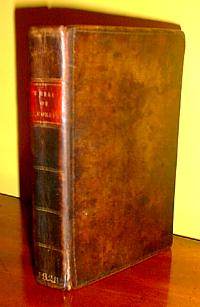
| Folklore & Forensic Legacy | The corpse was located following purported "prophetic dreams" reported by the victim's stepmother; Corder's corpse was skinned and tanned to bind the official trial chronicle, now curated at the Moyses Hall Museum |
Clandestine Liaison in Polstead
William Corder was the youngest surviving son of a wealthy yeoman farmer in Polstead, Suffolk. Despite his privileged social standing, Corder earned a local reputation for forgery, debt default, and chronic deceit.
In 1826 he initiated a liaison with Maria Marten, the attractive 24-year-old daughter of Thomas Marten, the village mole-catcher. Maria had previously borne two illegitimate children to other men (including Corder’s late brother). In early 1827, Maria delivered a child fathered by William Corder; the infant died within weeks under unexplained circumstances.
With the local parish overseers of the poor threatening bastardy charges against Corder to secure child support, Corder orchestrated an elaborate plan to eliminate Maria permanently.
The Murder at the Red Barn (May 18, 1827)
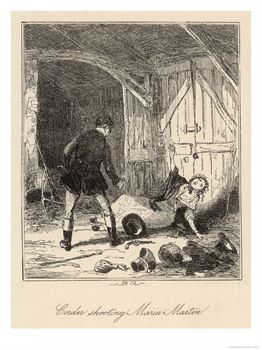
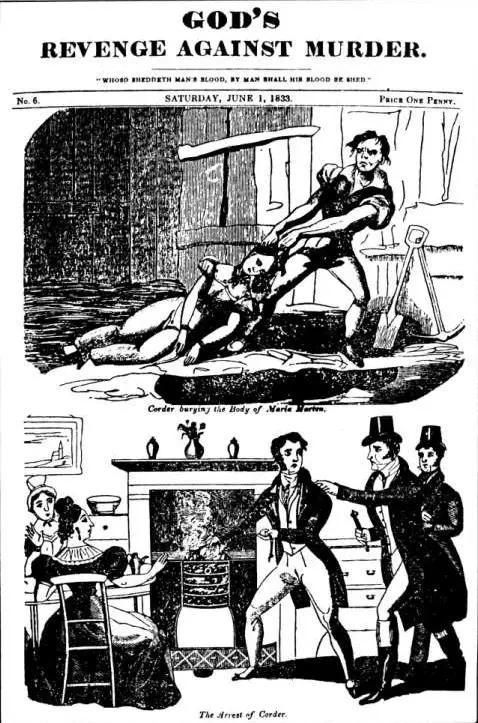
On May 18, 1827, Corder visited Maria, claiming they would elope that very evening to Ipswich and marry before an Anglican vicar. Under the pretext of preventing parish constables from discovering the elopement, Corder persuaded Maria to disguise herself in male attire and walk alone to the Red Barn—a distinctive red-tile granary barn owned by the Corder family.
Inside the barn, Corder launched a coordinated assault:
- He fired a pocket percussion pistol directly into her cheek and eye orbit.
- He thrust a sharpened walking sword through her ribs into her chest cavity.
- He tightly knotted a green silk scarf around her neck to ensure strangulation.
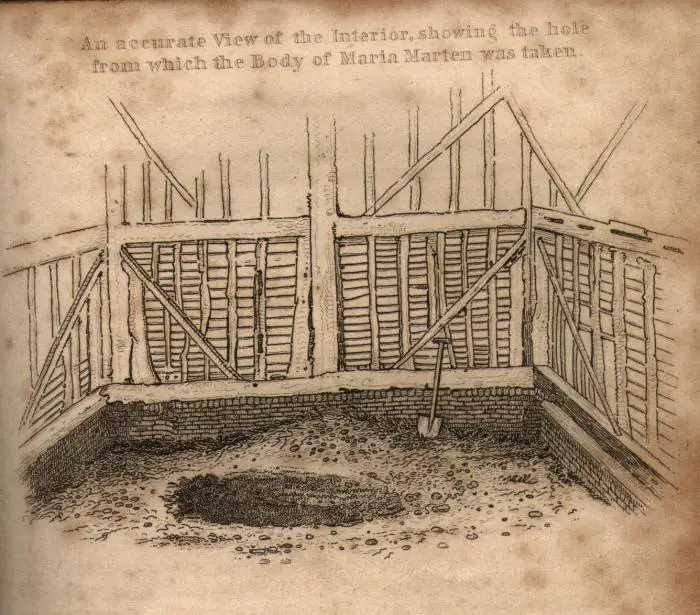
- He dragged the corpse into a threshing storage bay, excavated an eighteen-inch trench with a pick, buried her body, and leveled the earth under straw and grain sheaves.
The Deceitful Correspondence and London Matrimony
For nearly a year, Corder misled Maria's parents through a succession of letters, insisting they were happily wed and living on the Isle of Wight, attributing her failure to write to a chronic wrist ailment.
In autumn 1827, Corder relocated to London. He placed a personal advertisement in The Morning Herald seeking a respectable companion:
"A private gentleman, aged 24, having good property, wishes to introduce himself to a lady of respectability..."
He married respondent Mary Moore, a woman of means, and established a well-regarded boarding academy for young ladies in Ealing, West London.
The Step-Mother's Dreams and Discovery of the Corpse
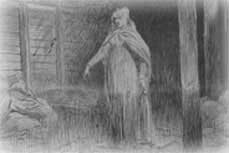
In spring 1828, Maria's family grew desperate over the total absence of physical contact. In April 1828, Maria's stepmother Ann Marten declared she had experienced three consecutive, intensely vivid nightmares depicting Maria murdered and buried under the floorboards of the Red Barn.
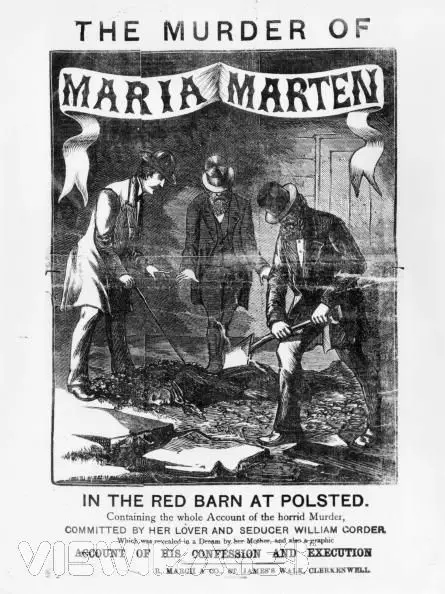
On April 19, 1828, Thomas Marten entered the barn with a spade. Digging beneath the threshing floor, he struck a decomposed sack containing human remains. The body was forensically identified by her missing lower teeth, distinctive clothing remnants, and the green neckerchief still fastened around her neck.
Investigation, Arrest, and Trial
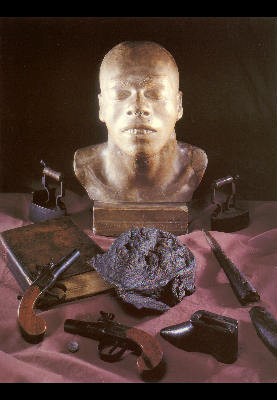
Veteran Bow Street Officer James Lea tracked Corder to his Ealing academy on April 22, 1828, recovering the twin murder pistols and walking blade in Corder's bedroom.
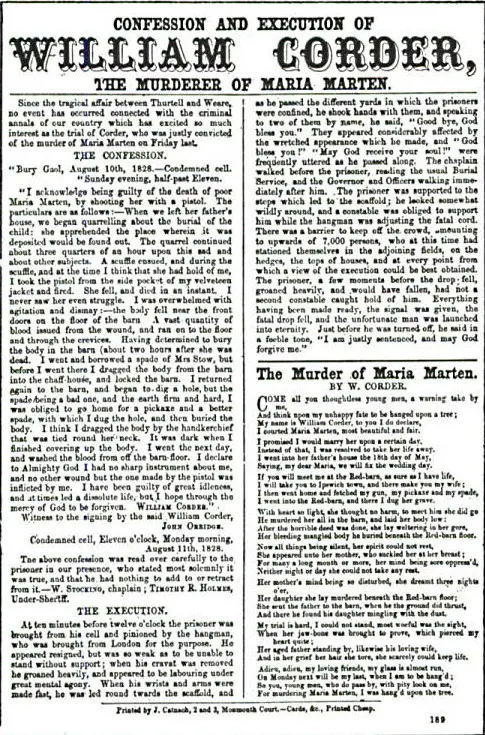
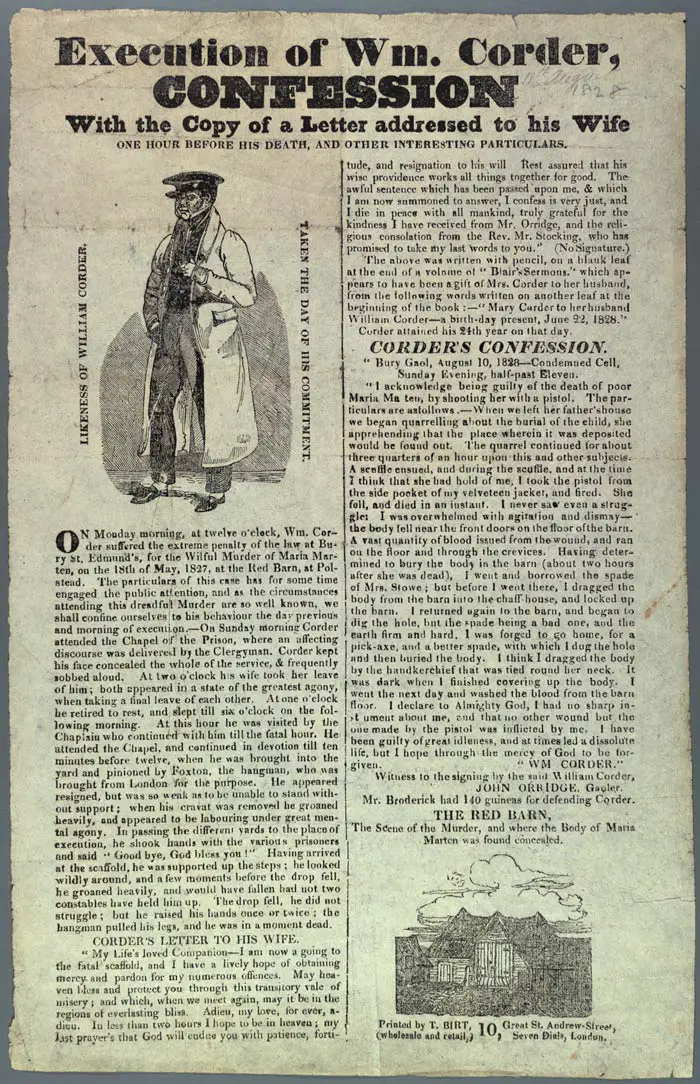
The trial at Bury St Edmunds Shire Hall on August 7, 1828, triggered immense sensationalism throughout the United Kingdom. Street ballads, broadsides, and theatrical adaptations of The Red Barn Mystery proliferated nationwide before the jury even retired.
Corder claimed that Maria had committed accidental suicide while struggling over a firearm. The jury required only 35 minutes to return a verdict of guilty of willful murder.
Execution and Anthropodermic Bookbinding
On August 11, 1828, William Corder was hanged outside the county gaol in Bury St Edmunds before an estimated 7,000 onlookers, leaving a signed confession admitting the shooting.
Immediately following execution, Corder’s body was dissected in the courtroom before massive public crowds. County surgeon George Creed performed the post-mortem, removed the skin from Corder’s chest, and had it commercially tanned. This human leather was subsequently utilized to bind James Curtis's definitive case record: An Authentic and Faithful Account of the Mysterious Murder of Maria Marten.
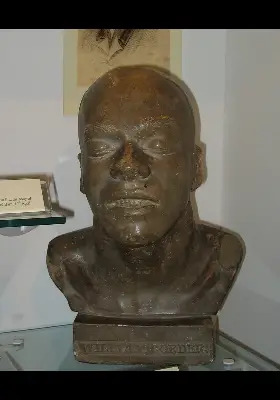
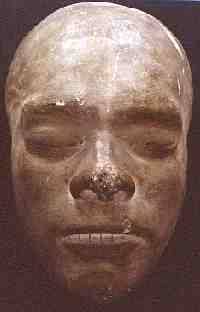
Corder's tanned anthropodermic book, his articulated skull, the pistols, and hair samples of Maria Marten are permanently exhibited at the Moyses Hall Museum in Bury St Edmunds, serving as one of the most famous relics of Victorian criminal history.