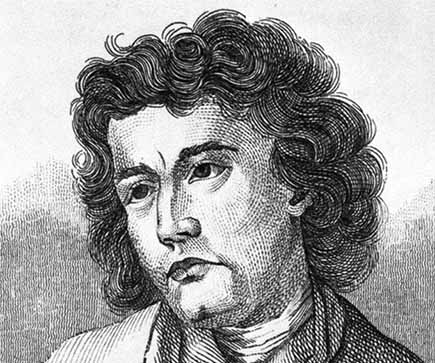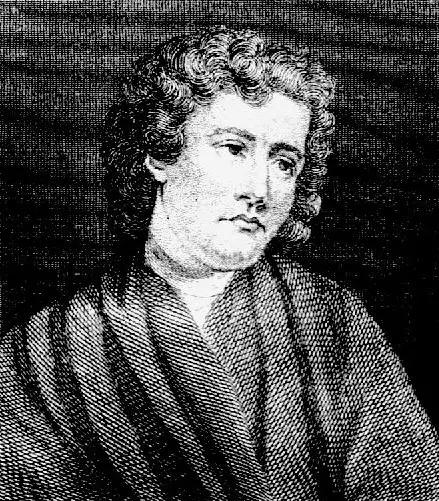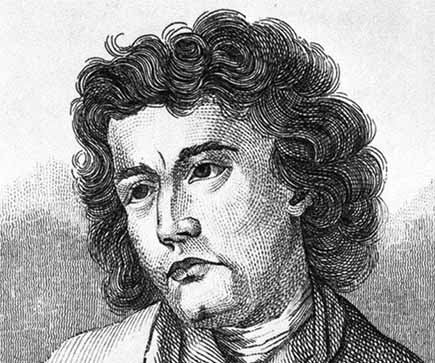




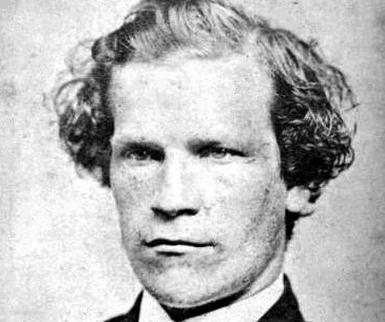
Forensic Profile Datasheet: Eugene Aram ("The Scholar Murderer")
| Forensic Parameter | Evaluation Details |
|---|---|
| Full Legal Name | Eugene Aram |
| Historical Epithet | The Scholar Murderer |
| Year & Place of Birth | 1704 — Ramsgill, Nidderdale, Yorkshire, England |
| Date & Place of Execution | August 6, 1759 (aged 55) — Tyburn gallows, York, England |
| Method of Execution | Public hanging followed by posthumous gibbeting in chains in Knaresborough Forest |
| Criminological Classification | Premeditated homicidal fraud / Intellectual instrumental murderer |
| Confirmed Fatal Victim | Daniel Clark (prosperous shoemaker and intimate associate of Aram) |
| Accomplice / Crown Witness | Richard Houseman (local dyer and pawnbroker) |
| Date & Scene of Murder | Night of February 7–8, 1744/45 — St. Robert's Cave, Knaresborough, Yorkshire |
| Forensic Cause of Death | Massive blunt-force craniofacial trauma (fractured temporal and parietal bones) |
| Period of Impunity | 14 years before accidental discovery of skeletal remains (1758) |
| Academic Legacy | Self-taught philological pioneer who anticipated the Indo-European Celtic-Classical cognate theory |
Background and Early Scholarly Brilliance
Eugene Aram was born in 1704 in the rural hamlet of Ramsgill, Nidderdale (Yorkshire), the son of Peter Aram, an esteemed landscape gardener employed by northern gentry. Though gifted with little more than rudimentary rural schooling, Aram manifested an insatiable passion for classical erudition and autonomous study. Early in life he married and took up employment as a village schoolmaster in Netherdale.
During his years in Yorkshire, Aram taught himself Latin and Greek, achieving fluent mastery of classical literature. In 1734 he removed to Knaresborough, expanding his linguistic investigations into Hebrew, Chaldee, Arabic, and ancient Celtic tongues. Long before Sir William Jones established the Indo-European language family in Calcutta, Aram formulated the groundbreaking hypothesis that Celtic was not an isolated dialect but a primary cognate branch of Latin, Greek, and Germanic, drafting extensive comparative dictionaries.
Despite his intellectual stature, his meagre earnings as a schoolmaster proved insufficient to finance his scholarly ambitions, extensive book purchases, and personal lifestyle.
The Conspiracy, Murder of Daniel Clark, and Concealment (February 1744/45)
In Knaresborough, Aram formed an association with Daniel Clark, a shoemaker who had recently received a marriage portion of £200. Conspiring with local dyer Richard Houseman, the trio orchestrated a lucrative fraudulent scheme: exploiting Clark's credit, they obtained large quantities of silver tableware, gold watches, and luxury merchandise from regional merchants under the pretext of outfitting an extravagant wedding banquet.
On the night of February 7–8, 1744/45, having stockpiled the plunder, the men gathered at St. Robert's Cave, a desolate hollow on the banks of the River Nidd, ostensibly to divide the proceeds before Clark staged a planned flight from creditors.
Inside the cavern, Aram and Houseman turned upon Clark, bludgeoning him to death with pickaxes and iron spades. After stripping the corpse, they excavated a shallow trench into the cave's sandy floor, buried Clark's remains, and covered the surface with loose scree.
The following morning, Clark's disappearance was interpreted by victims of the fraud as a calculated escape abroad with their goods. Although suspicions lingered and silver pieces were unearthed in Aram's garden, he asserted that Clark had deposited them in his custody. In the absence of a corpse or physical evidence of violence, charges could not be sustained, and Aram was discharged on bail. Shortly thereafter, he deserted his wife and children and departed for London.
The Wandering Scholar and Career at King's Lynn
Over the next fourteen years, Aram led a respectable and intellectually productive life across England, teaching in London, Hayes, Sussex, and eventually securing the post of usher (senior master) at the King's Lynn Grammar School in Norfolk.
In Lynn, Aram was regarded by clergy and magistrates as a refined, gentle scholar entirely engrossed in his magnum opus: a comparative lexicon tracing European languages to shared Celtic and Classical origins. He believed the events at St. Robert's Cave were consigned to permanent oblivion.
Exhumation and Apprehension (1758)
In August 1758, quarrymen digging for lime on Thistle Hill near Knaresborough accidentally uncovered human bones buried beneath a shallow embankment. Town rumors instantly linked the remains to the vanished Daniel Clark. Aram's abandoned wife, living in penury, informed authorities of clandestine nocturnal conferences held between her husband, Clark, and Richard Houseman on the night of the disappearance.
Houseman was apprehended and brought before the coroner. When presented with the Thistle Hill bones, Houseman grew agitated and blurted: "Those are no more Dan Clark's bones than mine!" This careless slip betrayed his complicity: his certainty that the exhumed skeleton was not Clark's proved he possessed direct knowledge of where Clark was actually buried.
Confronted by the coroner, Houseman confessed that Clark had been murdered and interred inside St. Robert's Cave, naming Eugene Aram as the principal bludgeoner. Constables excavated the specified corner of the cavern and uncovered Clark's skeleton, exhibiting distinct cranial blunt-force fractures.
On August 21, 1758, Yorkshire constables arrested Aram inside the schoolroom at King's Lynn before his astonished pupils.
Trial at York, Memorable Self-Defense, and Execution
Aram was tried for capital murder at the York Assizes on August 3, 1759, before Mr. Justice Noel. Houseman served as the Crown's turncoat witness in exchange for immunity.
Conducting his own defense without counsel, Aram delivered an address celebrated as a tour-de-force of 18th-century courtroom eloquence. Speaking in polished, classical prose, he argued that skeletal remains discovered in an ancient hermitage cave proved nothing, noting that Yorkshire soil was saturated with unrecorded burials of medieval anchorites, Roman legionaries, and Civil War combatants. He attacked Houseman's uncorroborated credibility as an interested accomplice and passionately questioned how an inoffensive scholar devoted to solitary philology could possess the physical brutality required for cold-blooded slaughter.
Notwithstanding his erudition, the circumstantial web—including his sudden possession of funds in 1745 and Clark's fractured skull—proved insurmountable. The jury convicted him after brief deliberation.
Aram subsequently attempted suicide in York Castle by opening the veins of his arm with a razor, but surgeons intervened. Before ascending the scaffold, he left a written statement tacitly admitting his presence and alleging jealousy over an affair between Clark and his wife.
On August 6, 1759, Eugene Aram was hanged at Tyburn, York. His corpse was afterward encased in chains (gibbeted) upon a wooden frame in Knaresborough Forest, visible to highway travelers for years as a grim testament to pride and greed.
Criminological and Cultural Immortality
Eugene Aram's case—the brilliant philologist who murdered for book money—captured the English literary imagination:
- In 1829, Thomas Hood published the widely recited dramatic poem The Dream of Eugene Aram.
- In 1832, Sir Edward Bulwer-Lytton published his acclaimed historical novel Eugene Aram, romanticizing the scholar's inner psychological torment.
- Modern criminologists, including Colin Wilson, cite Aram as an archetypal historical case of moral dissociation where intellectual superiority was invoked to rationalize instrumental homicide.