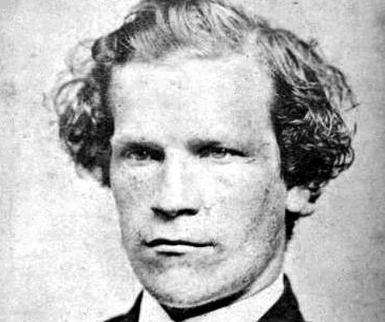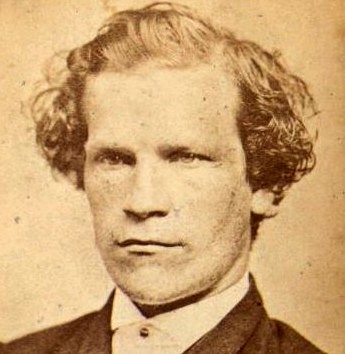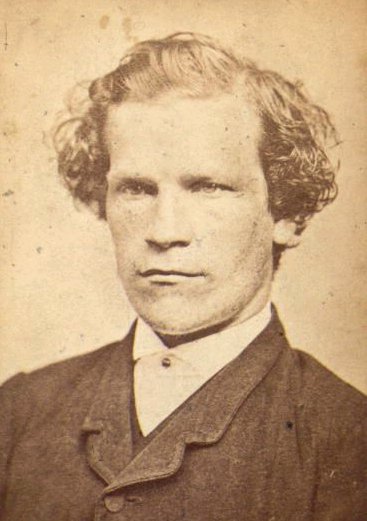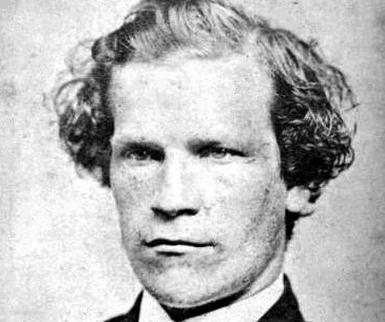





Forensic Profile Datasheet: Franz Müller ("The First Railway Murder")
| Forensic Parameter | Evaluation Details |
|---|---|
| Full Legal Name | Franz Müller |
| Criminological Landmark | The First Railway Murder (First recorded homicide on a British train) |
| Date & Place of Birth | October 31, 1840 — Langenselbold, Hesse, German Confederation |
| Date & Place of Execution | November 14, 1864 (aged 24) — Newgate Prison, London, United Kingdom |
| Method of Execution | Public hanging before a spectator crowd estimated at 50,000 |
| Criminological Classification | Opportunistic instrumental train robbery and murder |
| Fatal Victim | Thomas Briggs (aged 70; Chief Clerk of banking house Robarts, Lubbock & Co.) |
| Date & Scene of the Crime | Night of July 9, 1864 — North London Railway (Bow to Hackney Wick section) |
| Medical Cause of Death | Massive blunt-force craniofacial trauma and secondary trackside defenestration |
| Historic Manhunt | Transatlantic Scotland Yard steamship pursuit across the Atlantic Ocean |
| Legislative & Engineering Legacy | Statutory mandate for train passenger communication cords and compartment vision panes |
Background and Context: Compartments of Death
Franz Müller was born in 1840 in Langenselbold, Hesse. A journeyman tailor, he emigrated to London in the early 1860s, residing in the East End. While possessing no violent criminal record, Müller lived in grinding poverty, struggling with unpaid rent and desperate to finance passage across the Atlantic to build a new life in New York.
In early Victorian Britain, passenger train carriages lacked corridors. Individual first- and second-class compartments were sealed, isolated wooden boxes with no internal communication to adjacent carriages or train staff. Once the doors were locked at departure, passengers were trapped inside with fellow travelers until the next scheduled station stop.
The Slaying on the North London Railway (July 9, 1864)
On Saturday night, July 9, 1864, Thomas Briggs, a 70-year-old Chief Clerk of the prominent City bank Robarts, Lubbock & Co., boarded the 9:45 p.m. North London Railway train from Fenchurch Street, taking a seat in a first-class compartment bound for Hackney.
At 10:10 p.m., when the train pulled into Hackney station, passengers entering the compartment were horrified to discover the cushions, windows, and floorboards saturated in fresh blood. On a seat lay an unfamiliar beaver-fur top hat and an ivory-handled walking stick. Thomas Briggs was nowhere to be found.
Ten minutes later, the driver of a passing goods engine spotted an unconscious body lying near the rail ballast between Bow and Hackney Wick. It was Thomas Briggs, suffering from catastrophic fractures to the skull. Conveyed to a nearby public house, he died the following evening without regaining consciousness. His gold pocket watch, chain, and eyeglasses were missing.
The Clue of the Top Hat and the Transatlantic Race
The murder triggered mass hysteria among the traveling public, who viewed rail travel as an perilous endeavor. The British government and the rail syndicate posted a combined £300 reward.
Scotland Yard Detective Inspector Richard Tanner directed the investigation. The abandoned top hat bore a bespoke lining traced to a hatter in Marylebone. Days later, Whitechapel pawnbroker John Death came forward: a young German tailor had exchanged a gold watch chain belonging to Briggs for another timepiece. Müller's landlord confirmed that his tenant had departed abruptly on an overseas voyage.
Müller had embarked on July 15, 1864, aboard the commercial sailing vessel Victoria, bound for New York.
Realizing the sailing ship would take over five weeks to cross the Atlantic, Inspector Tanner and Detective Clarke, accompanied by jeweler John Death and Briggs's brother, took an express train to Liverpool and boarded the transatlantic steamship RMS City of Manchester—a state-of-the-art propeller-driven vessel. The high-seas race captivated newspapers on both sides of the Atlantic: could Scotland Yard's steamship overtake the tailwind-driven sailing ship?
Apprehension in New York Harbor and Extradition
On August 20, 1864, the City of Manchester dropped anchor in New York Harbor, beating the Victoria by four full days.
When the Victoria approached Sandy Hook on August 24, Inspector Tanner boarded the ship alongside US federal marshals. Müller was arrested on deck. A search of his sea chest yielded Briggs's engraved gold pocket watch, along with Briggs's missing top hat, which Müller had modified by shearing down its crown and brim.
Following an extradition hearing under the Webster-Ashburton Treaty, Müller was returned to England in September 1864.
Old Bailey Trial and Execution at Newgate
Müller's capital murder trial commenced on October 27, 1864, at the Central Criminal Court (The Old Bailey) before Lord Chief Baron Pollock. Müller maintained that he had purchased the watch from an itinerant peddler in the London docks. However, bespoke hatmakers proved in court that the cut-down hat in Müller's possession was identical to Briggs's ordered size.
The jury returned a guilty verdict within fifteen minutes.
On November 14, 1864, Franz Müller was publicly hanged outside Newgate Prison before an estimated crowd of 50,000 onlookers. Moments before the drop fell, German Lutheran chaplain Dr. Cappel implored him to speak the truth. According to Cappel's documented testimony, Müller whispered his final words: "Ich habe es getan" ("I did it").
The case altered rail transit engineering permanently. Parliament enacted the Regulation of Railways Act, compelling rail operators to install carriage partition windows and the iconic emergency communication cords connecting passengers directly with train crews.