


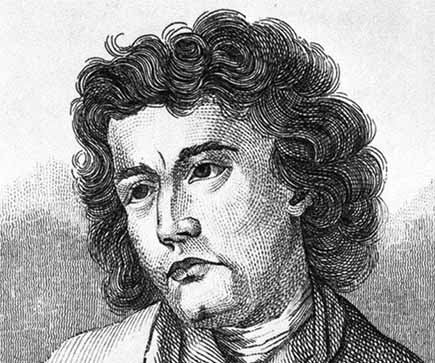
Forensic & Criminological Matrix
| Parameter | Forensic Detail |
|---|---|
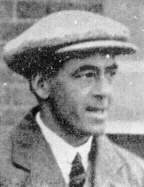
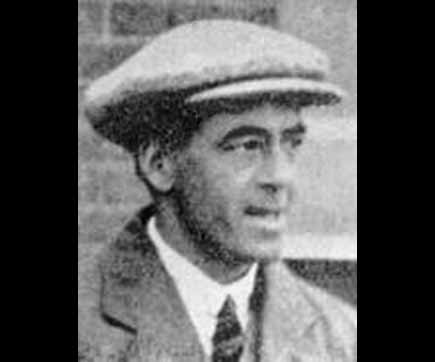
| Full Legal Name | Thomas Henry Allaway |
| Criminological Monikers | The Bournemouth Decoy Killer, The Telegraph Murderer |
| Nationality | British |
| Date of Birth | September 17, 1885, Reading, Berkshire, England |
| Date of Execution | August 19, 1922 (aged 36), Winchester Prison, Hampshire, England |
| Execution Method | Judicial hanging (executioner: Thomas Pierrepoint) |
| Date of Crime | December 22, 1921 |
| Crime Scene | Agricultural field at Tuckton, near Bournemouth, England |
| Fatal Victim | Irene Wilkins (aged 31), London culinary teacher and typist |
| Murder Weapon | Ball-peen mechanical hammer / heavy spanner |
| Forensic Significance | Landmark historical case establishing handwriting forensics on telegraph dispatch forms for Scotland Yard |
The Decoy Telegraph Trap
In December 1921, Irene Wilkins, an educated 31-year-old resident of Streatham, South London, placed a classified newspaper advertisement seeking employment as a domestic companion or shorthand typist. On December 20, an unknown individual visited telegraph offices in Bournemouth and Boscombe, dispatching decoy wires to multiple female job-seekers.
One telegraph, signed under the pseudonym "Wood", offered Miss Wilkins an enticing salary of two pounds per week with full room and board, requesting her immediate travel to Bournemouth Central Station on the evening of December 22 for an urgent employment interview.
The Murder at Tuckton Field
Irene Wilkins took the afternoon train from London Waterloo, arriving at Bournemouth Central at approximately 7:00 PM. Outside the terminal, she entered a private hire vehicle operated by Thomas Henry Allaway, a 36-year-old chauffeur with a history of theft and cheque forgery employed by a local gentleman.
Instead of driving to the purported employer's estate, Allaway steered the vehicle to a dark, secluded lane in Tuckton, near Iford Bridge. There, he stopped the car and attempted to sexually assault Miss Wilkins. Facing intense physical resistance, Allaway retrieved a heavy ball-peen hammer from his vehicle tool chest and struck her repeatedly about the cranium and facial bones, crushing the skull and causing instantaneous cerebral trauma. He dragged the deceased victim into a roadside ditch and fled the scene.
Scotland Yard Dragnet and Forensic Graphology
The victim's body was discovered the following morning by an agricultural laborer. Scotland Yard dispatched Detective Chief Inspector George Cornish to assume control of the inquiry. Investigators recovered the decoy wire in Wilkins's handbag and secured the original handwritten telegraph dispatch slips from the Bournemouth post offices.
Although the perpetrator attempted to obscure his handwriting using irregular block capitals, identical idiosyncratic misspellings and pressure strokes were identified across three separate telegraphs. Cornish authorized newspaper publication of the handwriting samples, soliciting assistance from the public.
The crucial lead came from a local turf accountant (bookmaker) in Bournemouth, who recognized the handwriting immediately: it matched betting slips regularly submitted by Thomas Allaway. Furthermore, Allaway had recently forged and cashed employer cheques using identical penmanship.
Realizing detection was imminent, Allaway absconded from Bournemouth and went into hiding in Reading under an alias. He was tracked down and arrested by police in April 1922.
Trial, Confession, and Execution
Allaway was tried at the Winchester Assizes in July 1922 before Mr. Justice Darling. Crown handwriting examiners provided microscopic evidence matching the telegraph slips, betting vouchers, and Allaway's known writing. Multiple eyewitnesses also testified to seeing Allaway's green saloon car parked near Tuckton on the night of the slaying.
The jury returned a guilty verdict in under one hour. Following the dismissal of his appeal, Allaway signed a full written confession inside his condemned cell, admitting he lured Miss Wilkins with the telegraph and bludgeoned her with a hammer after she resisted his sexual advances.
On August 19, 1922, Thomas Henry Allaway was executed by hanging at Winchester Prison by hangman Thomas Pierrepoint. The case established an enduring legal precedent in forensic science regarding document examination and handwriting analysis in British criminal jurisprudence.