



Forensic & Criminological Matrix
| Parameter | Forensic Detail |
|---|---|
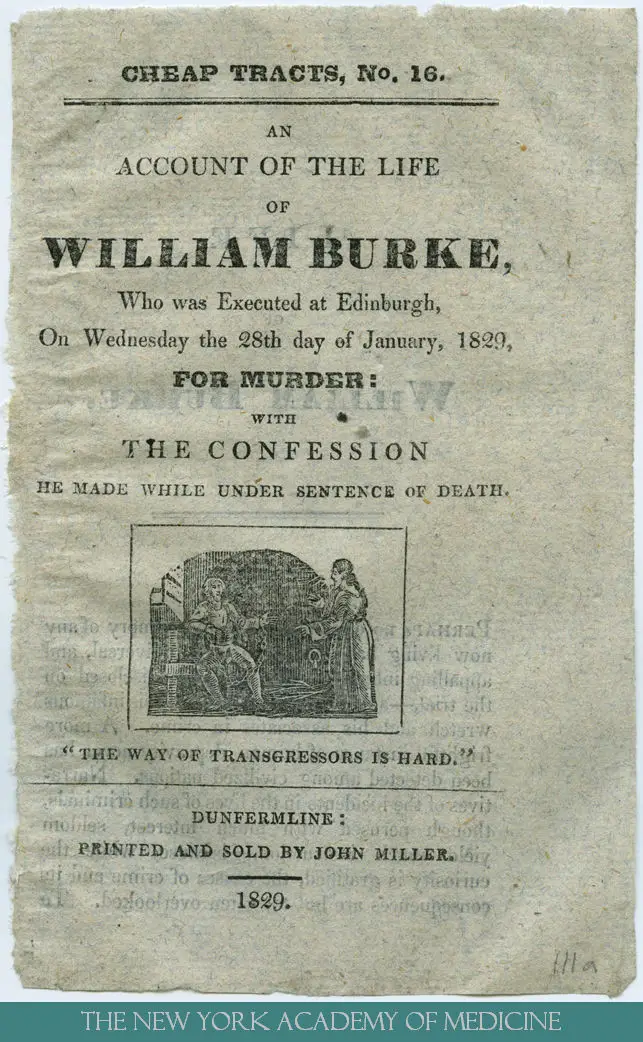
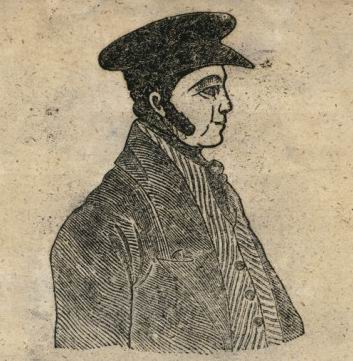
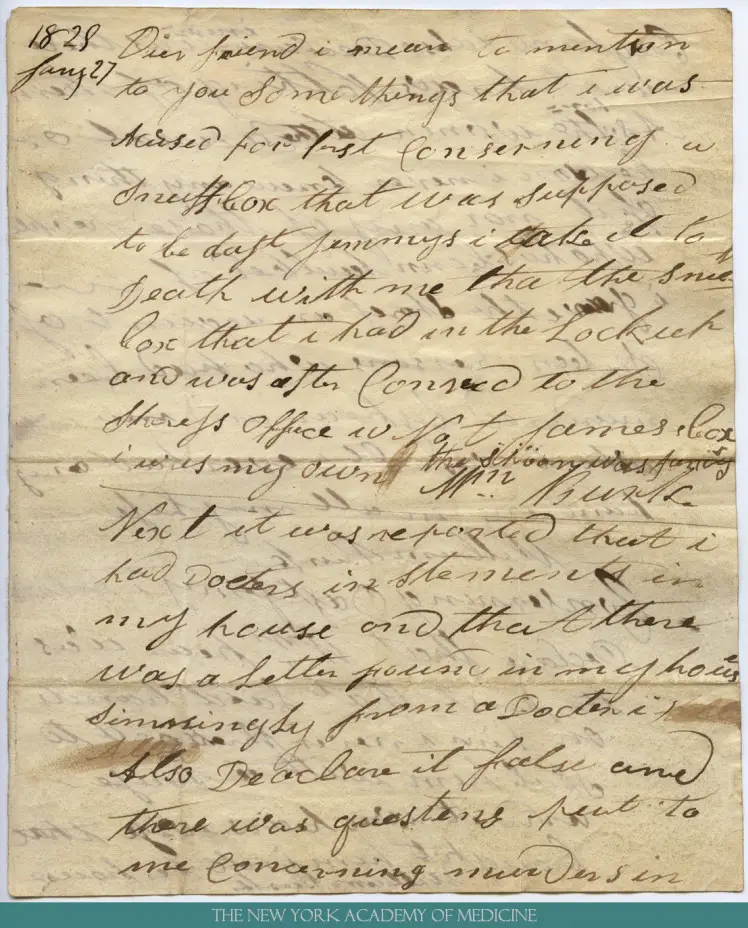
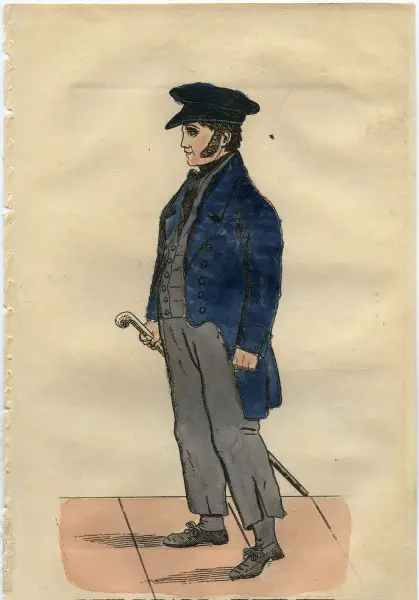
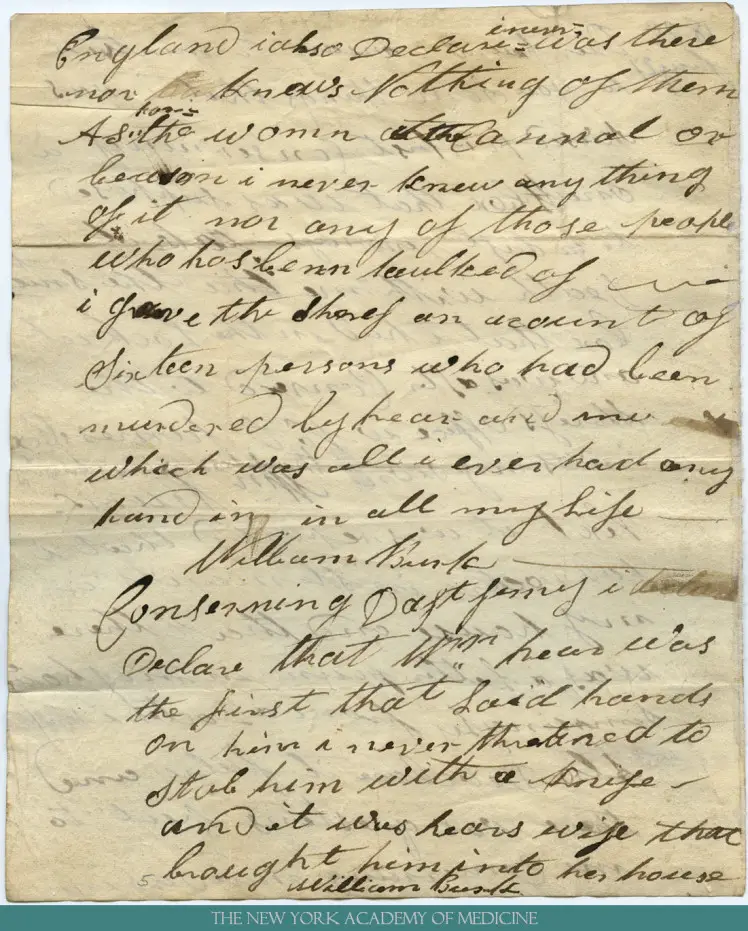
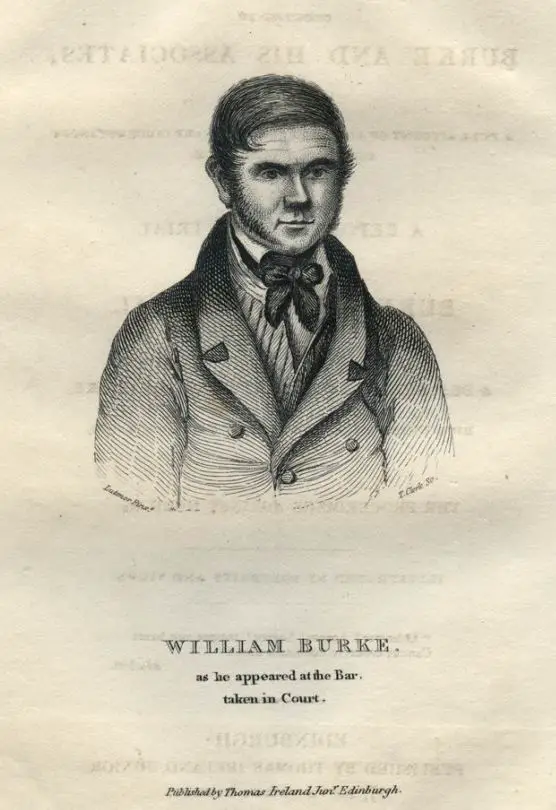
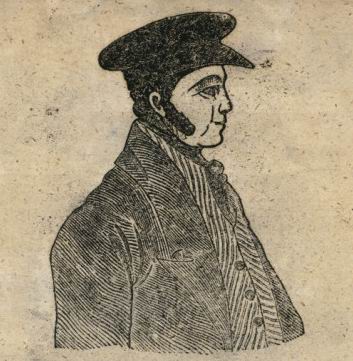
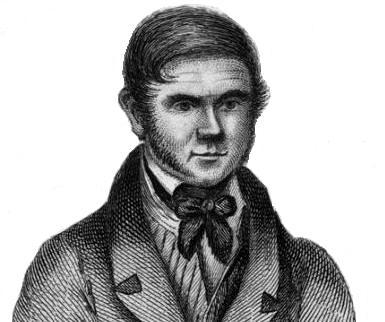
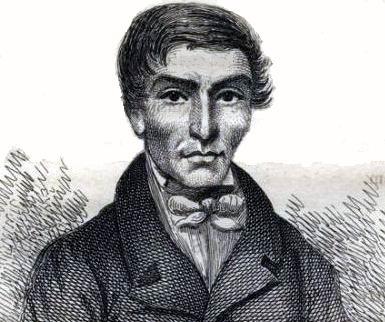
| Full Legal Name | William Burke |
| Historical & Legal Moniker | The West Port Murders, Burke & Hare |
| Nationality | Irish / British |
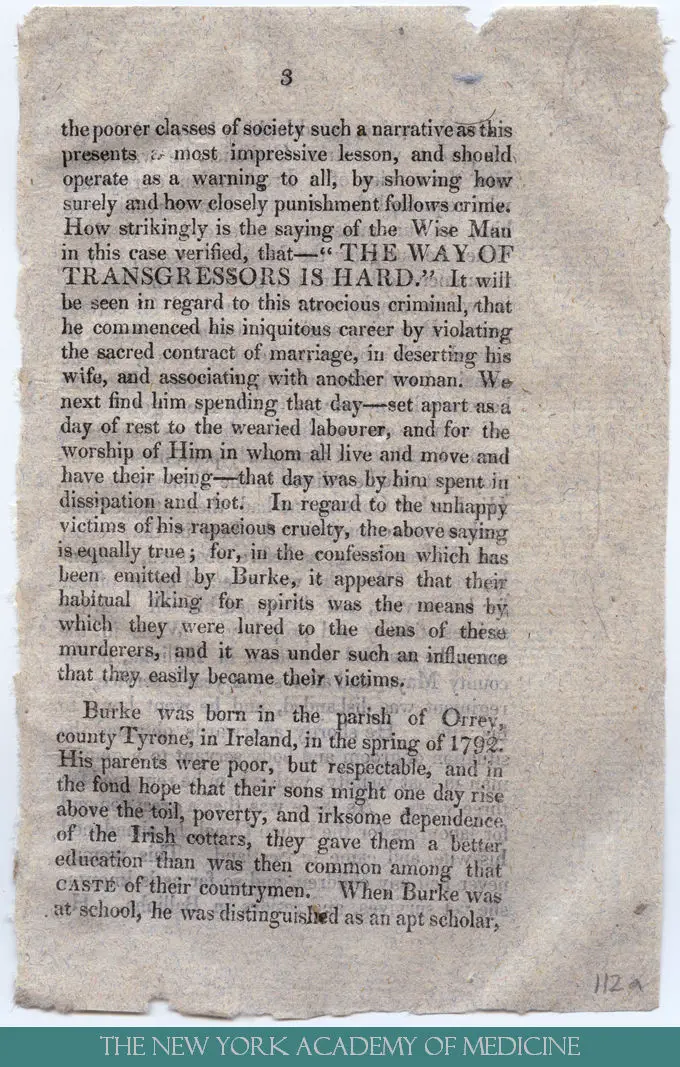
| Date of Birth | 1792, Urney, County Tyrone, Ireland |
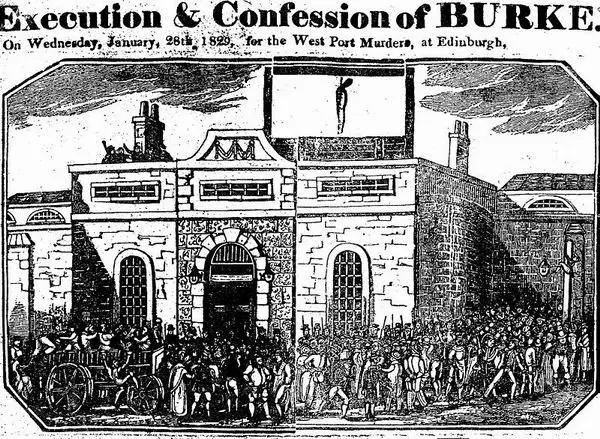
| Date of Execution | January 28, 1829 (aged 37) |
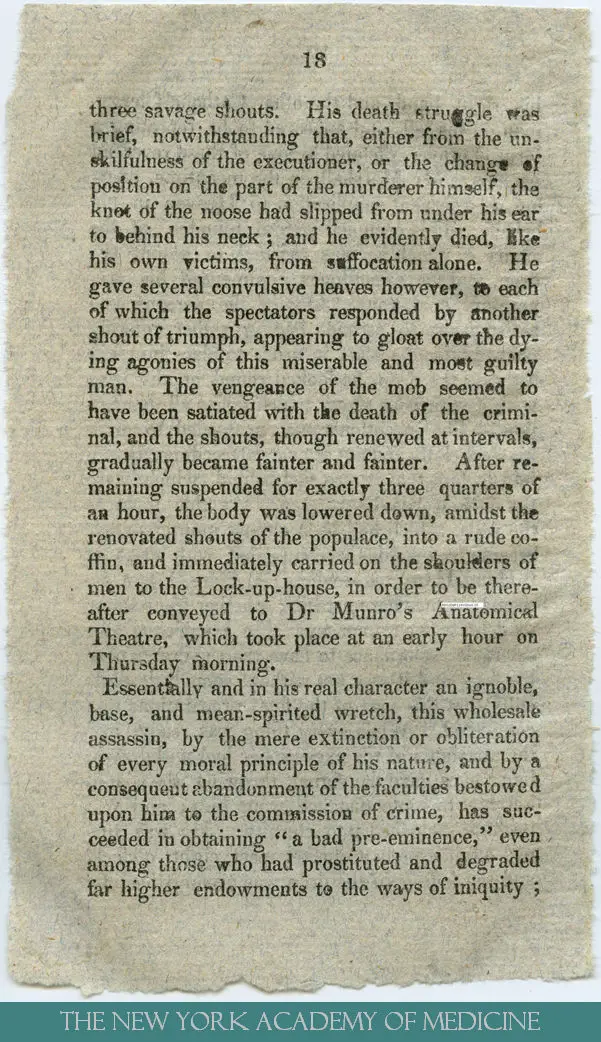
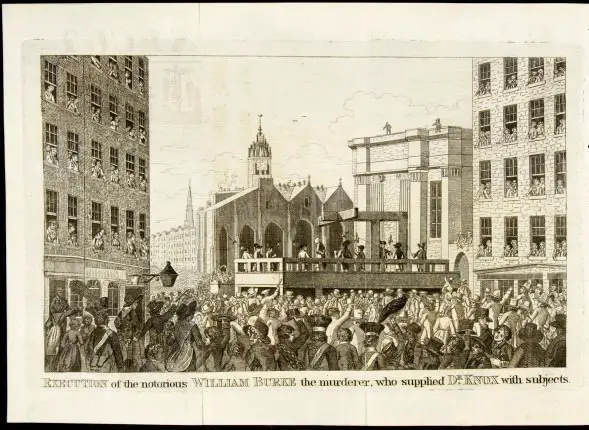
| Place of Execution | Lawnmarket, Edinburgh, Scotland |
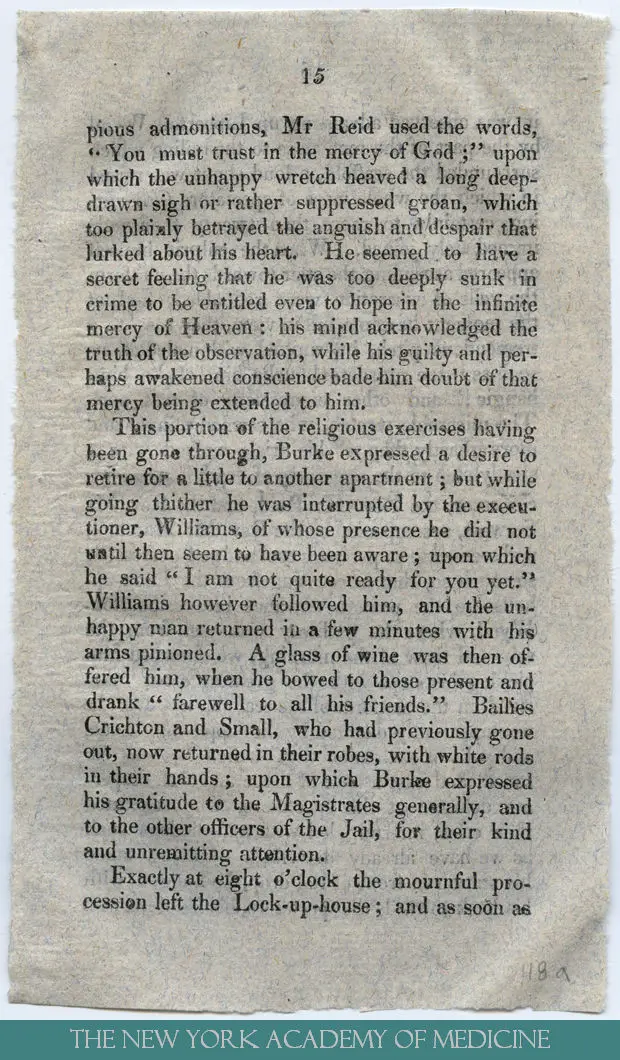
| Execution Method | Public hanging before a crowd of 25,000, followed by mandated public anatomical dissection |
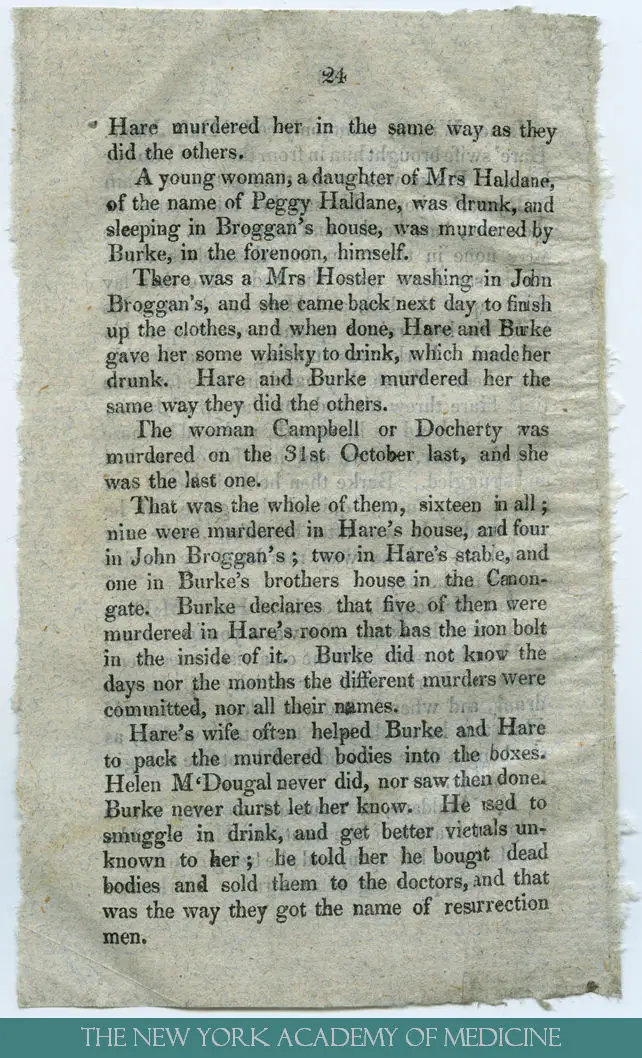
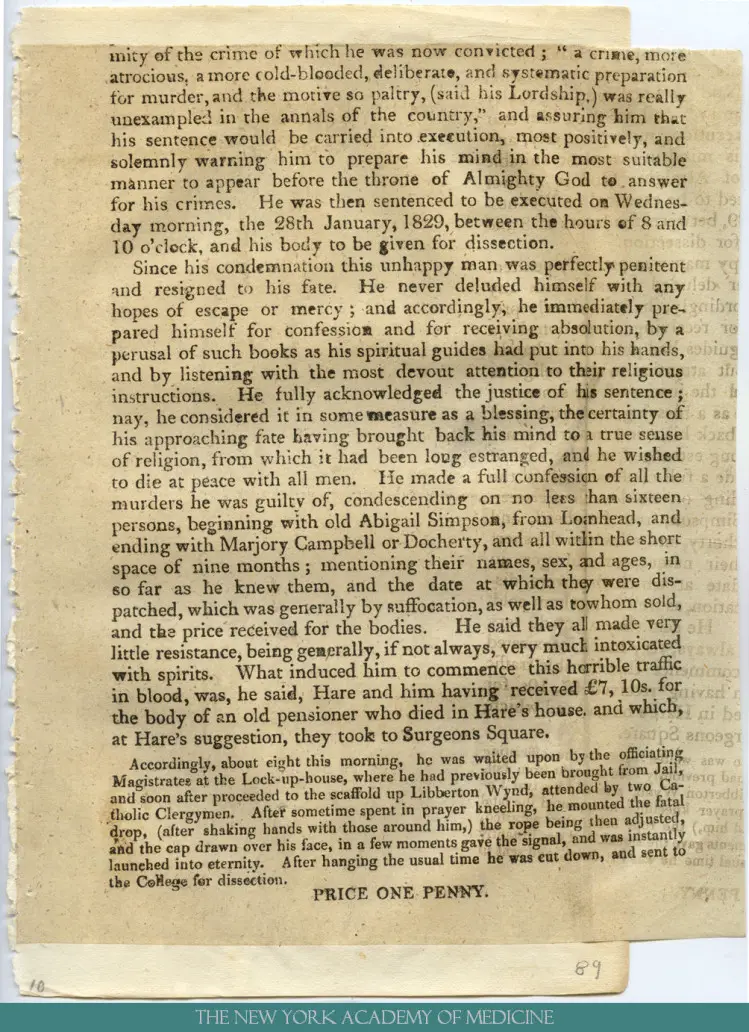
| Confirmed Murder Victims | 16 verified homicides |
| Active Crime Span | November 1827 – October 31, 1828 |
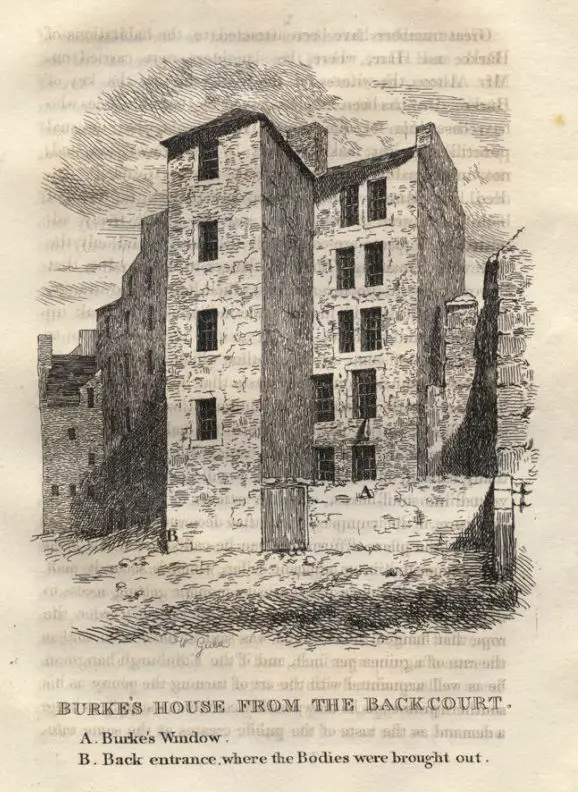
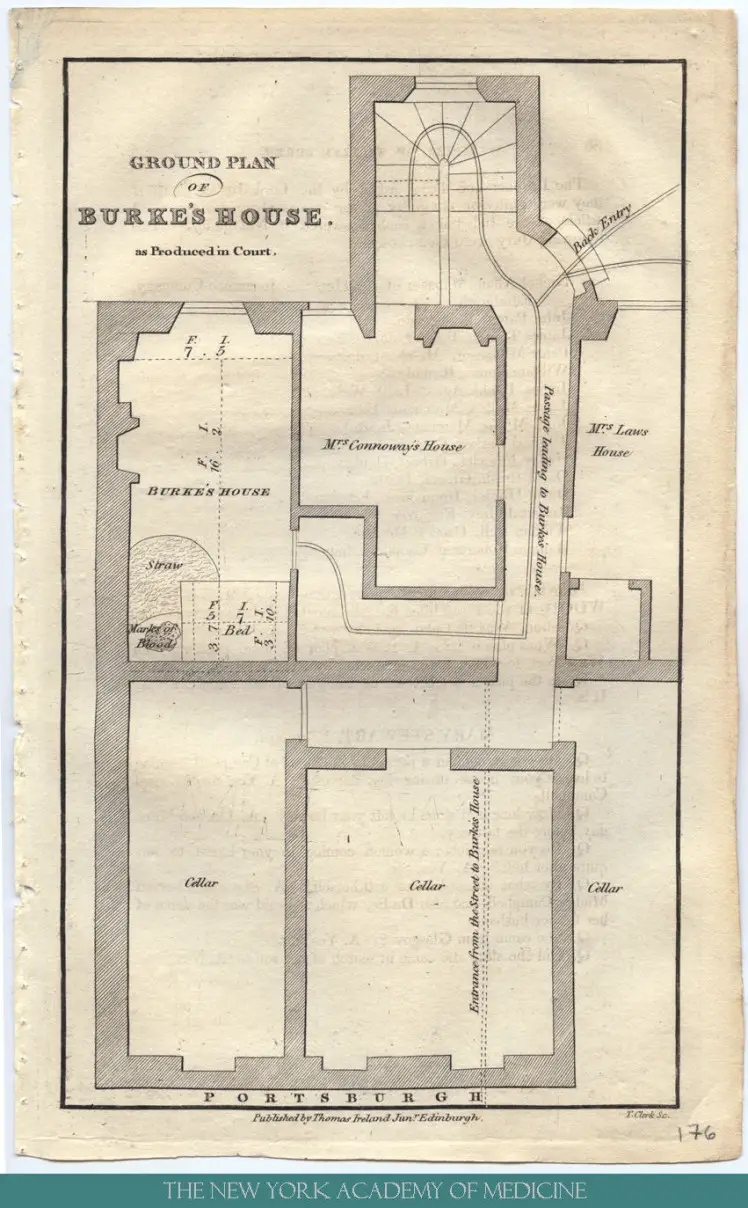
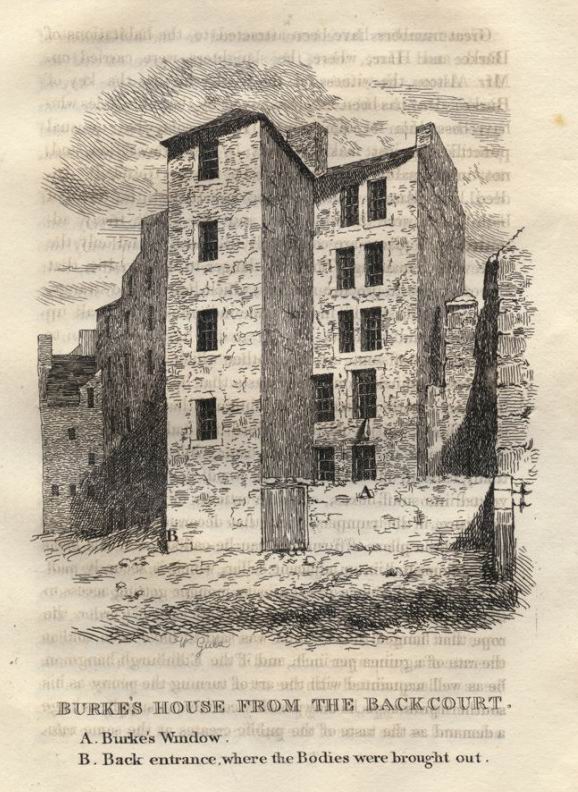
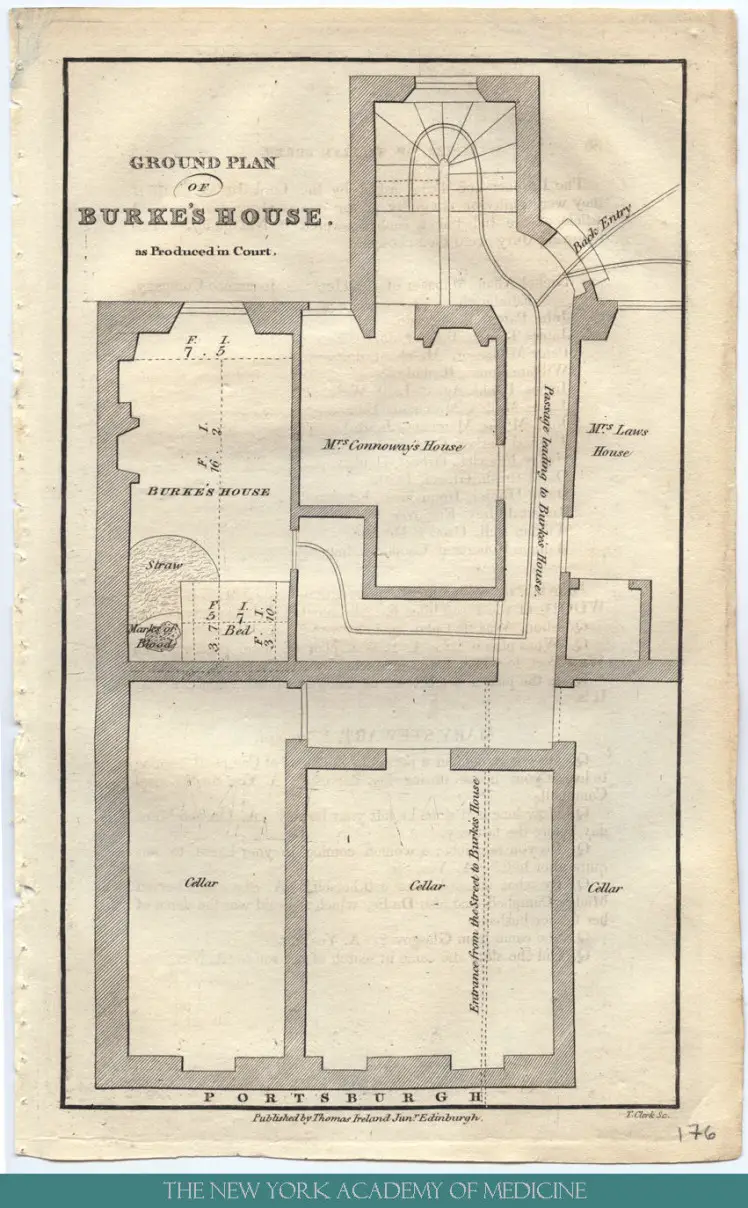
| Crime Epicenter | Tanner's Close lodging house, West Port district, Edinburgh |
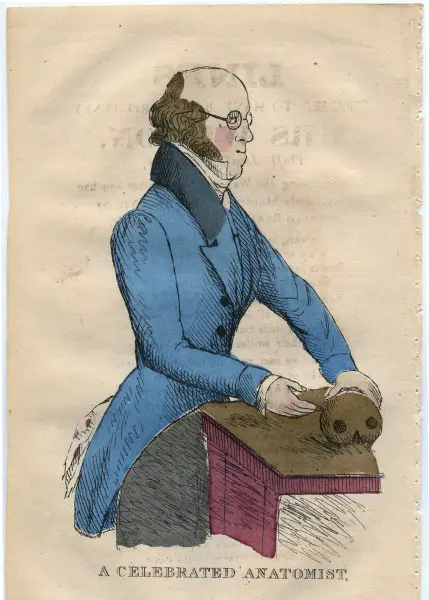
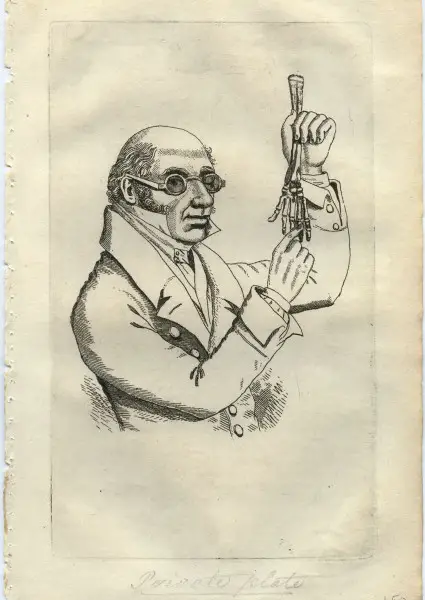
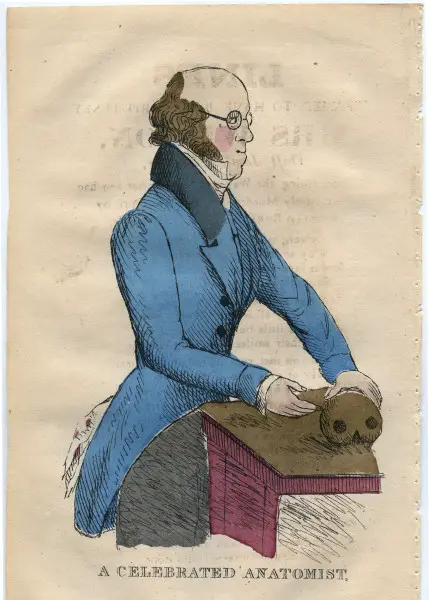
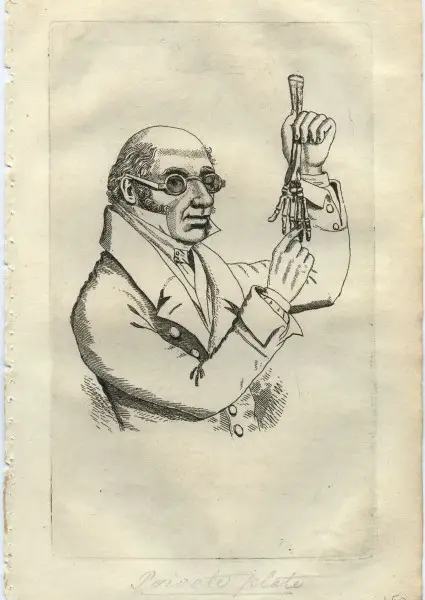
| Purchaser of Cadavers | Dr. Robert Knox, chief independent lecturer at Surgeon's Square Anatomy School |
| Financial Yield | Between £7 and £10 per fresh human corpse |
| Coined Forensic Term | Burking (method of traumatic positional asphyxiation combining thoracic compression with manual nasal-oral smothering, leaving no external musculoskeletal trauma) |
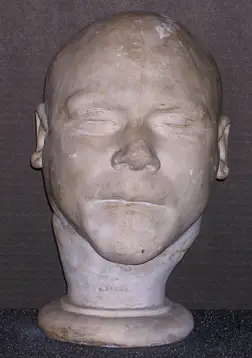
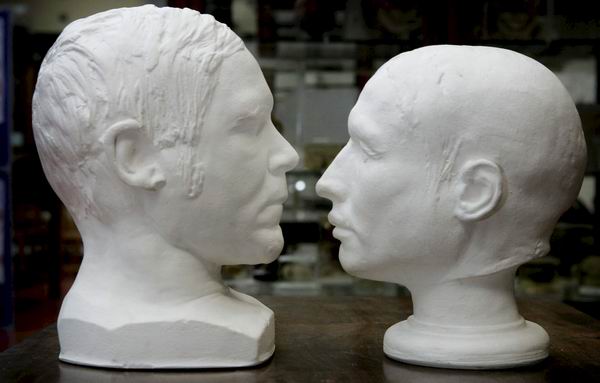
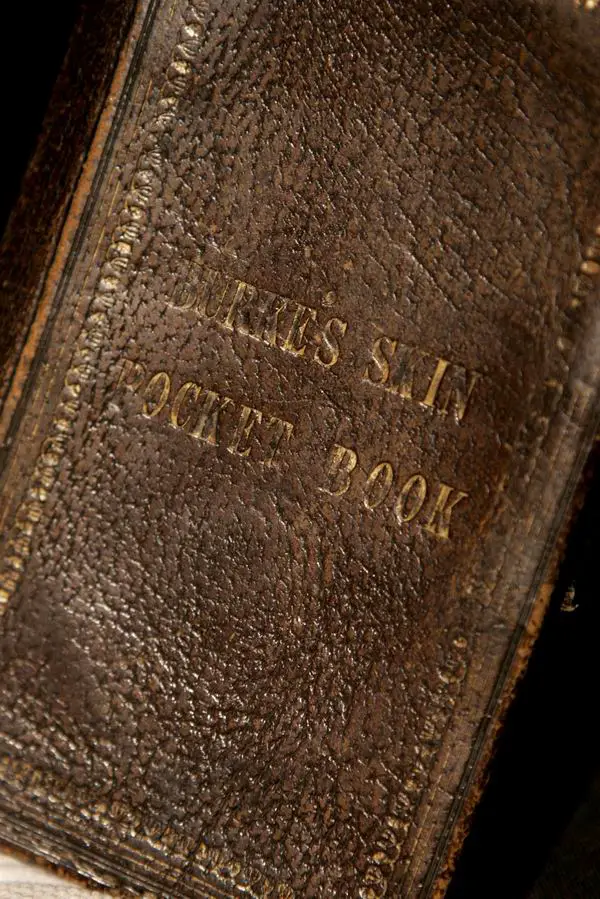
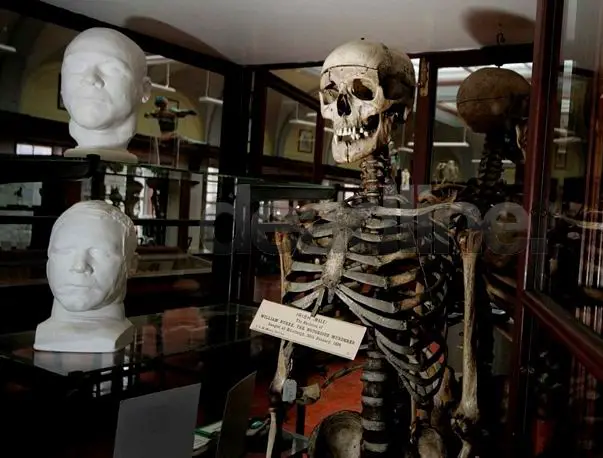
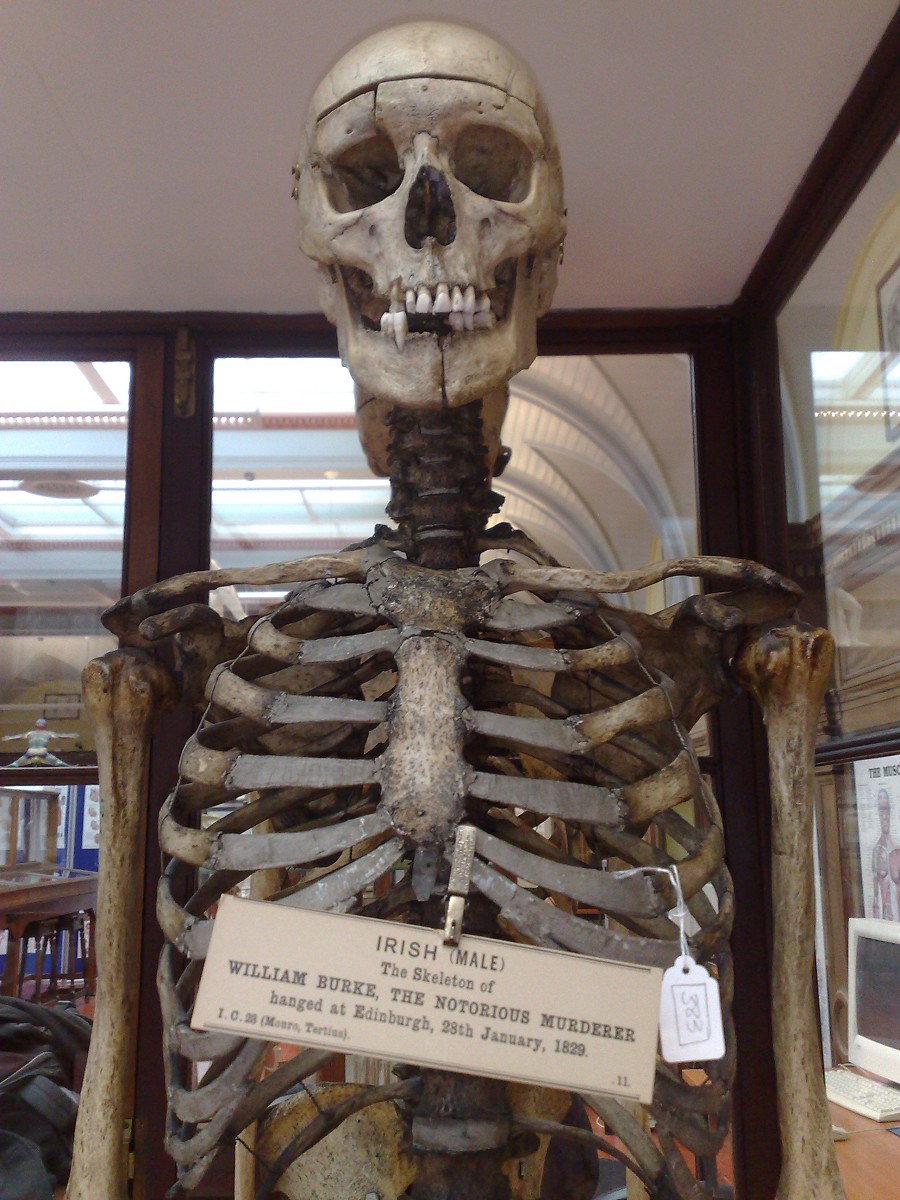
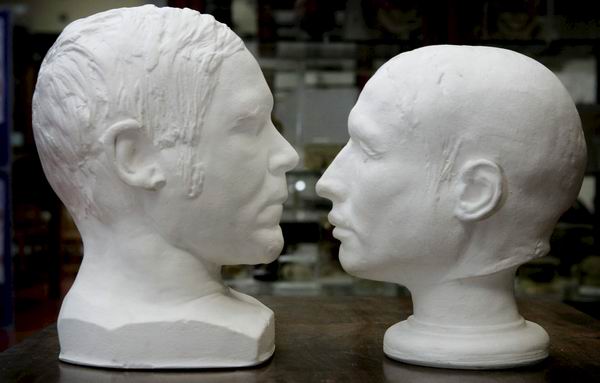
| Post-Mortem Human Artifacts | Burke's skeleton remains on permanent public display at the University of Edinburgh Anatomical Museum; book bound in his tanned human skin is held at the Surgeons' Hall Museum |
Historical Context: Edinburgh's Anatomical Supremacy
During the early 19th century, the University of Edinburgh's medical faculty stood as Europe's premier center for surgery and human anatomy. However, this academic prestige collided with acute legal scarcity: British statutes permitted dissection only on corpses of executed felons. As capital offenses declined while surgical classes exploded, anatomical demonstrators faced catastrophic shortages of fresh human subjects.
This scarcity fueled the illegal trade of resurrectionists (grave robbers), who exhumed freshly interred graves under darkness to sell cadavers to professors.
The Origin of the West Port Conspiracy
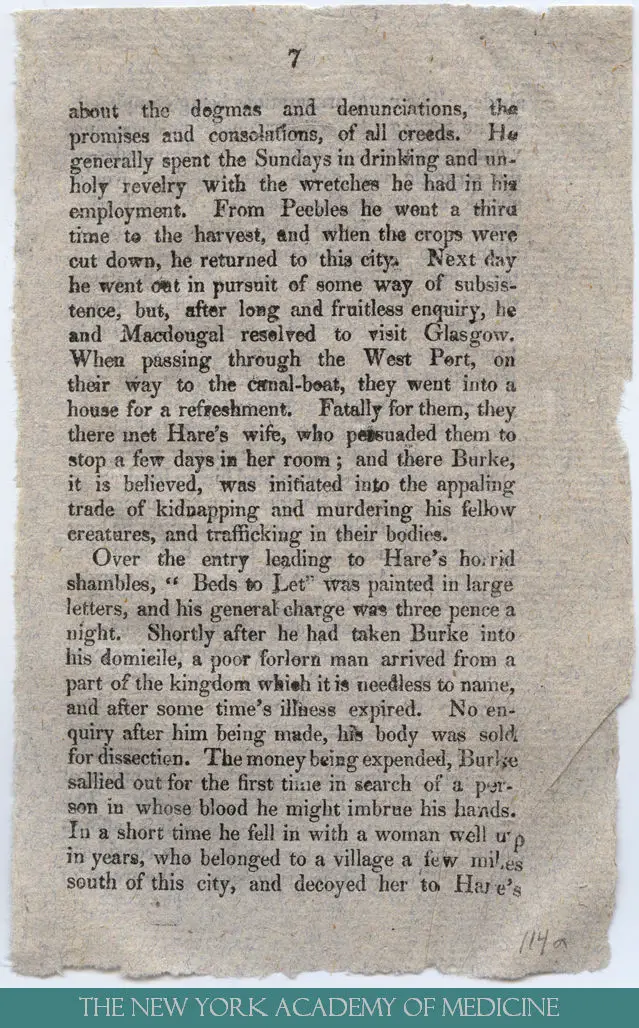
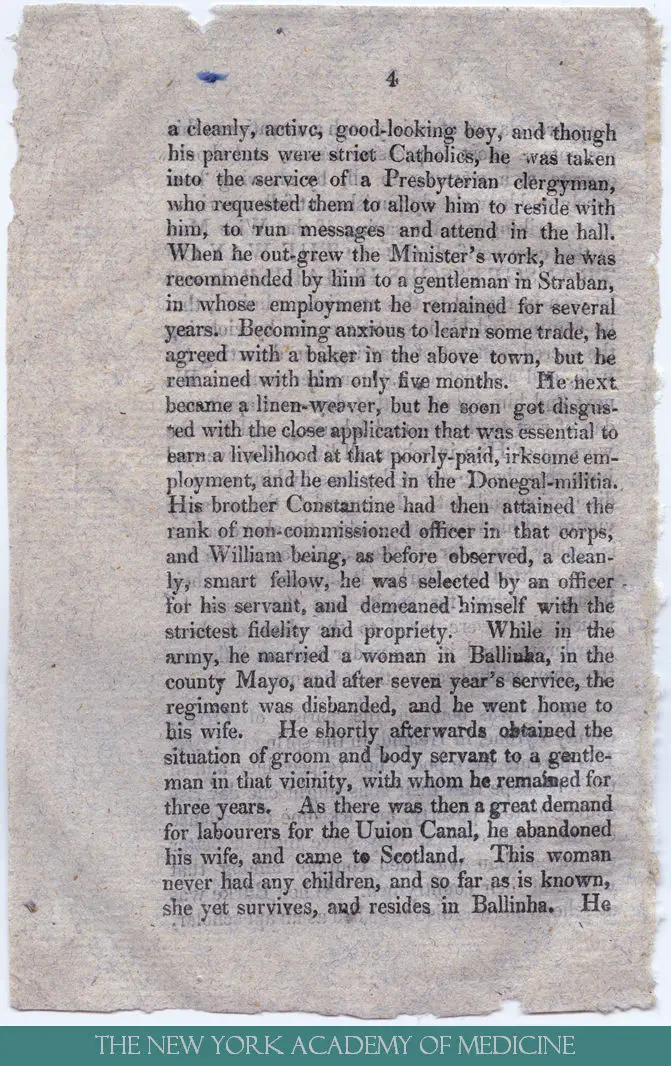
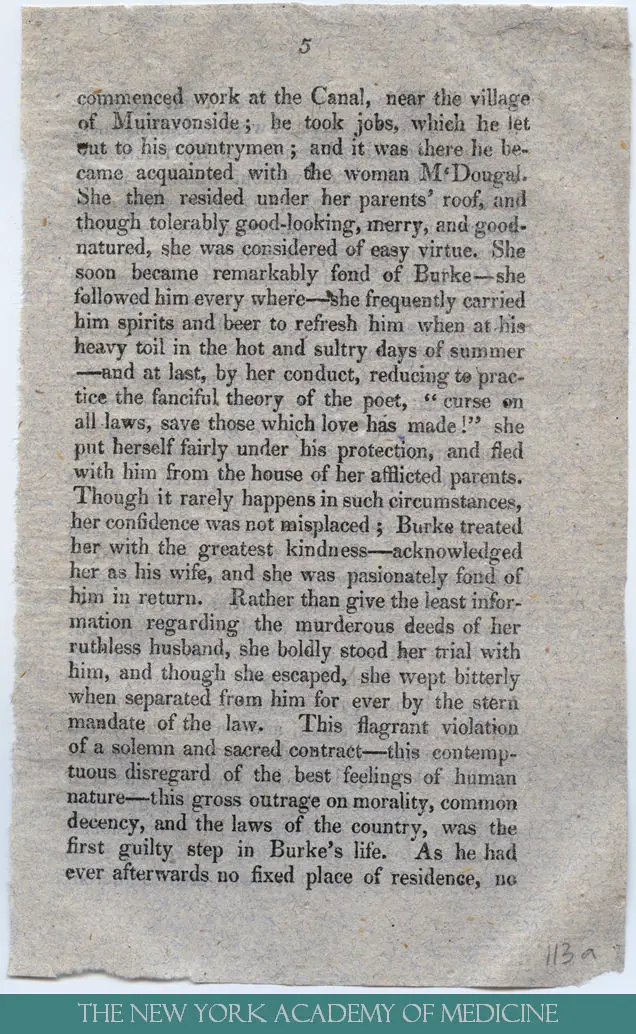
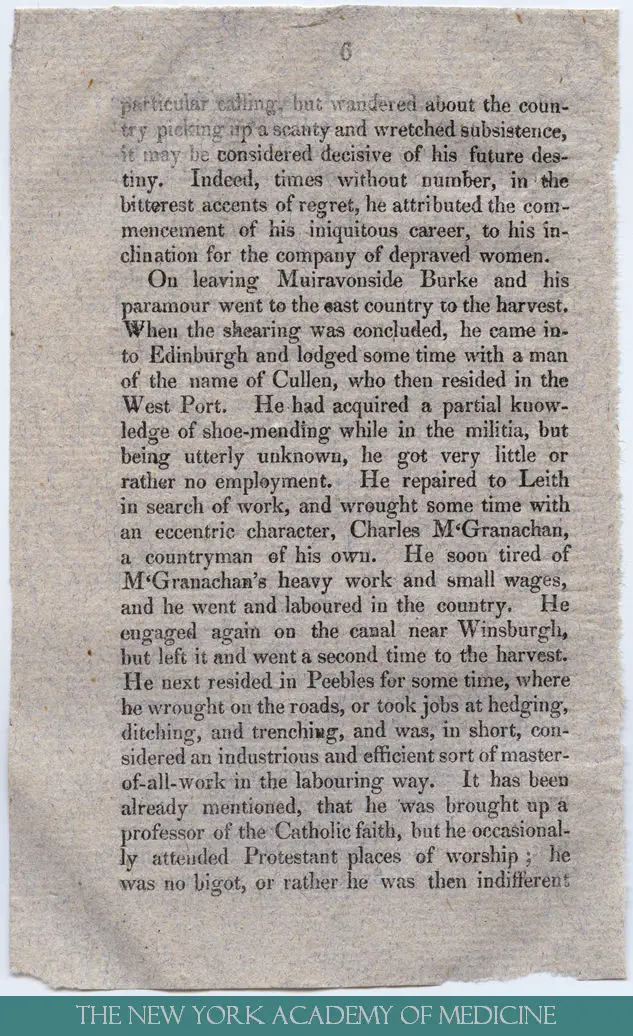
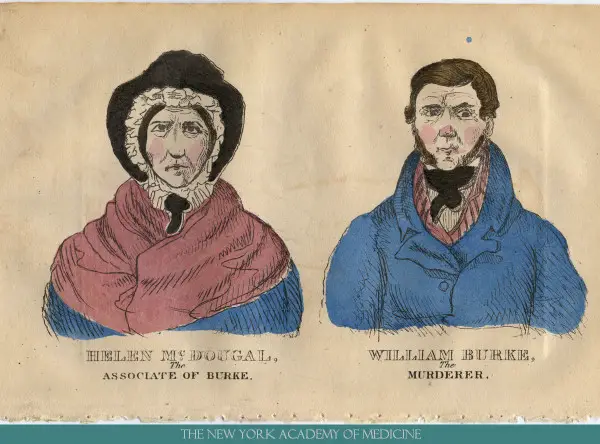
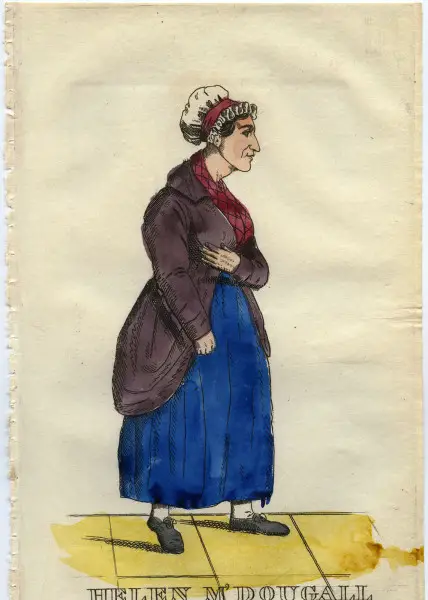
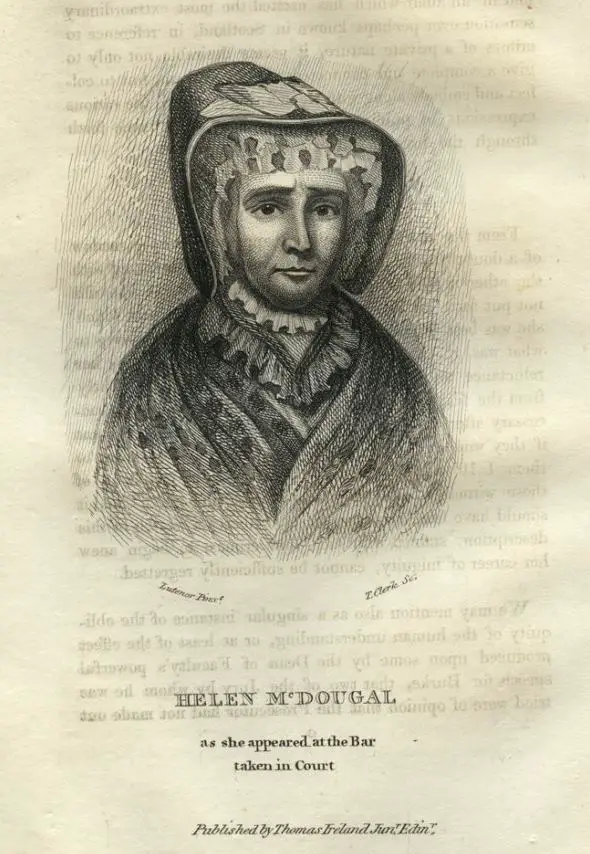
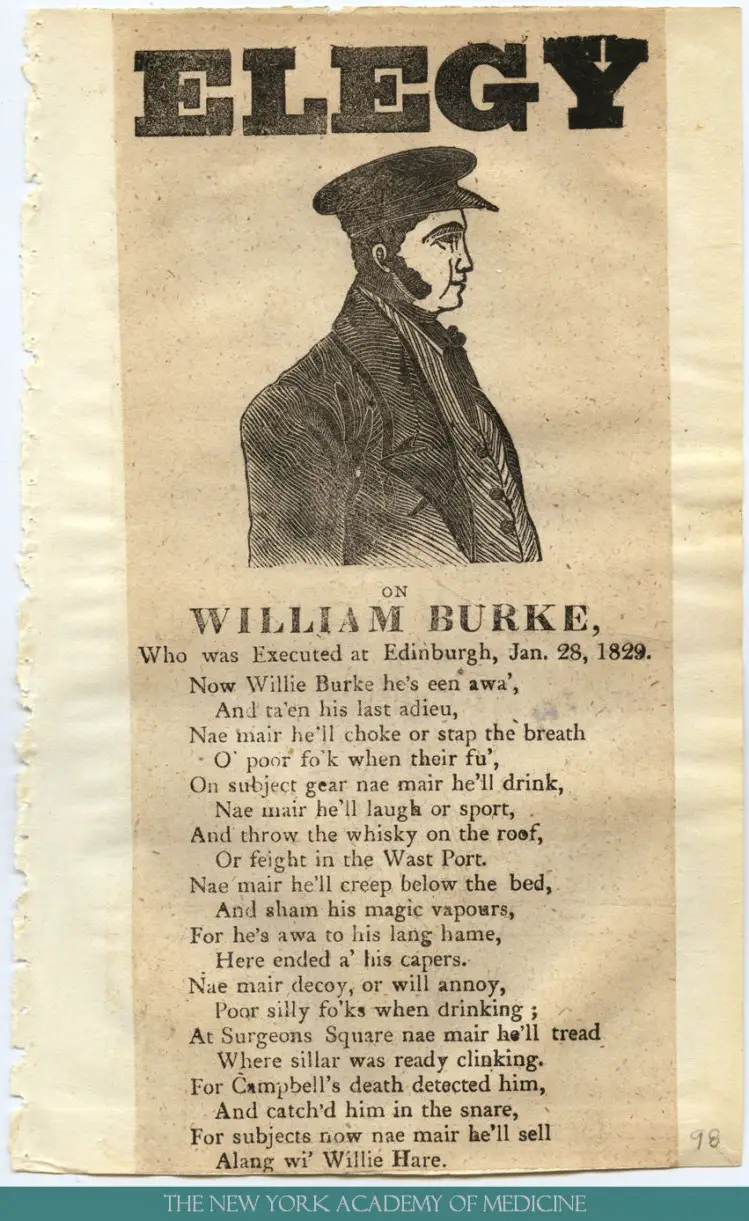
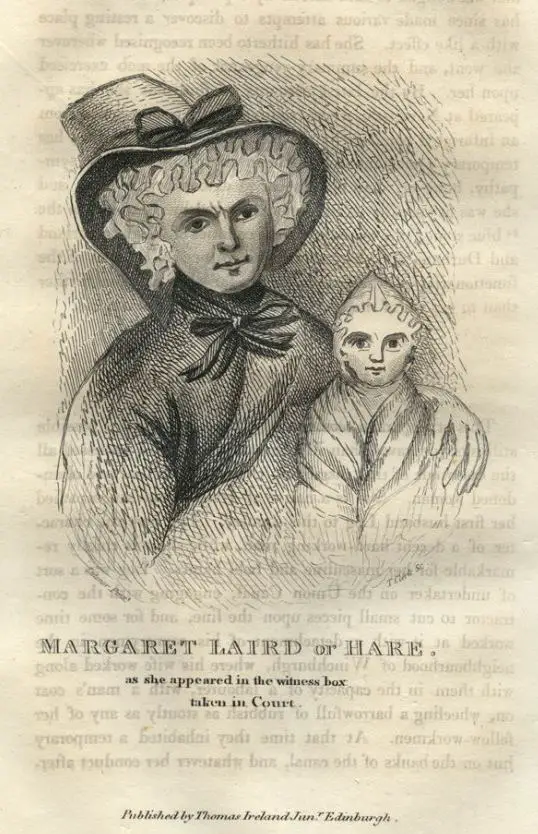
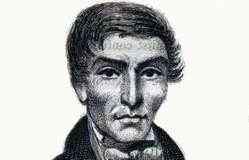
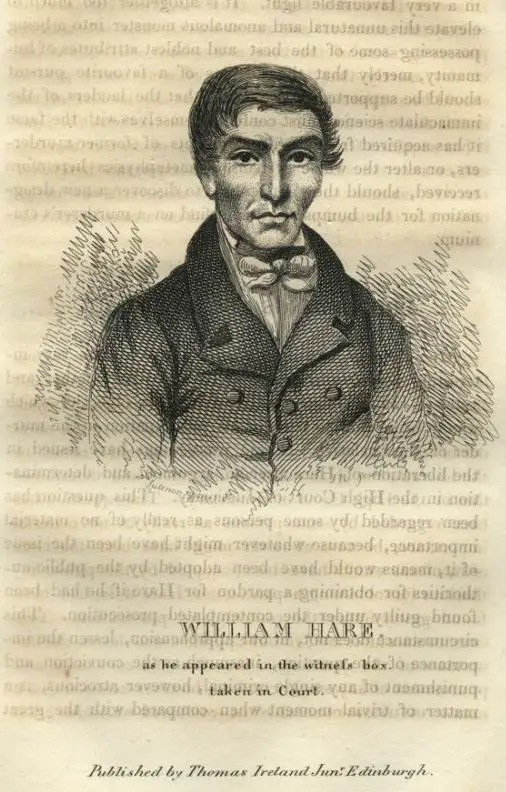
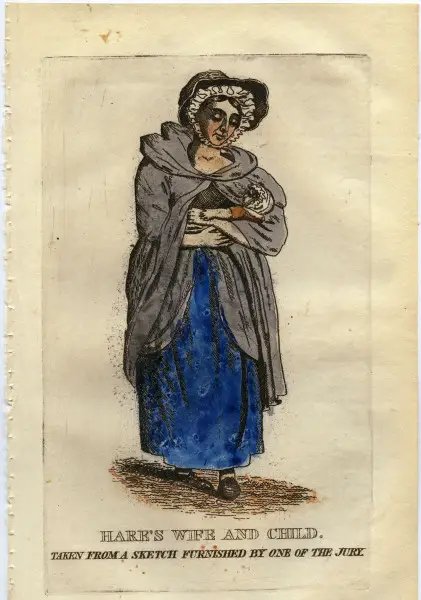
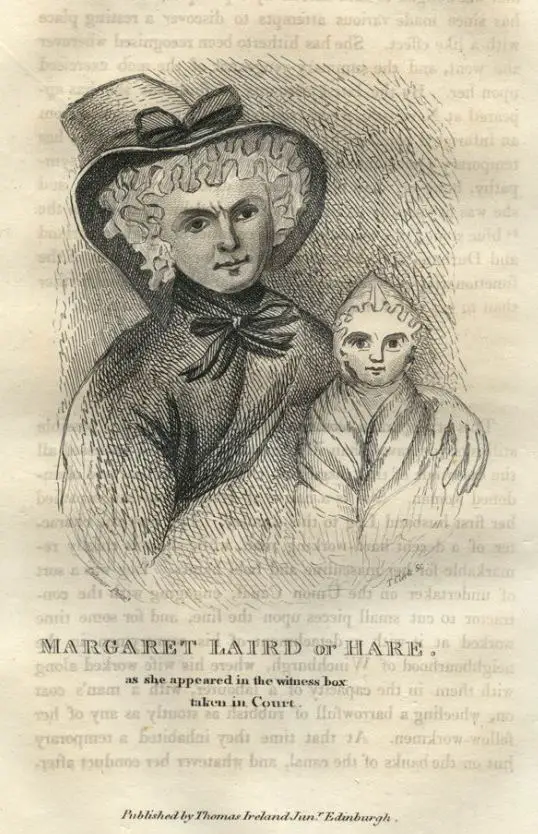
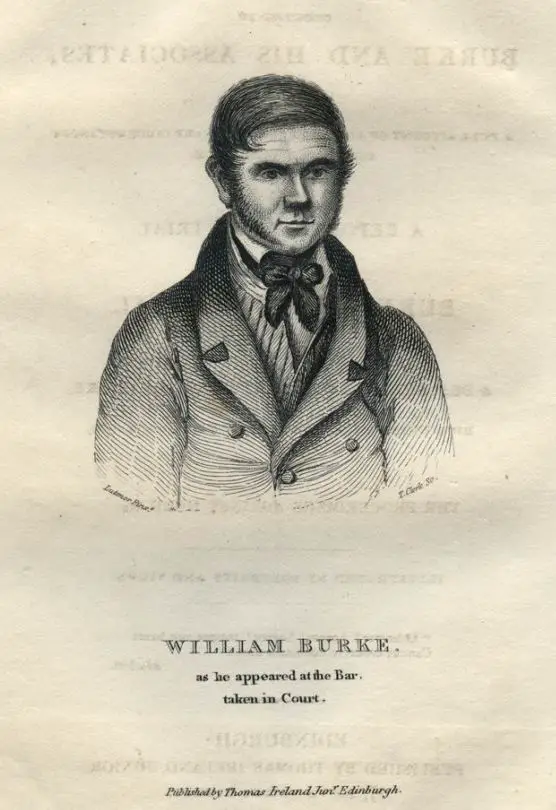
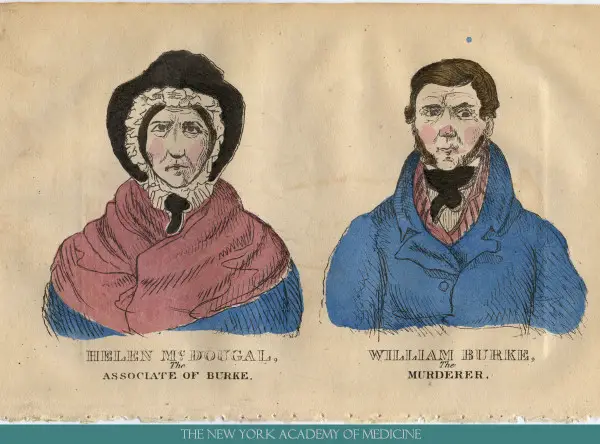
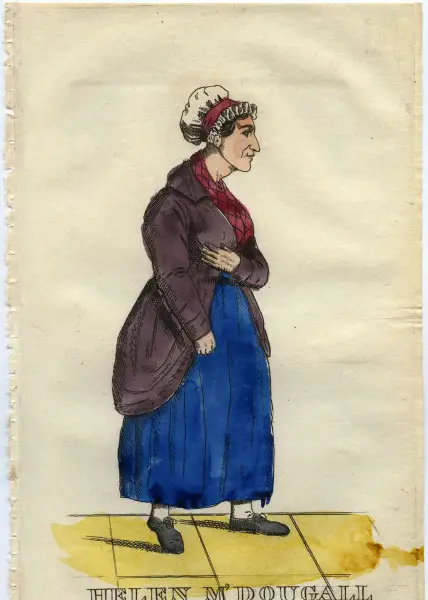
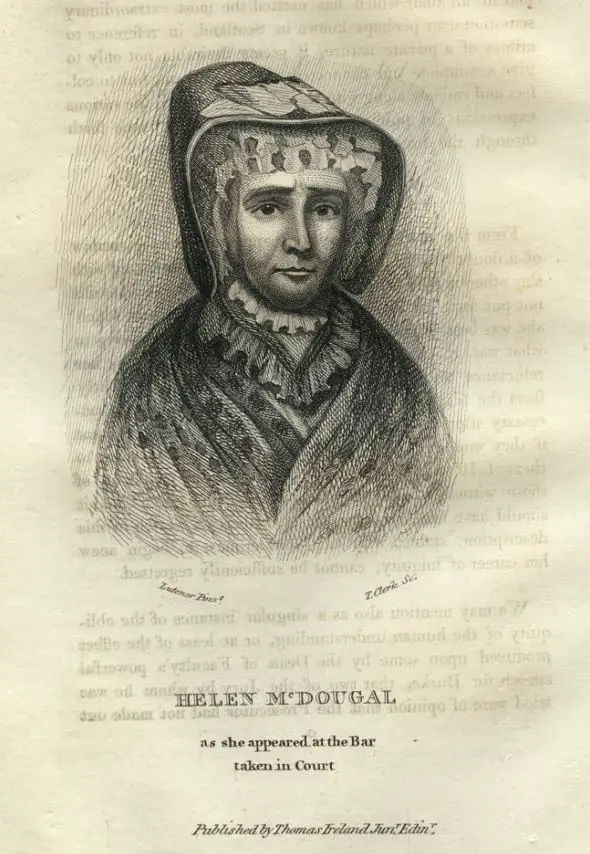
William Burke, an Irish laborer who had worked on the Union Canal before becoming a cobbler, arrived in Edinburgh with his common-law wife Helen McDougal. In late 1827 he lodged at a boarding house in Tanner's Close, West Port, managed by William Hare and Margaret Laird.
On November 29, 1827, an elderly army pensioner named Donald died of natural causes in Hare's lodge, leaving an unpaid rent debt of £4. To recover the money, Burke and Hare unsealed Donald's coffin, substituted the corpse with bark debris, and transported the body in a tea chest to Surgeon's Square. There, they sold the corpse to Dr. Robert Knox, an internationally acclaimed anatomist who taught over 400 private medical students, for £7 and 10 shillings.
Witnessing the effortless profits and recognizing the mortal risks of armed guards patrolling graveyards, Burke and Hare resolved to manufacture their own supply of fresh cadavers.
The Biomechanics of "Burking"
Between January and October 1828, Burke and Hare refined a method of homicide designed to withstand forensic review:
- They invited vulnerable targets—itinerant beggars, sex workers, lonely lodgers, and destitute women—into Hare's rooms.
- They plied them with heavy measures of neat whisky until the victims collapsed into motor helplessness.
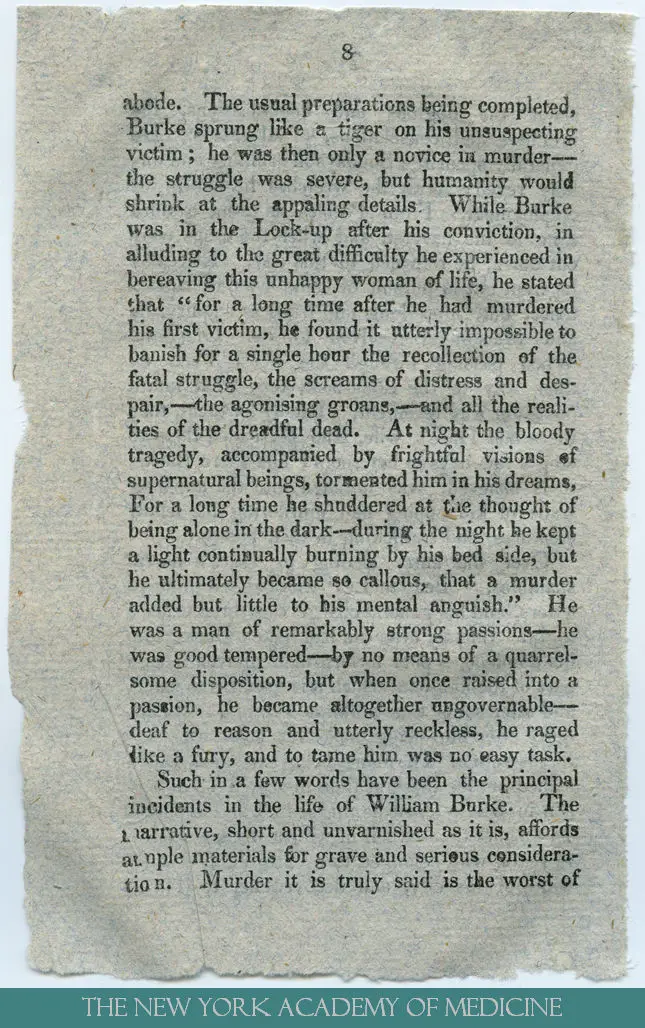
- One accomplice straddled the subject's ribcage, using full bodyweight to inhibit respiratory excursion, simultaneously pressing a hand firmly over the mouth and nostrils while pulling the jaw upward. The second accomplice restrained flailing limbs.
- Death resulted within minutes from clean anoxic asphyxiation.
This murderous technique—entered into world forensic literature as burking—left zero marks of ligature throttling, no fractured hyoid bones, and no visible thoracic contusions. Dr. Knox received warm, fully intact corpses perfectly suited for surgical dissection.
Victims and Eventual Downfall
Over an eleven-month spree, at least sixteen individuals were murdered:
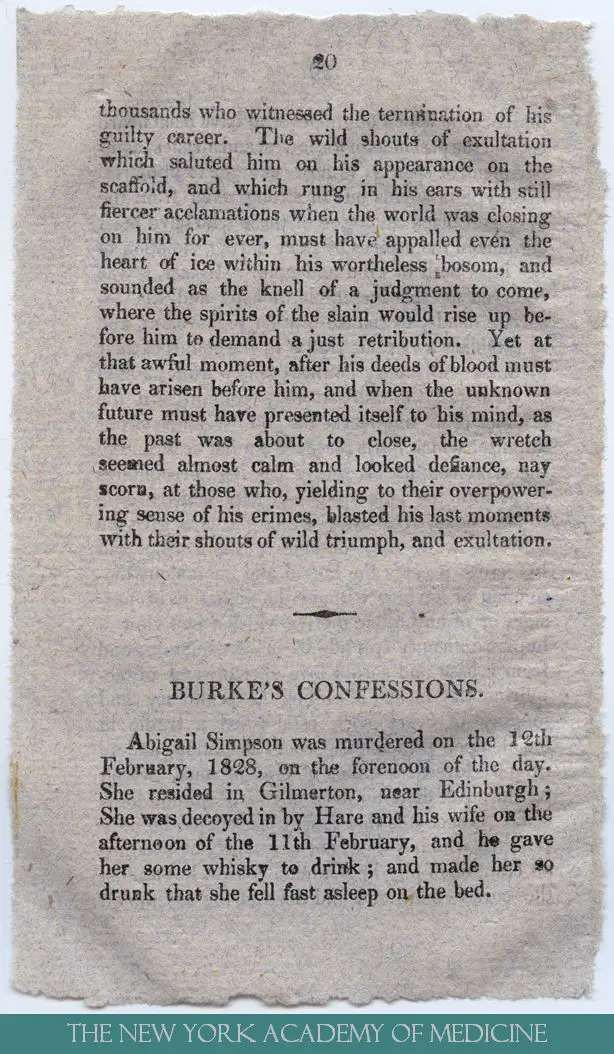
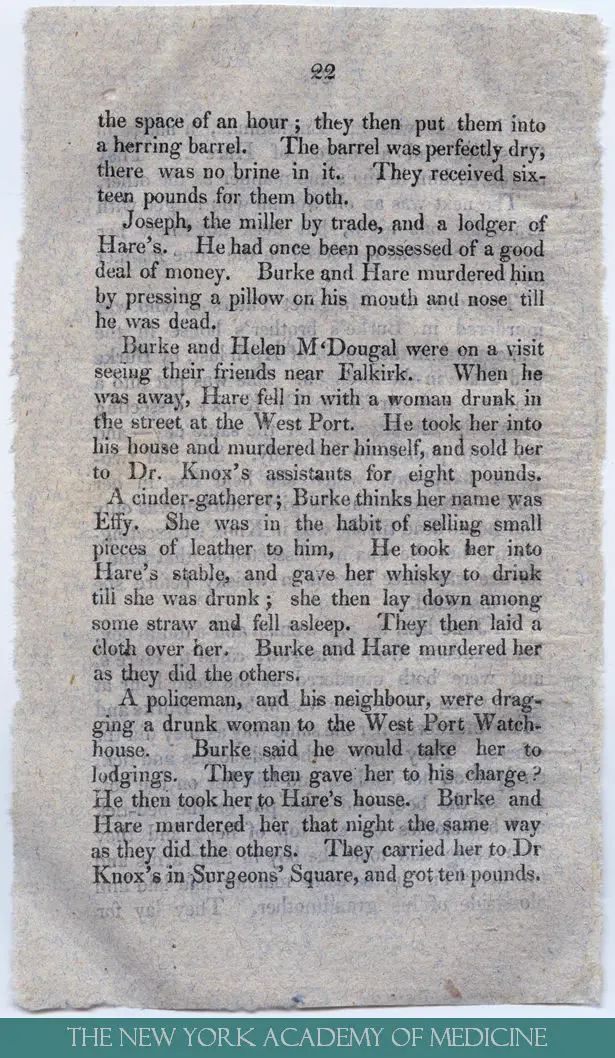
- Abigail Simpson: A destitute matches vendor smothered and sold for £10.
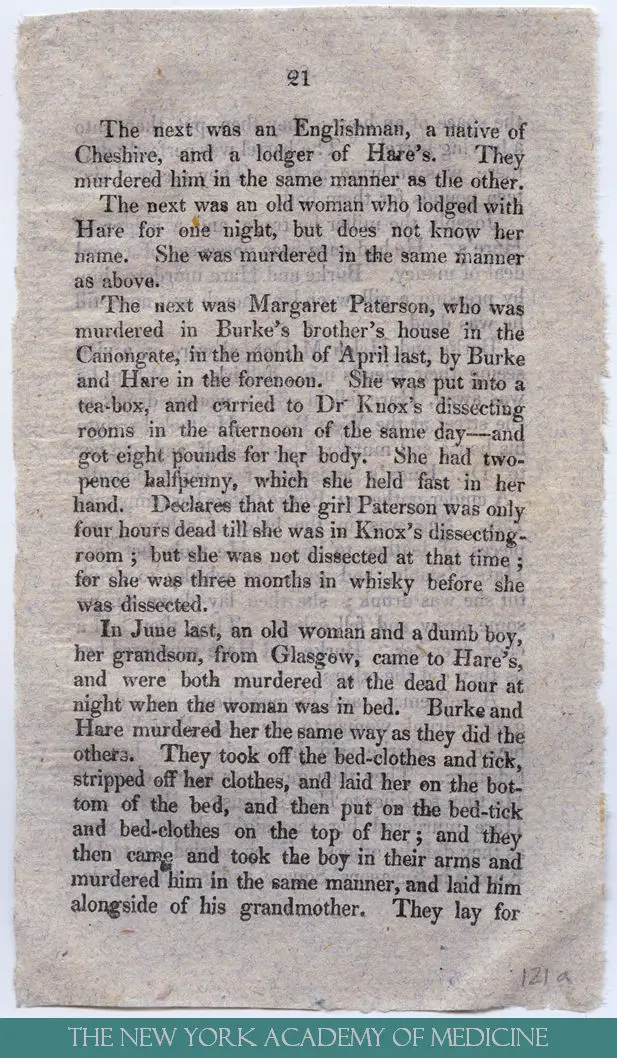
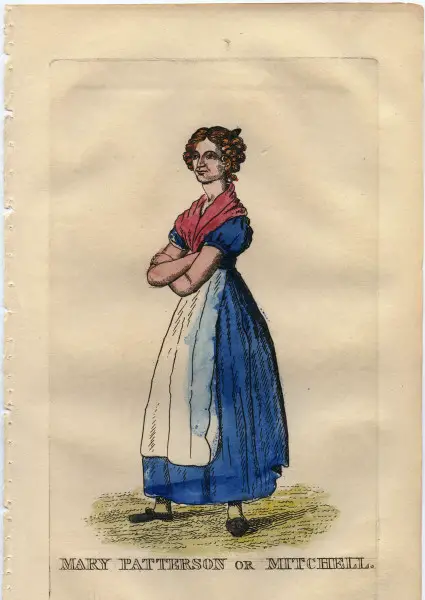
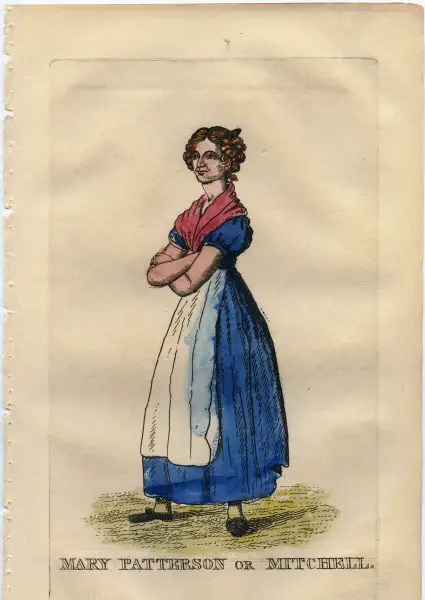
- Mary Paterson (18): An Edinburgh sex worker killed hours after meeting Burke; several medical students recognized her face on Knox's dissection slab, marveling at the corpse's pristine condition.
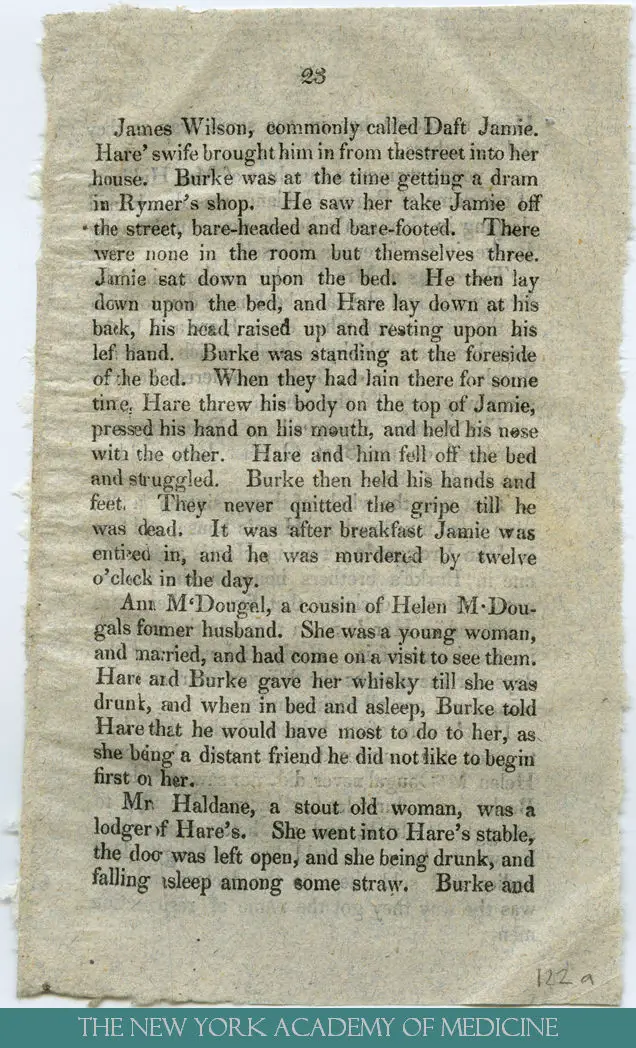
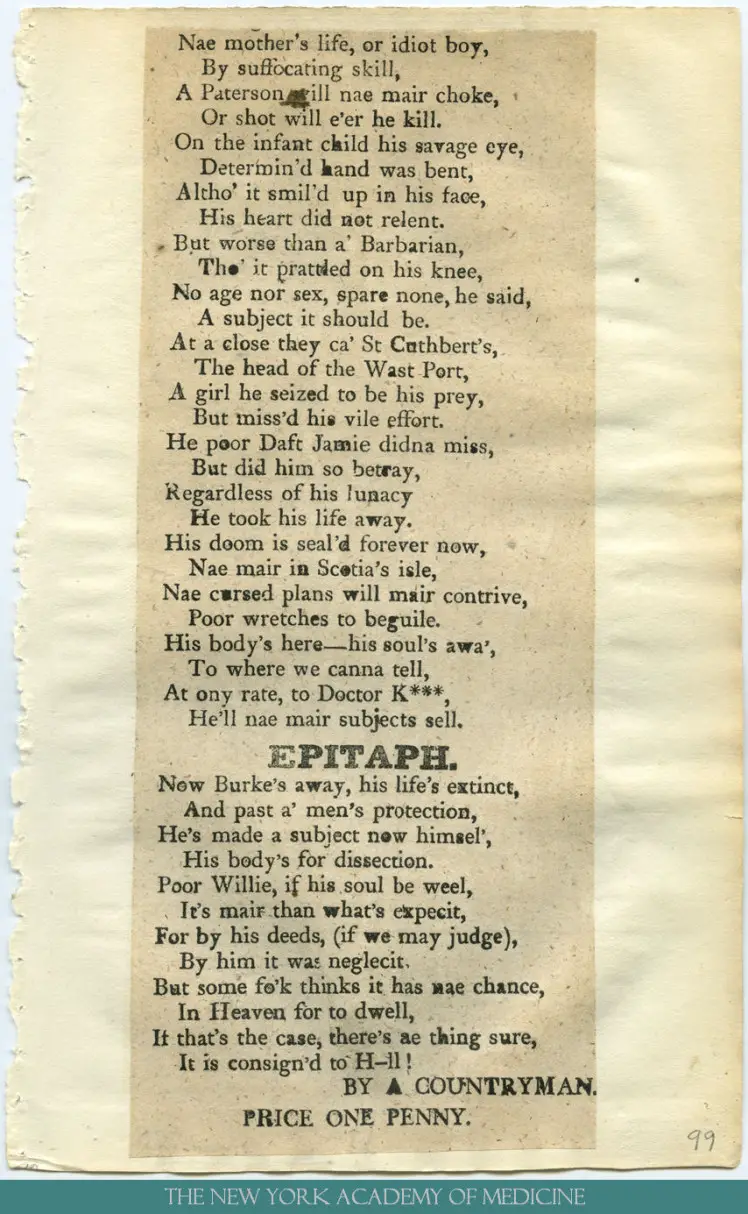
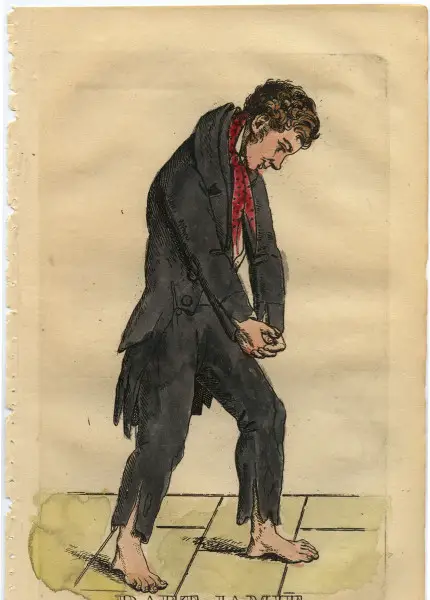
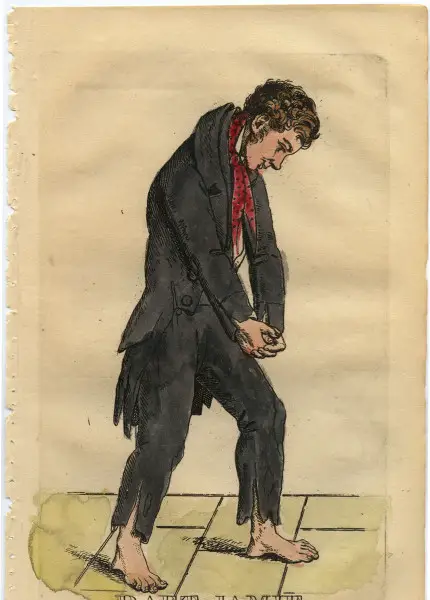
- Daft Jamie (James Wilson, 18): A mentally disabled youth widely known in Edinburgh. Jamie fought desperately against Burke and Hare before being overpowered. When Knox severed Wilson's head and deformed feet to obscure his identity from students, public suspicions reached a boiling point.
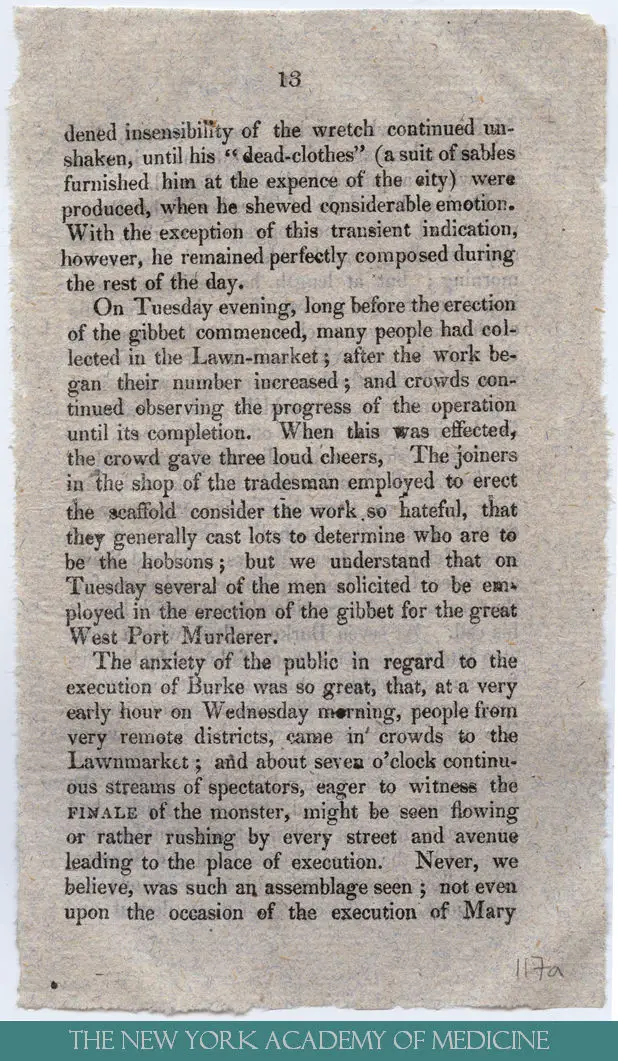
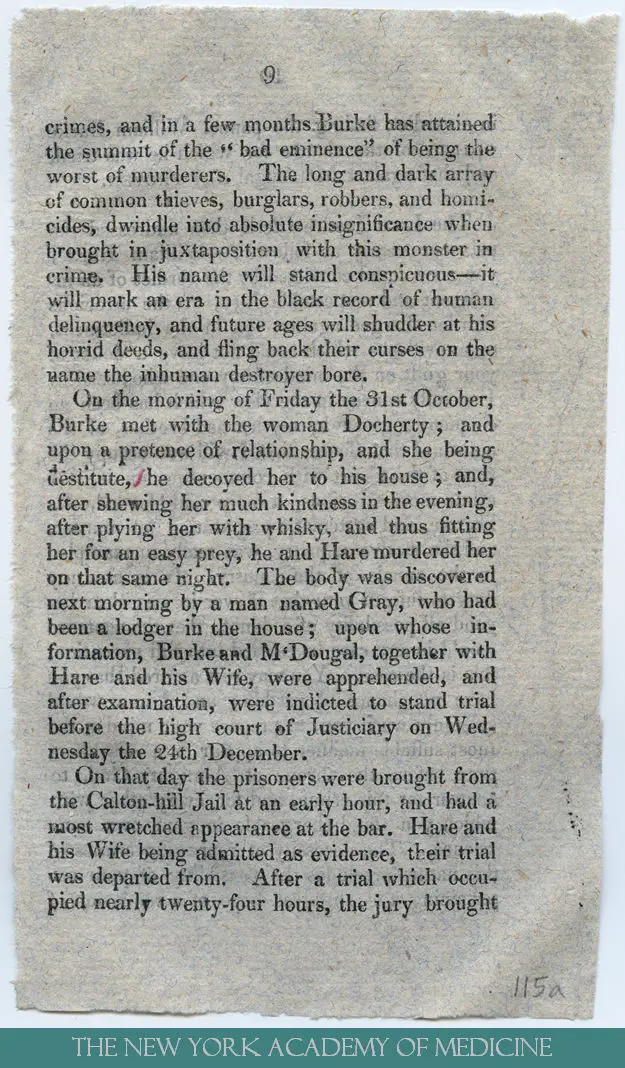
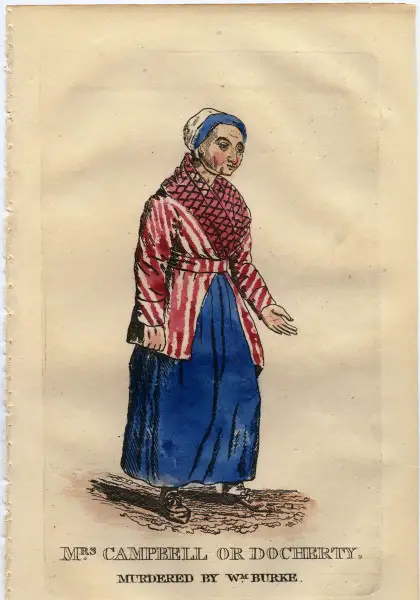
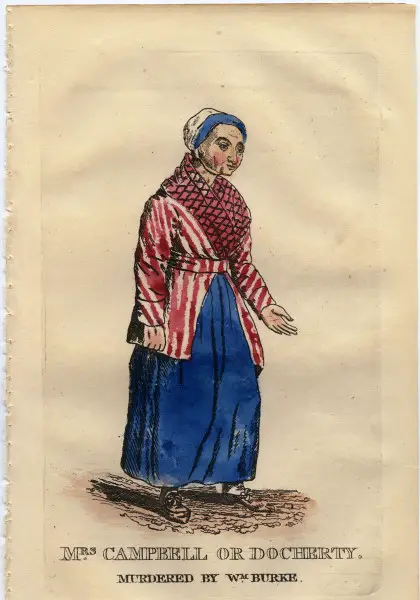
- Margaret Docherty (October 31, 1828): An impoverished Irish woman lured to the lodging house on Halloween. After smothering her, they concealed the body under bed straw. Lodgers James and Ann Gray discovered the hidden corpse and notified the Edinburgh Police.
Crown Evidence Deal and Trial
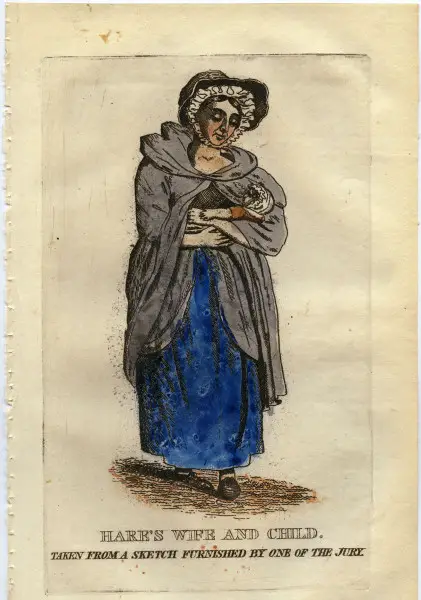
Police arrived at Knox’s dissecting rooms just as Docherty's body was unpacked. Burke, McDougal, Hare, and Laird were jailed.
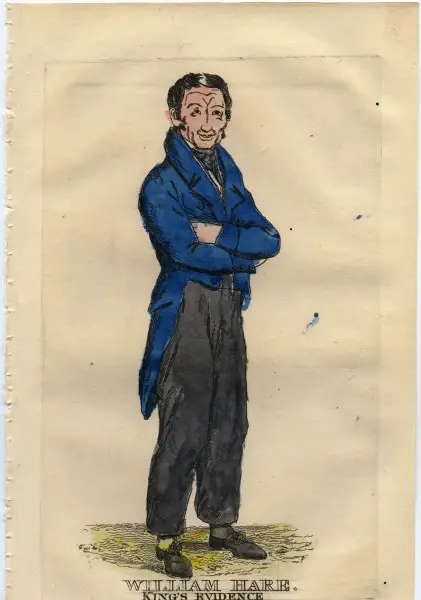
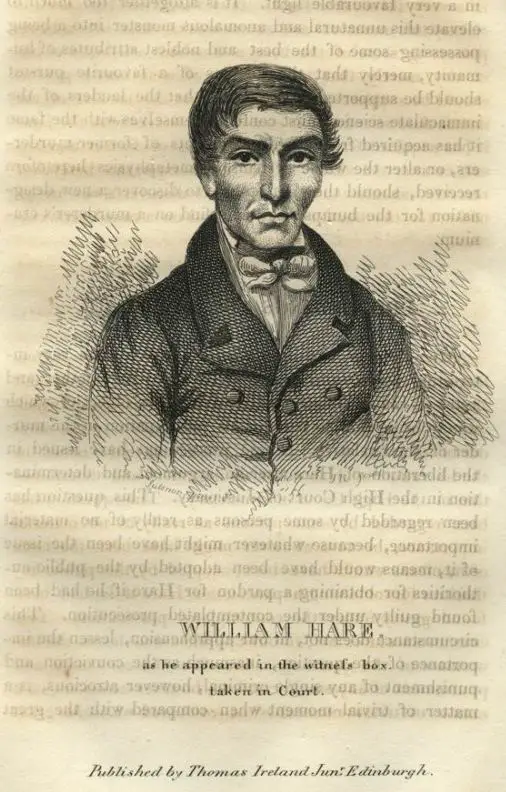
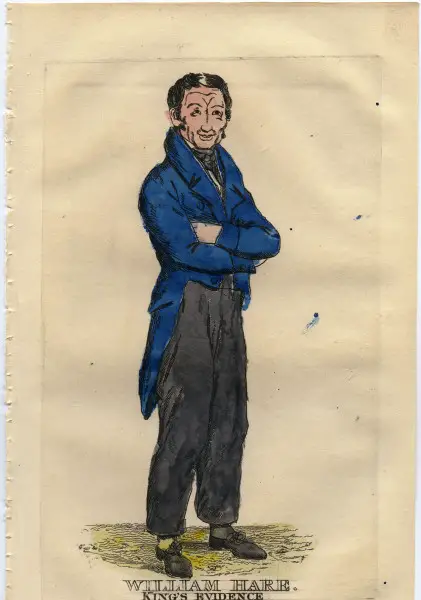
Lacking definitive pathological proof of intentional asphyxia versus alcoholic stupor, Lord Advocate Sir William Rae offered William Hare total prosecutorial immunity (King’s evidence) in return for testifying against Burke. Hare accepted without hesitation.
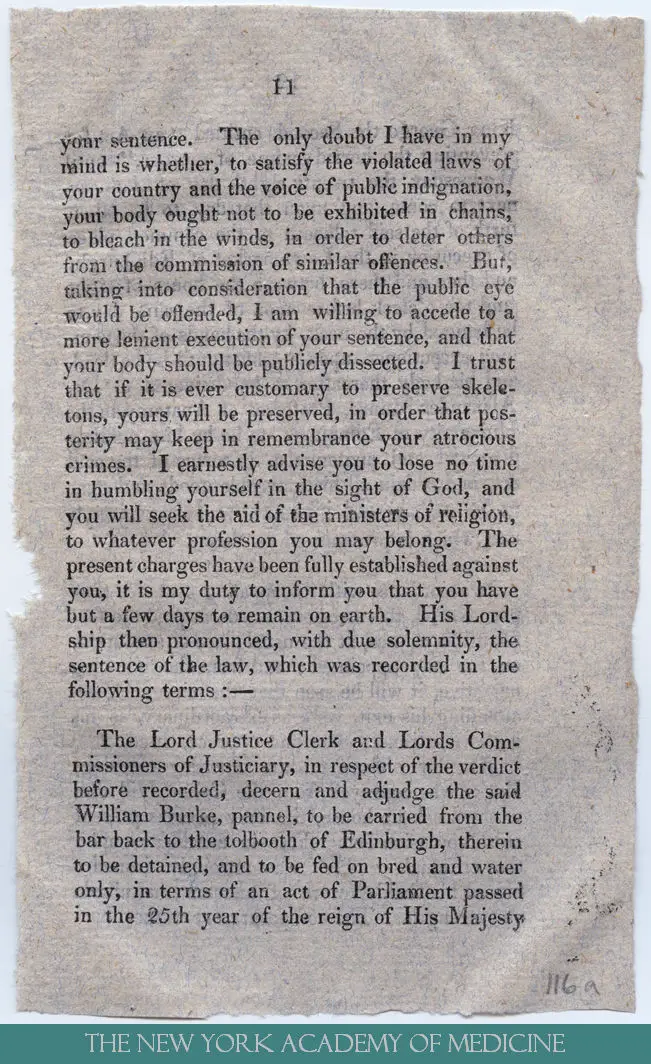
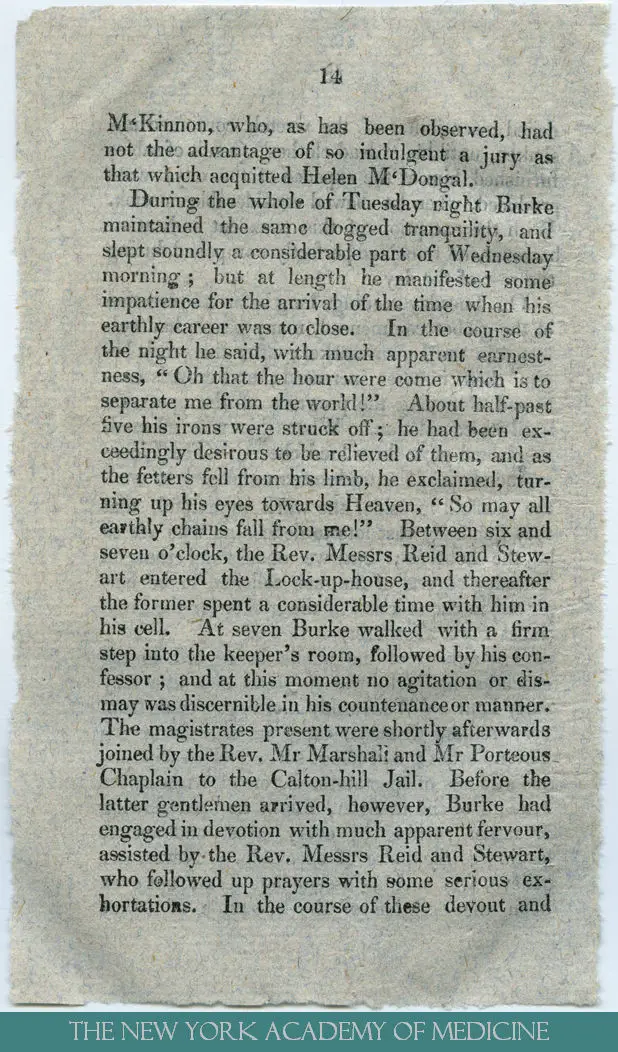
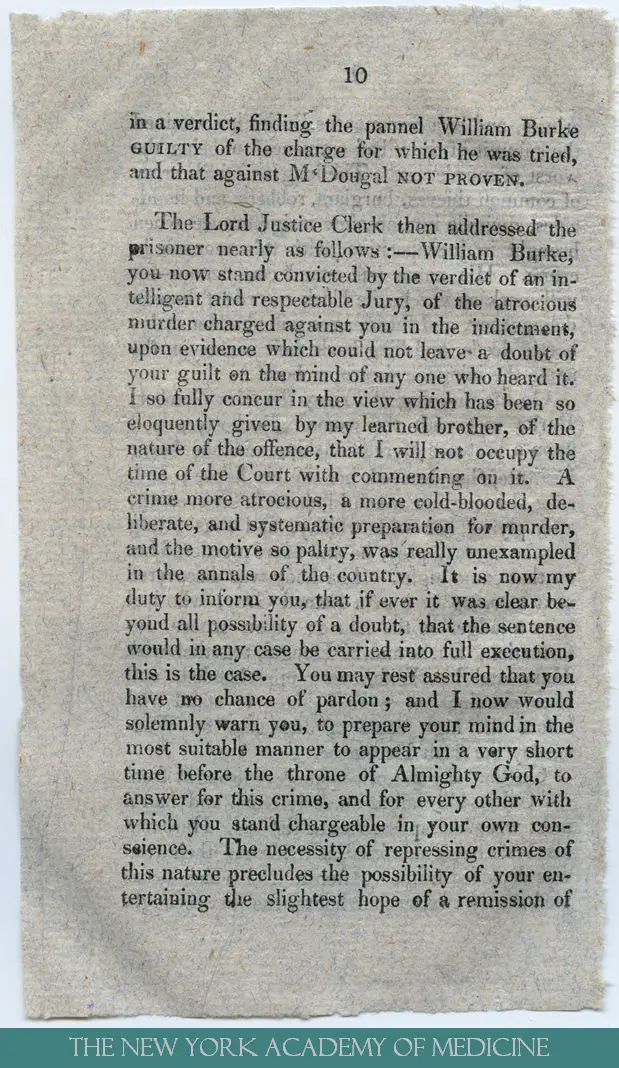
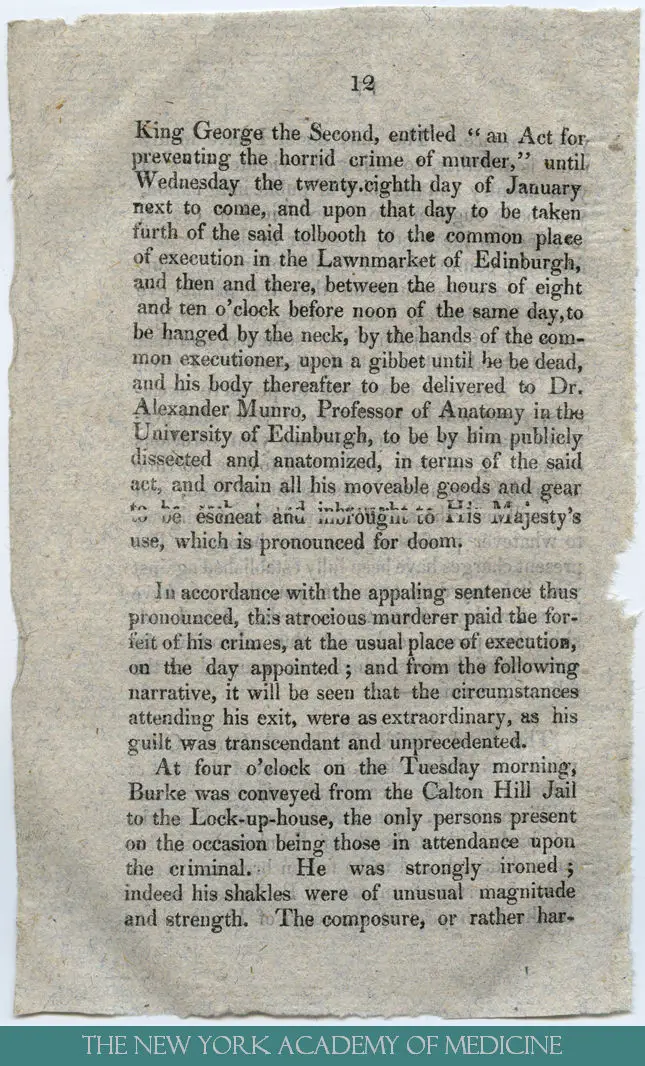
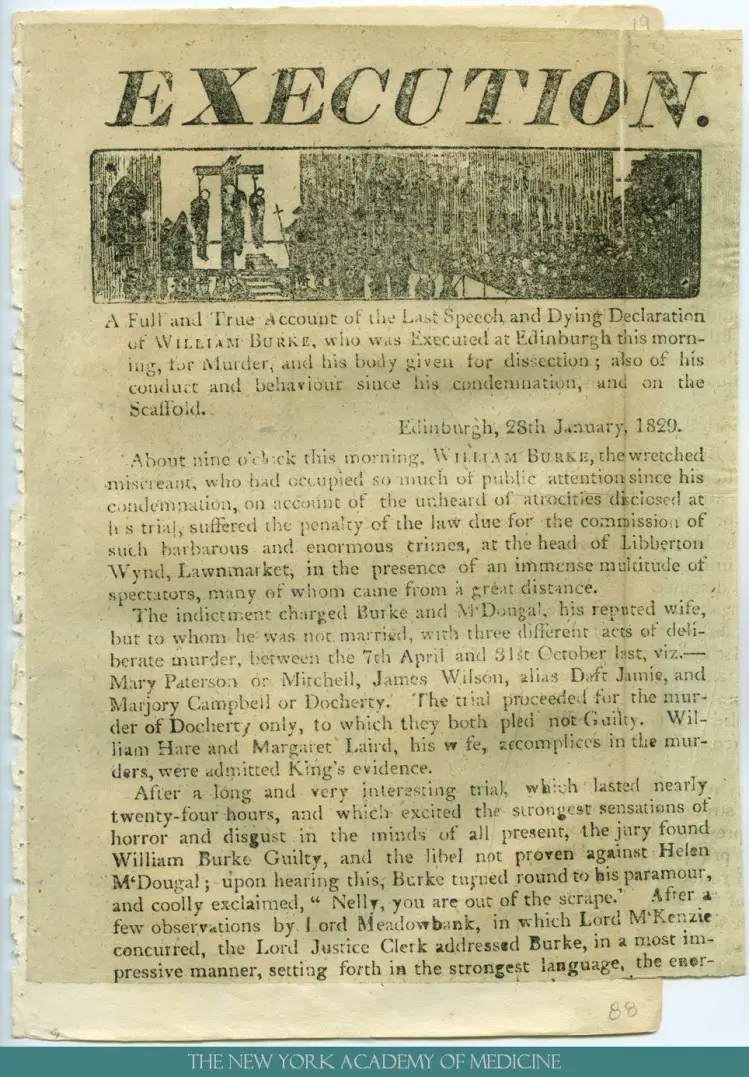
On Christmas Eve 1828, the jury convicted William Burke of Docherty's murder, issuing a "Not Proven" verdict for Helen McDougal. Lord Justice-Clerk David Boyle sentenced Burke to be publicly hanged and anatomized:
"Your body will be delivered to Professor Alexander Monro tertius, that all may witness your dissection, and your skeleton preserved that future generations may remember your abhorrent crimes."
Execution and Legislative Transformation
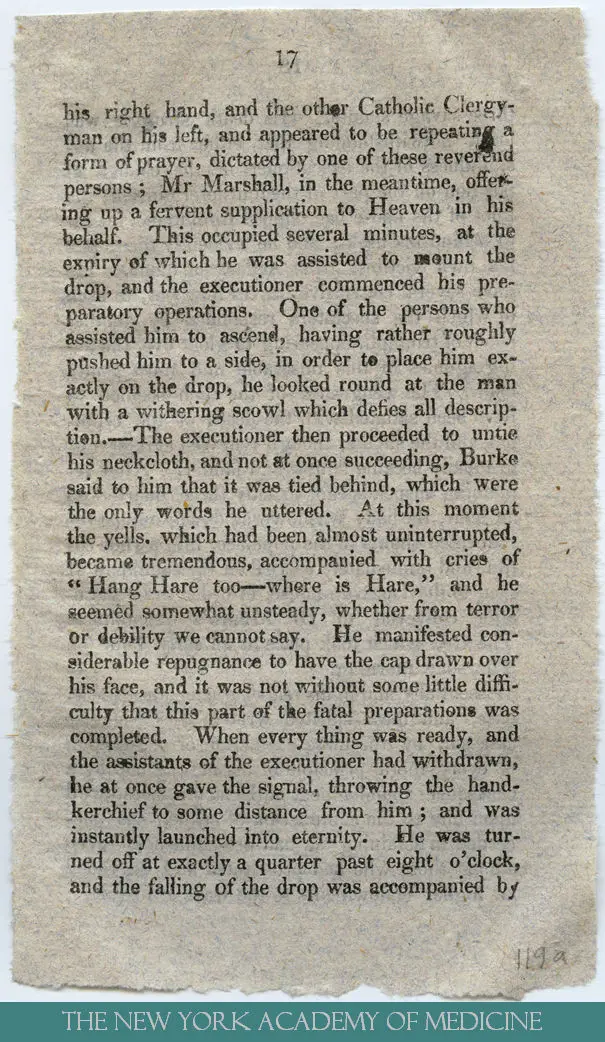
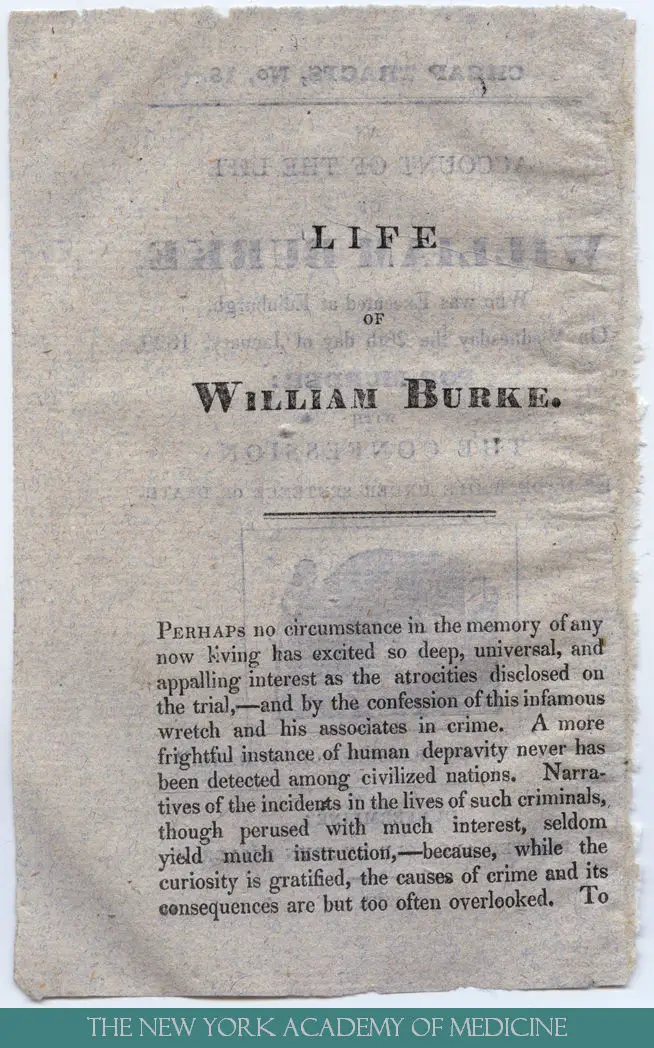
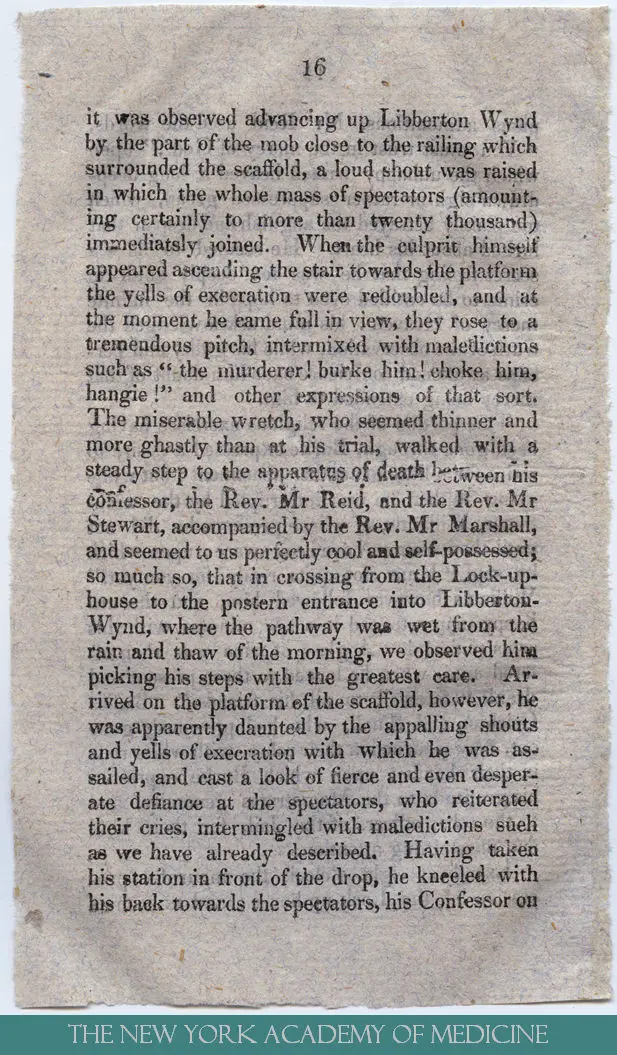
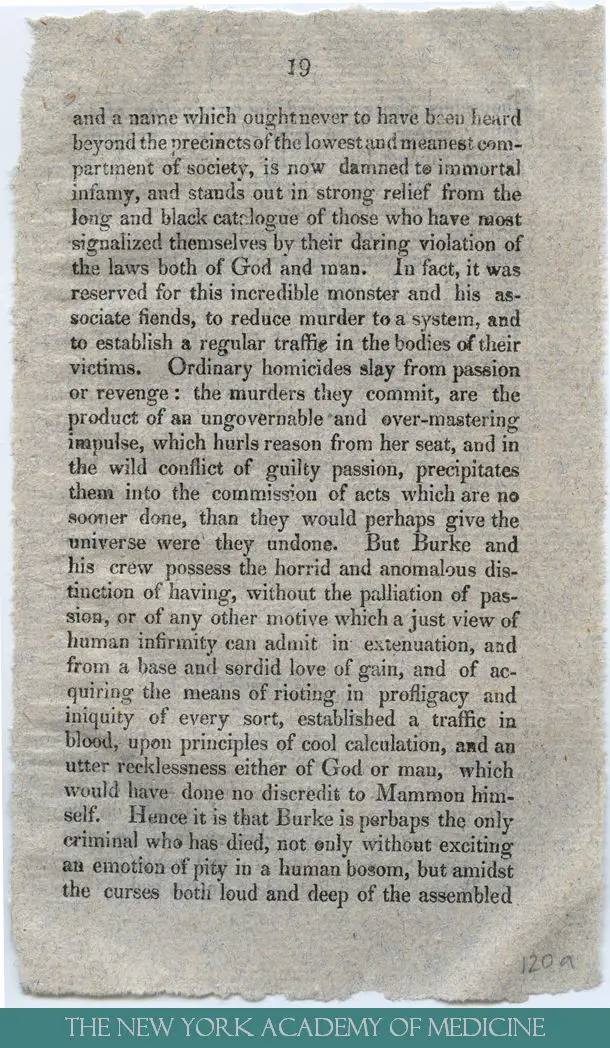
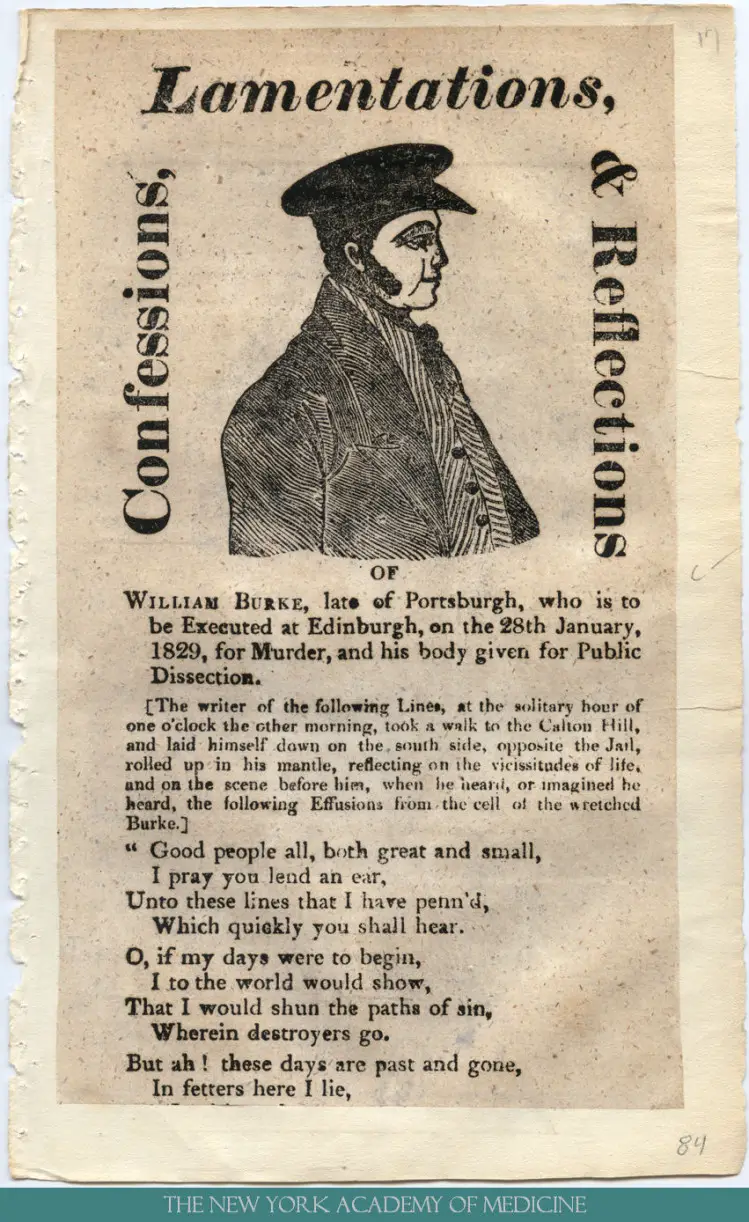
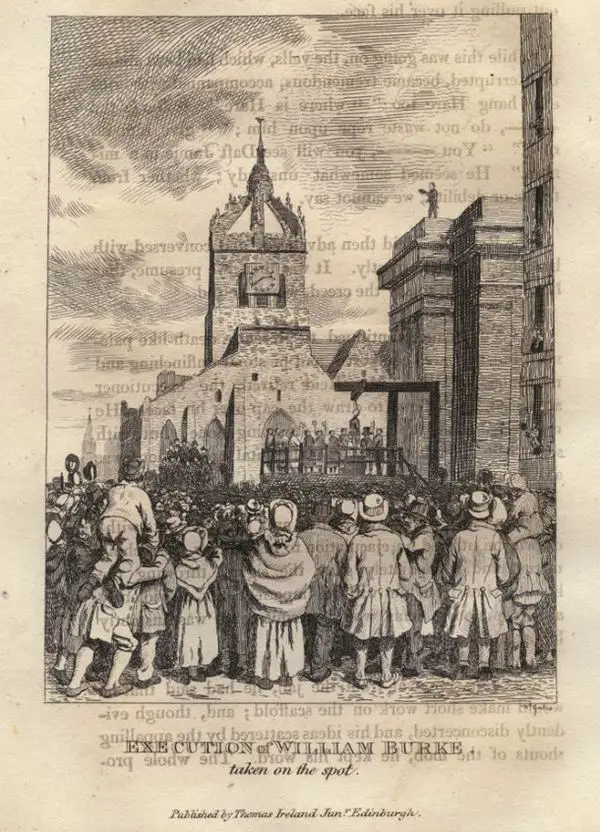
On January 28, 1829, Burke was hanged at the Lawnmarket in front of 25,000 spectators chanting "Burke him!".
The following day, his corpse was transferred to the University of Edinburgh's Old College theater, where Professor Monro publicly dissected his brain and viscera. Burke's skin was stripped, tanned, and used to bind official case registers and pocketbooks, now preserved in the Surgeons' Hall Museum.
The global uproar generated by the West Port Murders directly provoked the passage of the Anatomy Act of 1832 by the British Parliament, creating a regulated system of anatomical body donation and permanently eradicating the illicit grave-robbing economy.