

Forensic & Criminological Matrix
| Parameter | Forensic Detail |
|---|---|
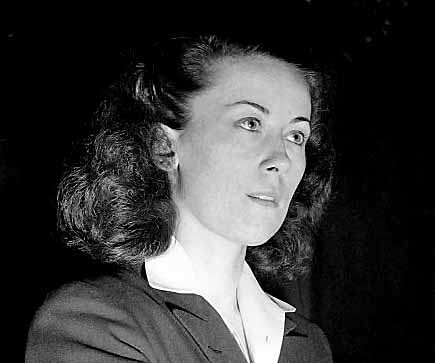
| Full Legal Name | Pauline Dubuisson. |
| Cultural and Jurisprudential Landmark | Her sensationalized 1953 trial epitomized the moralistic misogyny and bourgeois hypocrisy of postwar French society, directly inspiring Henri-Georges Clouzot's classic cinematic masterpiece La Vérité (1960) starring Brigitte Bardot. |
| Criminological Classification | Crime of passion / Rejection-induced homicide / Failed murder-suicide perpetrator. |
| Date of Crime | Saturday, March 17, 1951. |
| Crime Scene | Apartment on Rue Croix-des-Petits-Champs, Paris (France). |
| Fatal Victim | Félix Bailly (aged 25, promising medical student and former fiancé). |
| Weapon Used | FN Browning 6.35mm (.25 ACP) semiautomatic pistol and domestic gas line. |
| Motive | Narcissistic collapse and catastrophic despair following Bailly's definitive termination of their relationship to marry another woman. |
| Judicial Trajectory & Suicide | Sentenced in November 1953 to life forced labor (Travaux forcés à perpétuité); paroled for exceptional conduct in 1960; completed medical qualification and practiced as a physician in Morocco under an assumed identity; committed suicide by barbiturate overdose on September 22, 1963, in Essaouira at age 32 following media exposure. |
Introduction: The Trial of an Unruly Woman
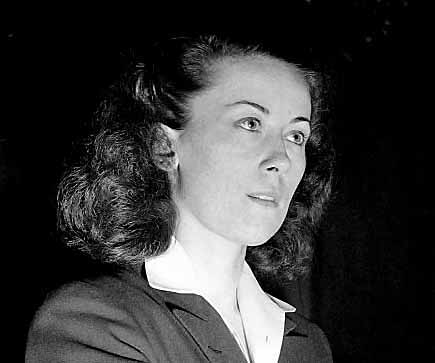
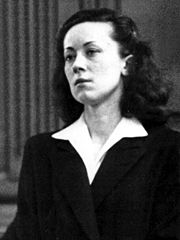
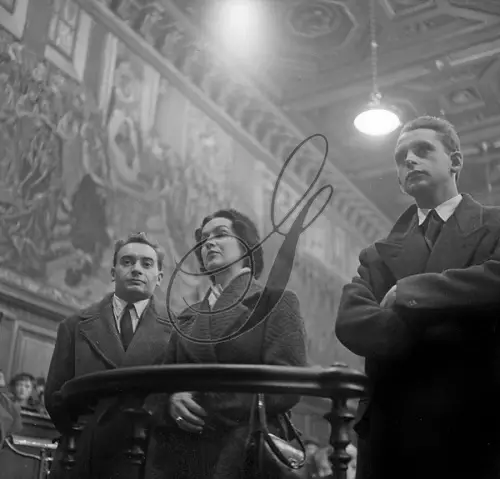
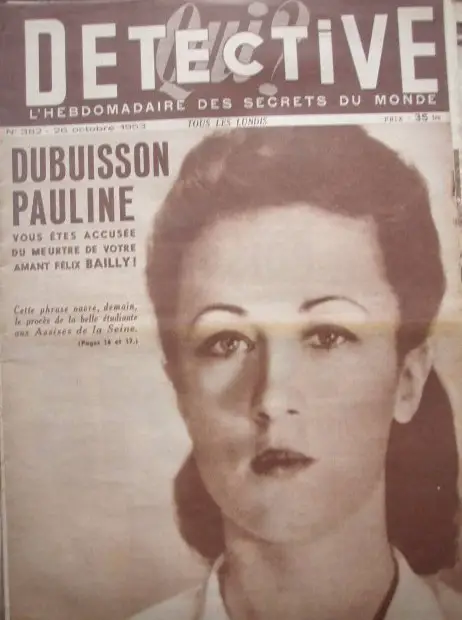
In the autumn of 1953, the Seine Assize Court in Paris was the arena for a judicial spectacle that exposed France's postwar ideological divide. In the prisoner's dock sat not an underworld felon, but a poised, defiant 22-year-old medical student: Pauline Dubuisson.
Charged with shooting her former lover Félix Bailly, the trial quickly degenerated into a public prosecution of Dubuisson's character: her sexual autonomy, her ambiguous survival during the Nazi Occupation, and her refusal to adopt theatrical remorse on command scandalized a patriarchal establishment. Her tragedy stands as an enduring cultural benchmark in postwar European jurisprudence.
Wartime Upbringing and Occupation Trauma
Born in Malo-les-Bains near Dunkirk in 1931, Pauline was raised by an authoritarian father who encouraged his children to socialize with occupying German military officers to preserve his engineering business. As a young adolescent, Pauline entered into a romantic relationship with a German military surgeon, Colonel Von Kress.
Following the 1944 Allied Liberation of Dunkirk, 14-year-old Pauline was seized by local resistance factions, had her head shaved publicly, was stripped, and subjected to severe sexual degradation before expulsion from the town. This foundational trauma hardened her into an emotionally self-reliant, guarded individual who distrusted social conventions.
The Complex Relationship with Félix Bailly
Enrolling at the Faculty of Medicine in Lille, Pauline met Félix Bailly, a conservative, Catholic medical student from an affluent background. An intense, volatile romance ensued:
- Bailly proposed marriage repeatedly, seeking to domesticate her.
- Pauline, fiercely protective of her academic ambitions and autonomy, resisted formal engagement while maintaining an intimate, passionate dynamic.
- Frustrated by her refusal to conform to conventional marital roles, Bailly transferred his studies to Paris, severing contact.
In late 1950, Pauline discovered that Bailly had formally announced his engagement to a compliant, traditional young woman. The news triggered intense jealousy and abandonment trauma.
The Slaying on Rue Croix-des-Petits-Champs
On March 17, 1951, having purchased an FN Browning 6.35mm pocket pistol, Pauline confronted Bailly at his Paris apartment:
- Bailly received her coldly, emphasizing his total devotion to his new fiancée and demanding she leave his life permanently.
- Following an agonizing night of arguments and a final sexual encounter, Bailly ordered her out the next morning to attend a luncheon with his fiancée's parents.
- Shattered by his finality, Pauline drew the firearm from her handbag and fired three shots into Bailly's chest and neck, killing him instantly.
- She immediately initiated suicide: inserting a rubber gas hose into her mouth, she fired a shot into the back of her head, but the small-caliber projectile ricocheted harmlessly along the skull. Responding police discovered her comatose from carbon monoxide poisoning beside the body.
The Sensational Assize Trial
Dubuisson's November 1953 trial became a national media obsession. Tabloids branded her a "bloodthirsty harpy" and "the viper." The prosecution fixated upon her active sex life and her lack of tears, portraying her intellectual detachment as proof of monstrous premeditation.
With public sentiment demanding the guillotine, renowned defense attorney René Floriot successfully appealed to jurors to spare her life. The court sentenced her to life forced labor.
Resurrection in Morocco and Tragic Suicide
Incarcerated at Haguenau women's prison, Dubuisson performed exemplary medical orderly work and continued her studies via correspondence, earning early release in 1960.
Finishing her doctorate in medicine in Paris under complete anonymity, she adopted the identity of "Dr. Andrée Jouve" and relocated to Essaouira, Morocco. Respected as a compassionate physician among impoverished patients, she was courted by a French engineer who proposed marriage.
Her past proved inescapable: the international acclaim of Clouzot's film La Vérité and investigative journalism by French crime tabloids unmasked her identity and location. Ostracized and rejected once more by her fiancé's family, Pauline concluded that society would never grant her peace. On the night of September 22, 1963, she consumed a lethal dose of barbiturates, leaving a brief note: "I wish to sleep at last."