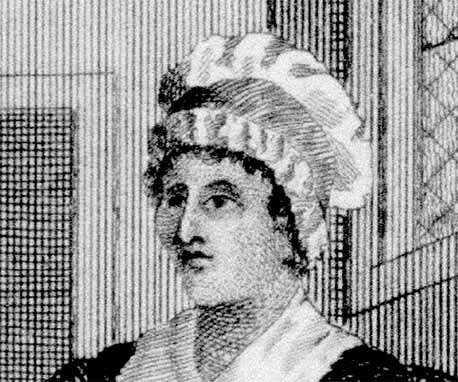



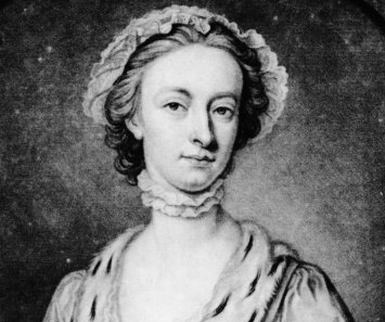
Forensic & Criminological Matrix
| Parameter | Forensic Detail |
|---|---|
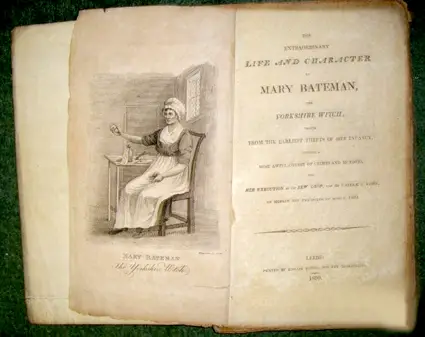
| Full Legal Name | Mary Harker Bateman. |
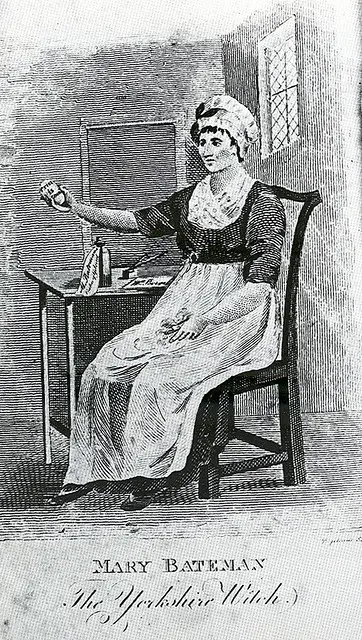
| Historic Moniker | The Yorkshire Witch. |
| Criminological Typology | Utilitarian lethal poisoner / Con artist, fraudulent fortuneteller, and charlatan. |
| Active Window | 1799 – 1808. |
| Location | Leeds and West Yorkshire districts, England, United Kingdom. |
| Proven Fatal Victim | Rebecca Perigo (clothier's wife, murdered via arsenic-laced pudding in May 1807). |
| Additional Suspected Killings | The Kitchin family (three members who died under acute poisoning symptoms in 1803 after retaining Bateman's quack cures). |
| Notorious Hoax | The Prophet Hen of Leeds (1806), wherein she chemically etched "Christ is coming" on eggs and forced them into a hen's oviduct to charge terrified crowds apocalyptic admission fees. |
| Judicial Penalty | Capital execution by hanging followed by anatomical dissection. Hanged at York Castle on March 20, 1809; her skin was tanned into commemorative leather. |
The Evolution of a Charlatan
Mary Harker was born in Ainderby Quernhow near Thirsk, Yorkshire, in 1768. From youth, she exhibited pathological deceit and petty theft, being dismissed from numerous domestic posts for larceny and fraud.
In 1792, she married John Bateman, a reputable wheelwright, and moved to Leeds. Capitalizing on the widespread superstition and medical illiteracy of the early Industrial Revolution working class, Bateman opened a lucrative practice as an astrologer, herbalist, and wise-woman.
She fabricated an elaborate grift around a fictional, reclusive seer named "Mrs. Moore" (and later "Mrs. Blythe"), whom Bateman claimed to consult to ward off evil spirits, infertility, and domestic curses. In exchange, fearful clients surrendered large sums of cash, silver plate, and fine linens to be sewn into "magical counter-hex pouches."
The "Prophet Hen of Leeds" Hoax (1806)
In 1806, Bateman engineered one of the most eccentric hoaxes in British folklore: she announced that one of her hens was laying miraculous eggs warning of the impending Apocalypse, each bearing the raised corrosive inscription: "Christ is coming". Hundreds of terrified Yorkshire citizens paid pennies to view the supernatural hen.
The fraud collapsed when an alert town physician concealed himself in her outhouse and caught Bateman chemically treating an egg with corrosive acid and forcibly reinserting it into the fowl's cloaca.
The Arsenic Murder of Rebecca Perigo (1807)
In late 1806, William Perigo and his ailing wife Rebecca, of Bramley near Leeds, retained Bateman to lift a perceived demonic affliction.
For over a year, Bateman fleeced the couple of their savings and furniture, requiring all valuables to be sewn into sealed silk cushions under instructions that opening them would break the spell.
By spring 1807, realizing the Perigos would soon inspect the pouches (which held only rusted metal scrap and waste paper), Bateman resolved to silence them. She supplied Rebecca with "magical honey and powder packets", instructing the couple to bake them into a festive batter pudding and forbidding them from consulting medical doctors.
The powder consisted of arsenic trioxide and corrosive sublimate (mercury chloride). Upon eating the pudding, both fell gravely ill with violent spasms and internal hemorrhaging. Rebecca Perigo perished in agony on May 24, 1807; William survived after a protracted convalescence.
Trial, Execution, and Tanned Skin Souvenirs
In October 1808, William Perigo broke the protective bags, discovered the fraud, and orchestrated a sting that trapped Bateman in Leeds. Chemical analysis of the remaining pudding confirmed heavy arsenic poisoning.
At the York Assizes in March 1809, Bateman was convicted of wilful murder. When sentenced, she attempted to delay the gallows by falsely pleading pregnancy ("plea of belly"), which a panel of twelve local matrons instantly dismissed after physical inspection.
On March 20, 1809, Mary Bateman was hanged at York Castle before a crowd exceeding 20,000 spectators.
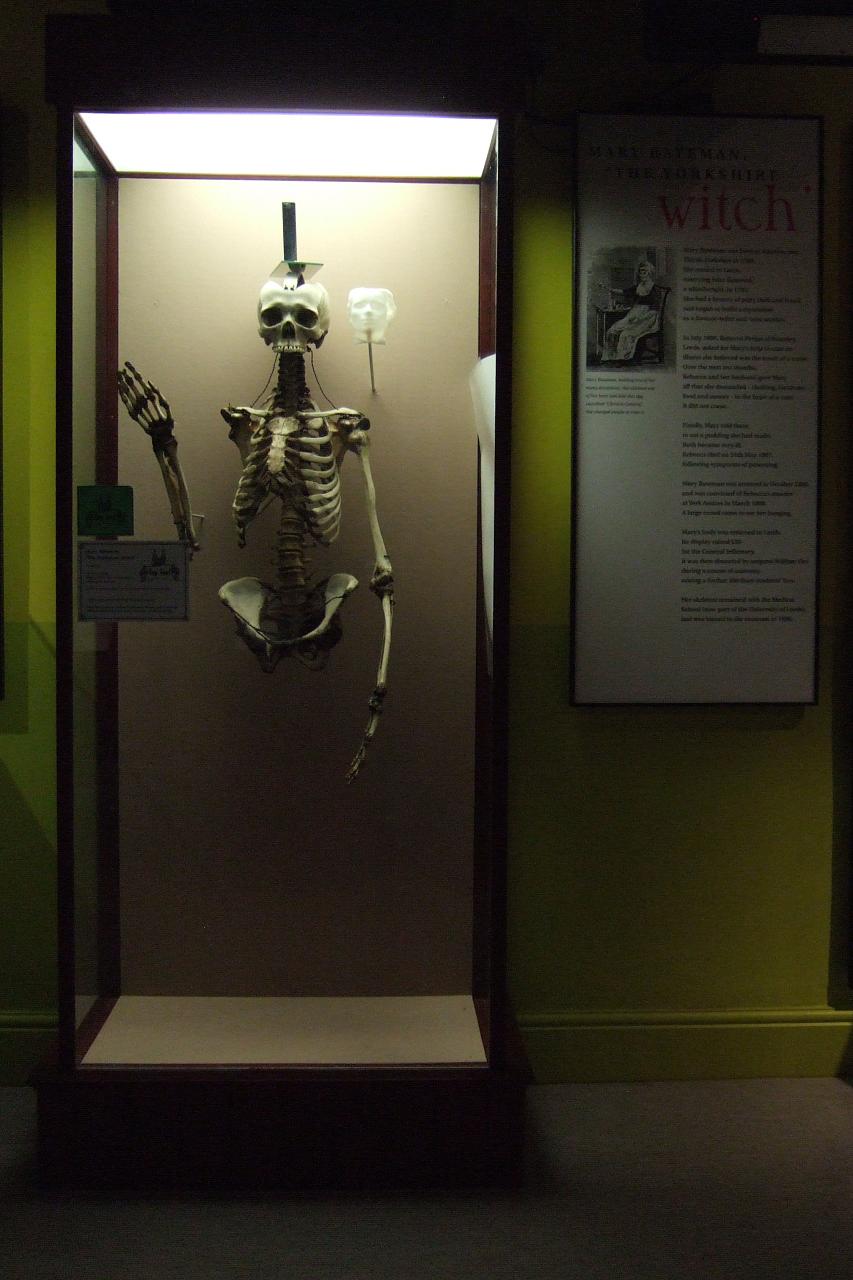
Under the provisions of the 1752 Murder Act, her body was delivered to Leeds Infirmary for public anatomical dissection. In a bizarre morbid sequel, strips of her skin were flayed, tanned into leather, and sold as lucky charms. Her articulated skeleton remained on public display at the Leeds University Medical School for nearly two centuries.