



Charlotte Bryant: The Dorset Arsenic Enigma, Rural Infidelity, and the Forensic Controversy of Dr. Roche Lynch
Executive Summary
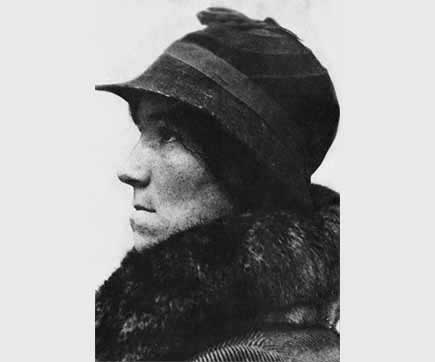
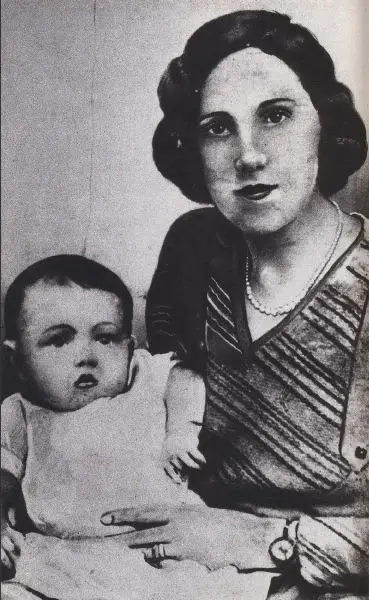
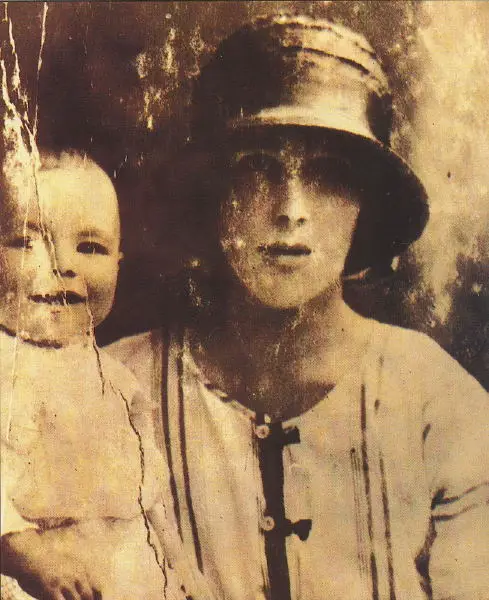
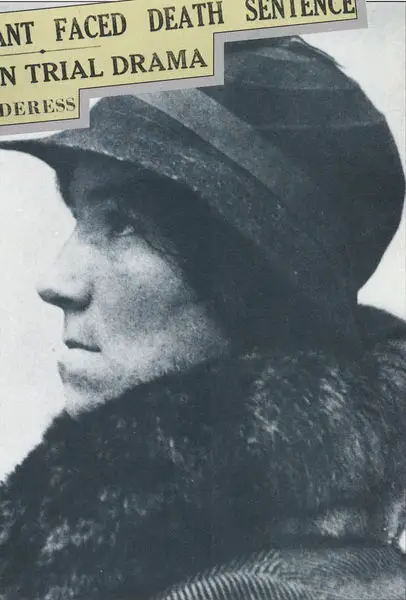
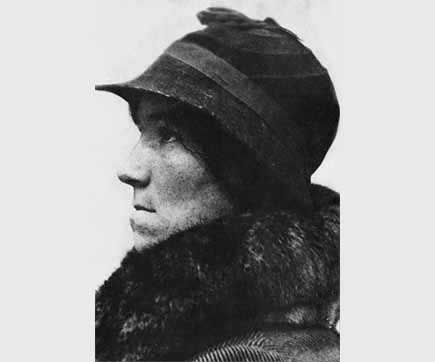
Charlotte Bryant (née Charlotte McHugh; 1904 – July 15, 1936), popularly known across rural interwar England as «Black Bess» and «Killarney Kate», was a Northern Irish woman condemned to death and executed by hanging for the arsenic poisoning of her husband, agricultural farm laborer Frederick Bryant (39). Tried before the Dorchester Assizes in May 1936 amid intense public interest, the prosecution represented one of the most contentious forensic trials of the 1930s in the United Kingdom, intertwining allegations of rural promiscuity and adultery with an acrimonious scientific clash concerning the reliability of Home Office chemical analyses.
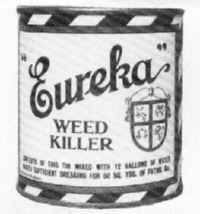
The victim died in December 1935 following violent gastrointestinal paroxysms initially diagnosed by the local practitioner as acute gastroenteritis. A subsequent autopsy and toxicological examination conducted by senior British government analyst Dr. Gerald Roche Lynch identified 4.09 grains of arsenic (approximately 265 milligrams) within Frederick's vital organs, allegedly sourced from commercial powdered herbicide (Eureka Weed Killer) administered in bowls of hot beef broth (Oxo). Crown counsel, led by Solicitor General Sir Terence O'Connor, argued that Charlotte murdered her spouse to facilitate a romantic liaison with Leonard Parsons, an itinerant Romani horse dealer and peddler who lodged in the family's tied cottage in Coombe.
Although Charlotte—an illiterate woman of limited intellectual capacity—steadfastly proclaimed her innocence and denied all knowledge of poisons, the jury returned a guilty verdict after one hour of deliberation, and Mr. Justice Sir Richard MacKinnon passed the death sentence. Following the trial, a scientific controversy erupted: Professor William Arthur Bone, Chair of Chemical Technology at Imperial College London, publicly asserted that Dr. Roche Lynch's calculations of arsenic in the household copper fire-grate ashes were vitiated by an elementary error, demonstrating that English coal naturally contains baseline arsenic levels far exceeding the Crown expert's assumptions. Despite parliamentary petitions organized by Labour MP Sir Stafford Cripps, the Court of Criminal Appeal in London declined to hear the new chemical evidence, and Charlotte Bryant was hanged at Exeter Prison on July 15, 1936.
Forensic & Criminological Matrix
| Parameter | Forensic Detail |
|---|---|
| Legal Identity | Charlotte Bryant (née Charlotte McHugh) |
| Public Identity | Charlotte Bryant |
| Criminological Aliases | "Black Bess" / "Killarney Kate" / "The Dorset Poisoner" |
| Date of Birth | c. 1904 (Londonderry / Derry, Northern Ireland, U.K.) |
| Date of Death | July 15, 1936 (Exeter Prison, Devon, England; aged 32) |
| Medical Cause of Death | Judicial execution by hanging (cervical fracture via long-drop table) |
| Executioners | Thomas Pierrepoint (lead executioner) assisted by Thomas Phillips |
| Criminological Classification | Spousal Poisoner / Arsenic Homicide |
| Confirmed Fatalities | 1 (Frederick Bryant, aged 39, farm laborer and Dorsetshire Regiment veteran) |
| Lethal Substance Employed | Arsenic trioxide (derived from tins of Eureka Weed Killer) |
| Forensic Dose Detected | 4.09 grains (265 mg) of unabsorbed arsenic isolated from stomach, liver, and kidneys |
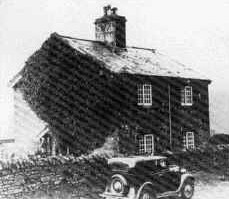
| Crime Scene | Tied farm laborer cottage in the hamlet of Coombe, near Sherborne, Dorset |
| Lead Crown Toxicologist | Dr. Gerald Roche Lynch (Senior Home Office Forensic Analyst) |
| Trial Court | Dorchester Assizes, presided over by Mr. Justice Sir Richard MacKinnon |
| Forensic Controversy | Rebuttal by Prof. William Arthur Bone (Imperial College) proving high natural arsenic in coal ash |
| Final Disposition | Executed by hanging; interred in quicklime within Exeter Prison grounds |
Origins in Londonderry, Marriage, and Dorset Rural Life (1904–1933)
Charlotte McHugh was born and raised in the working-class districts of Londonderry, Northern Ireland. Illiterate and raised in deep poverty, she possessed striking dark features, black hair, and an extroverted temperament, acquiring the youthful nickname "Darkie":
- During the Anglo-Irish War and Troubles of the early 1920s, Charlotte frequented British regimental garrisons, attracting local Republican scrutiny.
- In 1922, she met Frederick Bryant, an English soldier eight years her senior serving with the Dorsetshire Regiment Military Police. Following his discharge, Frederick returned to England accompanied by Charlotte; they married in Wells, Somerset, in 1922 when she was nineteen and he twenty-five.
- Around 1925, the couple settled into a tied farm cottage in Over Compton, outside Yeovil, where Frederick worked as a cowman and carter earning thirty shillings weekly.
Over thirteen years, Charlotte bore five children. However, her impulsive character and uninhibited sexuality clashed with conservative village life:
- Charlotte frequented local pubs, engaging in casual affairs for beer or shillings, earning the names "Black Bess" and "Killarney Kate."
- Frederick adopted an attitude of financial tolerance, noting to acquaintances that her earnings helped pay debts: "I don't care what she does so long as she brings money home; four pounds a week is better than thirty shillings."
Leonard Parsons and the Coombe Household (1933–1935)
At Christmas 1933, the domestic dynamic shifted when Frederick invited Leonard Edward Parsons, an itinerant Romani horse dealer and hawker, to spend the holiday, subsequently letting him a cot in the kitchen.
Parsons, who had a common-law wife and four children in an encampment, initiated a romantic relationship with Charlotte. The cohabitation was open:
- During Parsons's stays, Charlotte shared the marital bed with him while Frederick slept on a sofa.
- Gossip caused Frederick to lose his employment in early 1934. The family relocated to a stone cottage in Coombe, near Sherborne, Dorset, where Parsons followed.
- Although Frederick occasionally ordered Parsons away, Charlotte accompanied him temporarily, always returning. She became infatuated with Parsons, hoping he would take her and her children away.
- In November 1935, weary of Charlotte's domestic demands, Parsons left Dorset to return to his traveler encampment.
Illness and Death of Frederick Bryant (1935)
Frederick's health declined through three distinct episodes across 1935, coinciding with crises in Charlotte's affair with Parsons:
- May 1935 Attack: After eating a meat pie left by Charlotte, Frederick experienced violent abdominal agony and vomiting. Village doctor Dr. McCarthy diagnosed acute food gastroenteritis; symptoms abated after a week of bed rest.
- August 1935 Attack: A sudden collapse occurred following a meal, with severe cramping and dehydration, followed by slow recovery.
- Fatal Attack (December 1935): Following Parsons's departure, Charlotte invited Lucy Malvina Ostler, an impoverished widow with seven children, into the home. On December 11, Frederick suffered a third relapse. On December 21, after drinking a bowl of Oxo beef broth handed to him by Charlotte, Frederick suffered violent spasms, bloody diarrhea, and collapse.
Admitted to Sherborne Hospital in hypovolemic shock, Frederick Bryant died on the afternoon of December 22, 1935.
The Investigation, the Eureka Canister, and Lucy Ostler
Frederick's sudden death aroused medical suspicion. Hospital doctors suspended the burial and alerted the Dorset Constabulary:
- Toxicology: Organs sent to the Home Office forensic laboratories in London revealed 4.09 grains of pure arsenic trioxide (265 mg), more than double a fatal dose.
- Family Isolation: Police relocated Charlotte and her five children to the Sturminster Newton workhouse while investigators sieved the Coombe cottage and yard.
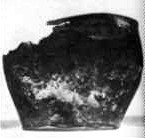
- Physical Clues: Thirty-two of 150 forensic swabs tested positive for arsenic. The primary clue was a rusted, charred canister discovered in an ash pile, identified as Eureka Weed Killer, an arsenic-based garden herbicide.
- Lucy Ostler's Deposition: Ostler testified she had seen Charlotte handling the weed killer tin and throwing it onto the copper boiler fire. A Yeovil chemist recalled selling weed killer to a dark-haired woman who signed the poison register with an «X».
On February 10, 1936, Charlotte Bryant was arrested for murder.
Trial at Dorchester Assizes (May 1936)
The trial opened on May 27, 1936, at the Dorchester Assizes before Mr. Justice Sir Richard MacKinnon:
- Solicitor General Sir Terence O'Connor presented Charlotte as a woman driven by adultery to dispose of an inconvenient husband.
- Defense counsel J. D. Casswell K.C. highlighted the absence of eyewitnesses seeing Charlotte administer poison, noting the Yeovil chemist failed to identify her in an identity parade.
- Crown forensic expert Dr. Gerald Roche Lynch testified that arsenic dissolved undetected in Oxo broth. He emphasized that ashes from the cottage copper showed 149 parts per million (ppm) of arsenic, contrasting this with what he termed a normal baseline of 45 ppm in ordinary coal ash, arguing a concentrated compound was burned.
Charlotte appeared confused in the dock, stating: "I don't know what poison is; I never bought poison."
On May 30, 1936, after sixty minutes, the jury convicted her, and Mr. Justice MacKinnon pronounced sentence of death by hanging.
The Professor Bone Controversy and the Exeter Execution
Two days following the verdict, defense counsel received urgent scientific correspondence:
- Professor William Arthur Bone, Chair of Chemical Technology at Imperial College London and Britain's leading coal analyst, demonstrated that domestic coal in southwestern England naturally contains harmless baseline arsenic concentrations between 140 and 1,000 ppm. Consequently, 149 ppm was normal chimney soot and proved nothing regarding herbicide burning.
- On June 29, 1936, the Court of Criminal Appeal under Lord Chief Justice Gordon Hewart refused to admit Professor Bone's evidence, ruling that appellate courts could not reconsider freshly disputed scientific testimony and holding that circumstantial evidence supported the conviction.
Home Secretary Sir John Simon declined clemency. On July 15, 1936, at 08:00, Charlotte Bryant was executed by hanging at Exeter Prison by Thomas Pierrepoint.
Forensic Victim Register
| Victim Identity | Age | Occupation / Station | Date and Scene of Murder | Cause of Death and Toxicological Findings |
|---|---|---|---|---|
| Frederick Bryant | 39 | Agricultural farm laborer; Coombe | December 22, 1935; Sherborne Hospital, Dorset | Acute arsenic trioxide poisoning (4.09 grains isolated); hemorrhagic gastritis and acute circulatory collapse |