




Forensic & Criminological Matrix
| Parameter | Forensic Detail |
|---|---|
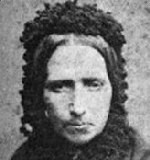
| Full Legal Name | Maria Catherina Swanenburg. |
| Historic Moniker | Goeie Mie (Good Mie / Kind Mie). |
| Guinness World Record | Listed in the Guinness Book of World Records as the deadliest female serial poisoner in European history. |
| Criminological Typology | Utilitarian serial poisoner / Healthcare-domestic caregiver fraud / Serial insurance-murder syndicate. |
| Active Period | 1880 – 1883. |
| Jurisdiction | Impoverished working-class districts of Leiden, South Holland, Netherlands. |
| Confirmed Fatal Victims | 27 proven murders (including her own parents, sisters-in-law, and neighbor children); more than 65 living survivors permanently disabled with motor paralysis and neuropathy (over 102 total casualties poisoned). |
| Toxic Substance | Arsenic trioxide ("white arsenic"), disguised in gruel, porridges, milk, and broths. |
| Judicial Penalty | Life imprisonment with hard labor (levenslange gevangenisstraf). Died at Gorinchem Penitentiary on April 11, 1915, at age 75. |
The Facade of "Good Mie"
Maria Catherina Swanenburg was born in Leiden on September 9, 1839. Raised amid grinding urban squalor marked by frequent typhus and cholera outbreaks, she married Johannes van der Linden in 1864.
To supplement her meager household income, Swanenburg cultivated a community persona as a selfless neighborhood caregiver. Whenever a neighbor fell ill or gave birth, Maria volunteered as a domestic nurse, bathing children, cooking food, and tending to the infirm without demanding payment. Her seemingly boundless charity earned her the widespread, affectionate neighborhood moniker "Goeie Mie" (Good Mie).
The Arsenic and Burial Insurance Scheme (1880–1883)
Beneath her benevolent demeanor, Swanenburg devised a ruthless scheme to exploit the popular burial societies and mutual life insurance funds prevalent in 19th-century Holland.
When a neighbor was indisposed, Maria secretly bought funeral insurance policies on their lives or their infant children, paying pennies each week and designating herself as the sole monetary beneficiary upon death.
Once the insurance contract was established, she obtained large quantities of white arsenic from local chemists under the pretense of exterminating bedbugs and vermin. She dissolved the poison into warm porridges, vegetable soups, and milk fed directly to her charges.
She commenced in 1880 by murdering her own mother, followed by her father, collecting their modest estates. She systematically poisoned cousins, in-laws, and neighbor families. Because local physicians regularly attributed the agonizing gastrointestinal cramps, vomiting, and dehydration to prevalent cholera and typhus, her killings went undetected for over three years.
The Frankhuizen Downfall (December 1883)
Her uninhibited greed spurred her unraveling in late 1883 when she targeted her sister-in-law's family, the Frankhuizens. Having insured their lives, Swanenburg served them a large pot of oatmeal porridge loaded with massive concentrations of arsenic.
Within hours, Hendrik Frankhuizen, his wife, and their suckling infant were seized by violent convulsions. While Hendrik and the infant died in agony, the mother survived. Attending physician Dr. Van Kleef grew intensely suspicious of the simultaneous violent onset and refused to issue death certificates, alerting magistrates.
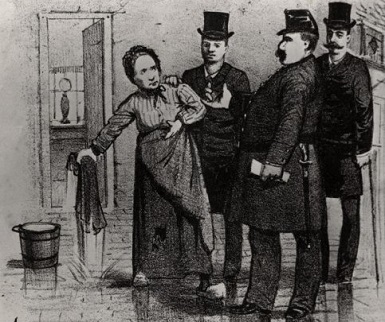
A forensic toxicology screen revealed lethal quantities of elemental arsenic in the deceased infant's stomach. When detectives learned that Maria Swanenburg had already arrived at the insurance agency to demand cash payout on the bodies, she was arrested on December 15, 1883.
Massive Exhumations and Judicial Condemnation
The arrest of "Good Mie" traumatized the Netherlands. Dutch prosecutors ordered an unprecedented forensic excavation: over ninety graves in Leiden cemeteries were opened.
Pathologists found tissue perfectly preserved by the biocidal properties of arsenic, verifying lethal poison concentrations in dozens of corpses. The inquest confirmed 27 direct homicides and over 65 survivors left with permanent gastrointestinal damage or paralyzed limbs.
At her May 1885 trial in The Hague, Maria Swanenburg was convicted of capital-tier murder and fraud. Because capital punishment had been abolished in the Netherlands in 1870, she was sentenced to maximum life imprisonment.
She served thirty years behind bars in Gorinchem, where she died on April 11, 1915, at age 75.