


Daisy de Melker: «The Johannesburg Poisoner», Insurance Policies, and the Pretoria Forensic Strychnine Inquest
Executive Summary
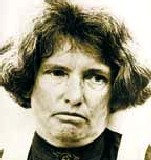
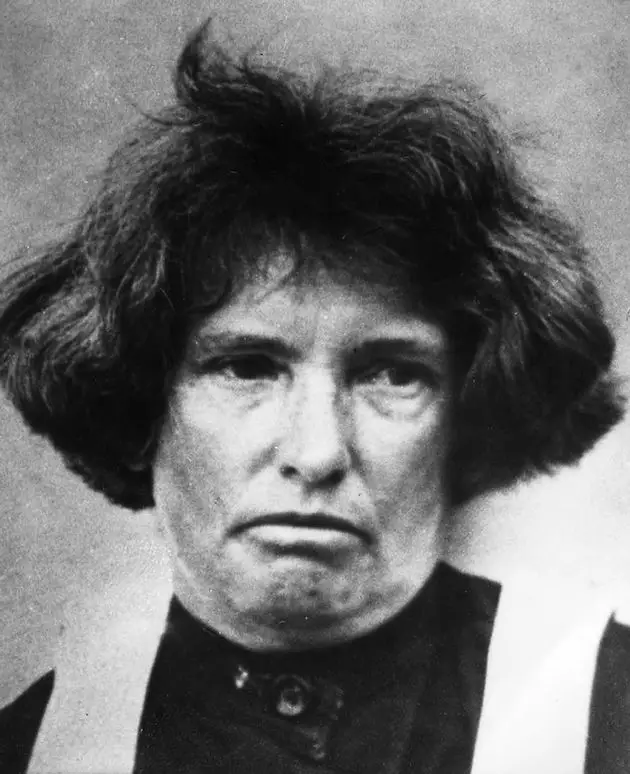
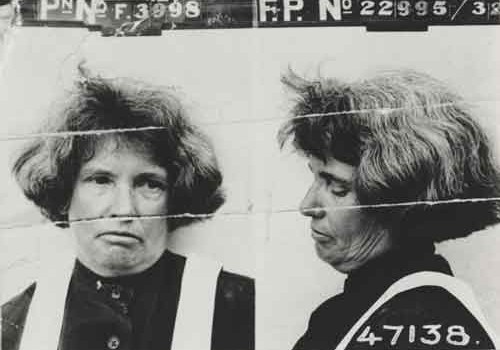
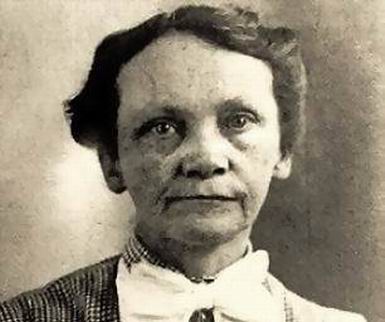
Daisy Louisa de Melker (née Hancorn-Smith; June 1, 1886 – December 30, 1932), a trained South African nurse, was one of the most calculating serial killers in African history and the second woman ever to be judicially executed by hanging in South Africa. Between 1923 and 1932, De Melker cold-bloodedly poisoned three members of her immediate domestic circle: her first two husbands and her only surviving biological child, driven by an unyielding desire for economic enrichment through successive life insurance payouts, municipal widow pensions, and inherited real estate.
Her criminal sequence began in Johannesburg in 1923 with the sudden, violent death of her first husband, municipal plumber William Alfred Cowle, initially certified as a stroke despite exhibiting textbook tetanic convulsions. In 1927, her second husband, railway engine driver Robert Sproat, succumbed under identical convulsive agony shortly after drinking beer poured by his wife, netting De Melker a substantial fortune. Her predatory ambition reached a tragic domestic nadir in early 1932: when her twenty-year-old son, Rhodes Cecil Cowle, demanded his legally mandated share of his late father's estate trust fund upon reaching majority, De Melker spiked his thermos coffee and tonic medicine with pure arsenic, triggering days of agonizing internal burning until his death.
A criminal complaint lodged by Robert Sproat's surviving brother led the South African Police, under Detective Inspector William Palmer, to order the dramatic exhumation of all three bodies from Brixton and Newclare cemeteries. Toxicological analysis by government pathologists revealed massive lethal concentrations of strychnine in the preserved organs and spinal tissue of both husbands, as well as unassailable levels of arsenic in the viscera of her son. Tried in an internationally publicized proceeding at the Witwatersrand High Court in late 1932 before Mr. Justice Leopold Greenberg, De Melker was convicted of her son's premeditated murder and sentenced to capital punishment. She was hanged at Pretoria Central Prison on December 30, 1932.
Technical Forensic Matrix
| Parameter | Forensic Specification |
|---|---|
| Legal Identity | Daisy Louisa de Melker (née Hancorn-Smith) |
| Public Recognized Name | Daisy de Melker |
| Criminological Aliases | «The Johannesburg Poisoner» / «The Black Widow of Germiston» |
| Date of Birth | June 1, 1886 (Seven Fountains, Grahamstown, Cape Colony) |
| Date of Death | December 30, 1932 (Pretoria Central Prison, South Africa; aged 46) |
| Medical Cause of Death | Cervical dislocation and mechanical asphyxia via judicial hanging |
| Criminological Classification | Organized domestic serial poisoner / Black widow / Financial profit killer |
| Confirmed Murder Victims | 3 domestic homicides (William Cowle, Robert Sproat, and Rhodes Cowle) |
| Poisons Employed | Crystalline strychnine and white arsenic trioxide |
| Wounding Mechanics | Acute toxicity via spiked tea, beer, and coffee; respiratory paralysis and multiorgan failure |
| Geographic Scenes | Private homes in Bertrams, Malvern, and Germiston (Gauteng, South Africa) |
| Primary Motive | Direct pecuniary gain: insurance policies, municipal pensions, and trust fund expropriation |
| Presiding Judicial Body | Witwatersrand Local Division High Court, Mr. Justice Leopold Greenberg presiding |
| Judicial Sentence | Capital punishment via hanging (Death by Hanging); royal clemency denied |
| Execution Facility | Gallow complex, Pretoria Central Prison |
Early Life, Nursing Career, and First Marriage (1886–1923)
Daisy Hancorn-Smith was born in Seven Fountains, near Grahamstown. In her early twenties, she completed nursing training at Berea Nursing Home in Durban:
- In 1909, she married William Alfred Cowle, a well-paid plumber employed by the Johannesburg City Council. The couple settled in Bertrams, Johannesburg, and had five children, four of whom died in infancy from acute gastrointestinal episodes that were never formally investigated. Only their youngest son, Rhodes Cecil Cowle (born 1911), survived.
- By late 1922, marital discord escalated, and Cowle suffered frequent bouts of digestive distress.
- On January 11, 1923, after consuming a bitter glass of milk provided by his wife, Cowle suffered violent tetanic spasms, severe spinal arching (opisthotonos), and respiratory arrest, dying within hours. The attending physician mistakenly certified the cause of death as chronic nephritis and cerebral hemorrhage; Daisy immediately collected £1,795 from the municipal pension board and commercial insurers.
The Second Marriage and the Poisoning of Robert Sproat (1926–1927)
In 1926, possessed of substantial personal wealth, Daisy married South African Railways engine driver Robert Sproat:
- Soon after their wedding, Daisy persuaded Sproat to draft a new will naming her sole beneficiary of his estate and pension benefits, explicitly disinheriting his siblings and elderly mother.
- In October 1927, Sproat became violently ill after drinking cold beer poured by his wife. After a temporary hospitalization, he returned home; within hours of sharing a private dinner with Daisy, he suffered agonizing muscular spasms identical to Cowle's fatal symptoms, dying at age 46 on November 6, 1927.
- His death was erroneously attributed to cerebral arteriosclerosis. Daisy inherited over £4,000 in liquid assets, investing in luxury automobiles and suburban properties.
The Murder of Rhodes Cowle and Marriage to De Melker (1931–1932)
In January 1931, Daisy married her third husband, prominent rugby player Sydney Clarence de Melker:
- Her surviving twenty-year-old son, Rhodes Cecil Cowle, proved an increasing source of friction: unemployed and demanding, Rhodes frequently confronted his mother, insisting on taking control of his inheritance from William Cowle's estate upon his impending twenty-first birthday.
- In late February 1932, using the false identity of «Mrs. Sproat», Daisy visited a pharmacy in Kenilworth, purchasing two shillings worth of pure white arsenic, signing the poisons register under the pretext of destroying feral cats in her garden.
- On March 2, 1932, Daisy prepared a thermos of coffee for Rhodes to take to his job at the railway workshops. After drinking it, Rhodes suffered severe gastrointestinal burning, black vomiting, and hypothermia; brought home, Daisy administered soothing medicines and salt mixtures. Rhodes died in agony three days later on March 5, 1932.
The Triple Exhumation and Forensic Toxicological Breakthrough
Daisy's haste in burying her only son aroused the suspicions of her former brother-in-law, William Sproat, who recalled his brother Robert's identical death:
- Sproat presented his suspicions to the Criminal Investigation Department (CID) in Johannesburg.
- Detective Inspector William Palmer secured court orders for the exhumation of all three bodies:
- Government pathologists Dr. J. M. Watt and Dr. W. A. Murray examined the exhumed remains:
- Rhodes Cowle's organs contained overwhelming quantities of undecomposed arsenic trioxide, sufficient to kill multiple adults.
- The mummified remains of William Cowle and Robert Sproat in the dry Highveld soil contained distinct crystalline deposits of strychnine within their vertebrae and visceral tissue.
- Government pathologists Dr. J. M. Watt and Dr. W. A. Murray examined the exhumed remains:
- Detectives traced the Kenilworth chemist's Poisons Register, uncovering Daisy's distinctive handwriting purchasing arsenic days before Rhodes fell ill.
Trial at the Witwatersrand High Court and Execution at Pretoria (1932)
The trial of Daisy de Melker commenced on October 17, 1932, at the Witwatersrand High Court:
- Crown Prosecutor Cyril Jarvis presented detailed financial records linking the poisonings to policy collections, supported by forensic chemical exhibits.
- Presiding Judge Leopold Greenberg, renowned for strict evidentiary standards, sat with two judicial assessors. In his ruling, Greenberg acquitted De Melker on the charges of murdering Cowle and Sproat on narrow technical grounds, finding that the prosecution had not conclusively eliminated every possibility of sample contamination over the intervening ten years.
- However, regarding the murder of her son Rhodes Cowle, Greenberg found the handwriting evidence, the arsenic purchase, and the toxicological post-mortem conclusively established guilt beyond a reasonable doubt.
- On November 25, 1932, Greenberg sentenced De Melker to death.
- At dawn on December 30, 1932, Daisy de Melker was hanged at Pretoria Central Prison, maintaining her innocence to the scaffold and entering South African criminal folklore as its most infamous historical poisoner.