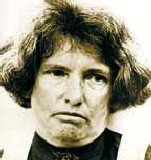



Forensic Profile Datasheet: Gesche Margarethe Gottfried ("The Angel of Bremen")
| Forensic Parameter | Evaluation Details |
|---|---|
| Full Legal Name | Gesche Margarethe Gottfried (née Timm) |
| Criminological Landmark | The Angel of Bremen (Der Engel von Bremen, Historic Serial Poisoning Case) |
| Date & Place of Birth | March 6, 1785 — Free Hanseatic City of Bremen, Holy Roman Empire |
| Date & Place of Execution | April 21, 1831 (aged 46) — Domshof Square, Bremen, German Confederation |
| Method of Execution | Public decapitation by broadsword (last public execution in Bremen's history) |
| Criminological Classification | Serial domestic poisoner / Munchhausen syndrome by proxy / Black widow |
| Confirmed Fatalities | 15 victims murdered: parents, twin brother, 3 children, 2 husbands, fiancé, and creditors |
| Active Lethal Timeline | 1813 – 1827 (14-year systematic poisoning campaign) |
| Chemical Agent Deployed | Arsenic trioxide compounded with lard (Mäusebutter / "mouse butter" rodenticide) |
| Forensic Landmark | Detection of crystalline white arsenic deposits in smoked meat by Dr. Luce (1828) |
| Cultural Heritage | The Spuckstein (spit stone) cobblestone in Bremen's Domshof square |
Social Persona and the Facade of Piety
Gesche Margarethe Timm was born in Bremen in 1785 into a modest artisan family. Blessed with striking grace, delicate manners, and pious Lutheran devotion, she married affluent saddler Johann Miltenberg in 1806, bearing three children. The union deteriorated as Miltenberg descended into alcoholism and financial ruin.
In 1813, Gesche initiated her homicidal career by acquiring mouse butter (Mäusebutter), a commercial pest-control paste consisting of pure arsenic trioxide whipped into animal tallow. Introducing measured doses into her husband's daily broths, Miltenberg perished in gastrointestinal agony in October 1813. Gesche secured a modest widow's estate, successfully projecting the image of a tearful, heartbroken Christian mourner.
The Domestic Extermination Campaign (1815)
Between May and October 1815, Gesche orchestrated one of the most ruthless domestic massacres in early modern European annals. In fewer than five months, she methodically poisoned:
- Her mother, Gesche Margarethe Timm (May 1815).
- Her two young daughters, Johanna (aged 3) and Adelheid (aged 5).
- Her elderly father, tailor Johann Timm (June 1815).
- Her surviving son, Heinrich (September 1815).
At bedside vigils, Gesche knelt in ostentatious grief, bathing her dying relatives' brows while personally serving poisoned gruels. Neighboring clergy and physicians, awed by her ceaseless devotion amidst what appeared to be divine misfortune, bestowed upon her the public moniker "The Angel of Bremen" (Der Engel von Bremen), showering her with charity and societal reverence.
Serial Matrimony and Poisoning of Creditors (1816–1827)
Unburdened by dependents, Gesche pursued wine merchant Michael Christoph Gottfried. When she conceived out of wedlock, she dosed him with arsenic until he agreed to formalize their nuptials on his deathbed, inheriting his wine inventories upon his death in 1817.
Over subsequent years, any obstacle to her social standing or financial solvency was resolved with Mäusebutter:
- She poisoned her twin brother Johann upon his return from military service.
- She eliminated her prospective suitor Paul Zimmermann, collecting life gifts.
- She assassinated personal friends, landladies, and creditors to extinguish promissory notes, baking arsenic into cakes and casseroles.
The Smoked Ham Clue and Apprehension (1828)
In 1827, facing bankruptcy, Gesche sold her Pelzerstraße residence to wheelwright Johann Rumpff, remaining on site as a lodger and household cook.
Within months, Rumpff's wife fell violently ill and died. Soon after, Rumpff and his apprentices suffered recurring bouts of agonizing abdominal cramps and vomiting following meals.
Suspicious of Gesche's cooking, Rumpff inspected a cured ham kept in the kitchen pantry, noting suspicious white crystalline crusts embedded in the meat fat. Conveying samples to Dr. Luce and municipal apothecaries, chemical assays confirmed pure arsenic trioxide.
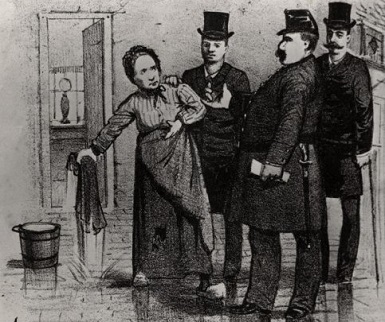
On March 6, 1828—her 43rd birthday—Bremen constables arrested Gesche Gottfried, seizing canisters of Mäusebutter from her handbag.
Confession, Trial, and Decapitation
Interrogated by municipal magistrates, Gesche Gottfried broke down and provided full confessions to fifteen homicides and multiple attempted poisonings. Criminologists noted a dual motive: liquidating debts coupled with severe Munchhausen syndrome by proxy, deriving intense psychological gratification from holding absolute life-and-death power while basking in community adulation as a devoted nurse.
Following three years of legal deliberations, the High Court of Bremen sentenced her to death by decapitation.
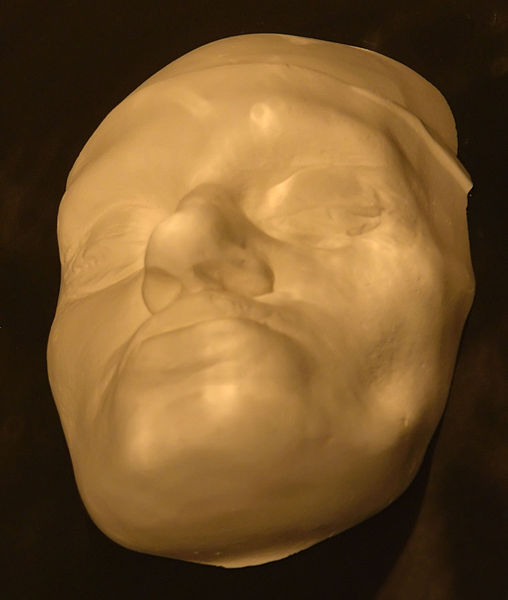
On April 21, 1831, before 35,000 spectators packed into Bremen's Domshof square, Gesche Gottfried was led to the scaffold in black vestments and beheaded with a broadsword by the city executioner, marking the final public execution in the city's history. Her severed head was cast into a plaster death mask, and a memorial stone—the Spuckstein—was embedded in the cobblestones, where Bremen residents still spit to express revulsion for the fallen Angel of Bremen.