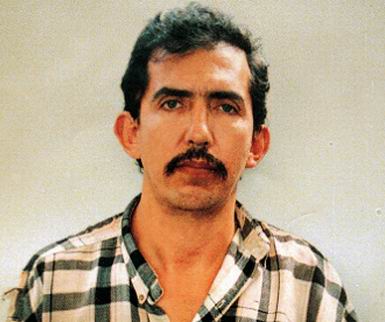




Forensic & Criminological Matrix
| Parameter | Forensic Detail |
|---|---|
| Full Legal Name | Luis Gregorio Ramírez Maestre |
| Media Monikers | The Monster of Tenerife, The Motorcycle-Taxi Strangler, The Rope Torturer |
| Nationality | Colombian |
| Date of Birth | September 30, 1980, Valledupar, Cesar, Colombia |
| Current Status | Alive (incarcerated at La Tramacúa High-Security Prison, Valledupar) |
| Historical Penal Status | Convicted in successive criminal trials to cumulative sentences exceeding 57 years of imprisonment for aggravated homicide, torture, and armed theft |
| Confirmed Murder Victims | Over 30 motorcycle taxi drivers forensically linked via signature rope knotting and physical recovery |
| Active Criminal Span | 2007 to December 2012 |
| Geographic Jurisdiction | Cesar, Magdalena, Santander, Norte de Santander, and Sucre departments, Colombia |
| Victim Demographics | Young male informal motorcycle-taxi drivers aged 19 to 30 of small physical stature (under 1.70 m / 5 ft 7 in) |
| Lethal Modus Operandi | Hiring motorcycle taxis to isolated agrarian woodland; physical subjugation at knifepoint; binding victims to tree trunks using complex nautical knots linking flexed legs to a cervical running noose (self-induced positional asphyxiation via muscle exhaustion); theft of motorcycle and personal property |
| Forensic Landmark Significance | Recognized as one of South America's most sadistic modern serial predators; characterized by an autonomous ligature execution mechanism |
| Diagnostic Motive | Sadistic lust predation, eroticized gratification from agonizing protracted asphyxiation, and financial gain from motorcycle trafficking |
1. Criminological Trajectory and Predatory Hunting
Luis Gregorio Ramírez Maestre was born in Valledupar and operated across northern and northeastern Colombia. Presenting the public persona of a friendly, ordinary motorcycle driver and street merchant with a domestic family in Barrancabermeja, Ramírez Maestre concealed severe sadistic psychopathy centered on dominating and executing young men.
Between 2007 and late 2012, he traveled across multiple department hubs—including Tenerife (Magdalena), Sabana de Torres (Santander), Aguachica (Cesar), and Cúcuta—systematically scouting informal transport stands for youthful, slight-framed motorcycle operators whom he could easily overpower.
2. The Self-Strangulation Modus Operandi
Forensic pathologists from Colombia's National Institute of Legal Medicine were stunned by the methodical depravity of Ramírez Maestre's lethal mechanics:
- The Fare Trap: He approached young motorcycle-taxi drivers, offering substantial financial compensation to ferry him into remote agrarian jungle terrain under the pretext of visiting agricultural plantations.
- Ambush in Seclusion: Once secluded, he requested a stop, drew a combat blade, and incapacitated the driver, stripping him of communication devices.
- The Tree Knotting Mechanism: Carrying nylon ropes and synthetic cords, he bound the victim against a tree trunk in an intricate nautical configuration:
- The victim's ankles were bound together and hoisted backward behind their torso, connected by a cord that ran up the spine and terminated in a slipknot around the throat.
- So long as the captive maintained voluntary muscular contraction holding their legs bent, airflow was preserved. However, as extreme dehydration, muscular cramps, and fatigue set in, involuntary leg extension caused the slipknot to tighten, inducing slow, agonizing self-strangulation.
- Disposal and Flight: Ramírez Maestre observed the onset of panic before absconding on the victim's motorcycle, selling the vehicle for scrap or forged resale in distant municipalities.
3. Police Investigation and Capture
By 2011, Colombian Technical Investigation Corps (CTI) and judicial police detectives began identifying decomposing and skeletonized remains of missing drivers strapped to trees with identical knot architectures across Santander and Cesar:
- Pathological post-mortems confirmed absence of bullet or knife fatalities; deaths were certified as protracted mechanical positional asphyxiation following hours of torment.
- Telecom intelligence traced cellphones stolen from victims to SIM cards registered to relatives of Ramírez Maestre in Valledupar.
- Service station surveillance footage captured Ramírez Maestre operating victims' motorcycles hours following their disappearances.
- On December 13, 2012, National Police tactical officers executed a dragnet in central Santa Marta, taking Ramírez Maestre into custody without resistance.
4. Confessions and 57-Year Sentencing
Searches of his luggage uncovered cordage matching crime-scene ligatures, bladed weapons, identity cards of vanished drivers, and stolen motorcycle helmets.
Faced with forensic DNA matches, cellphone geolocations, and the testimony of a surviving driver who miraculously severed his bonds, judicial dockets mounted rapidly:
- In August 2013, a Bucaramanga court sentenced him to 34 years for the murder of John Jairo Amador de la Rosa.
- Subsequent indictments in Valledupar and Santa Marta consolidated convictions for over thirty homicides, extending his penal sentence to over 57 years of imprisonment.
- He is confined at La Tramacúa High-Security Prison in Valledupar under solitary maximum-security protocols.