Forensic & Criminological Matrix
| Parameter | Forensic Detail |
|---|---|
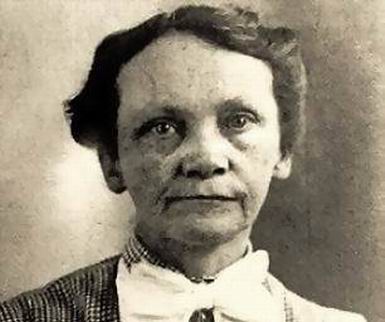
| Forensic Heading / Aliases | Charity Lamb |
| Legal Identity | Charity Lamb |
| Confirmed Victims | 1 (Nathaniel Lamb, husband) |
| Active Timeline | May 13, 1854 |
| Jurisdiction / Area of Operations | Clackamas County, Oregon Territory, United States |
| Criminological Classification | Domestic homicide / Severe abuse survivor |
| Forensic Modus Operandi | Surprise lethal assault with a heavy edged weapon (axe) directed at the victim's cranium from behind |
| Weapon / Mechanism of Death | Woodsman's axe |
| Motive / Behavioral Dynamics | Desperate self-defense against chronic spousal abuse, death threats, and situational psychological trauma |
| Judicial Outcome | Convicted in 1854 of second-degree murder, sentenced to life imprisonment at hard labor; transferred to an insane asylum in 1862, where she died in 1879 |
1. Background and Profile
Charity Lamb was born in the early 19th century and participated in the westward migration across the American frontier via the Oregon Trail, ultimately settling in a remote log cabin in the Oregon Territory alongside her husband, Nathaniel Lamb, and their children. Her domestic life was defined by years of severe physical abuse, constant death threats, geographic isolation, and psychological coercion. Subsequent testimonies from her children corroborated a chronic history of domestic violence, including assaults with heavy objects and coercion under the prevailing patriarchal frontier laws.
2. Crime Spree and Modus Operandi
On May 13, 1854, at a homestead near Oregon City, Nathaniel Lamb was seated at the family supper table recounting a hunting trip. Amidst heightened tension stemming from recent disputes over correspondence and documented threats by Nathaniel to kill his wife and desert the family, Charity retrieved an axe from the woodpile, approached her husband from behind, and struck him twice in the back of the head. The attack was targeted and decisive, representing a violent reactive response to an imminent and inescapable domestic terror.
3. Investigation and Forensic Capture
Identification of the perpetrator was immediate and undisputed. Charity made no elaborate attempt to conceal her actions; she briefly fled the immediate vicinity before being located at a neighbor's cabin, sitting calmly by the fire and smoking a pipe while expressing concern that her husband might still come after her. The children's eyewitness testimonies before the coroner and the court provided the core evidentiary framework establishing both the physical act and the oppressive environment in which it occurred.
4. Legal Proceedings and Outcome
Charity Lamb's trial took place between September 11 and 16, 1854, before the U.S. District Court for the Oregon Territory, presided over by Judge Cyrus Olney. It marked a historic milestone as the first murder trial of a woman in the Pacific Northwest. The defense presented arguments centered on temporary insanity and justifiable self-defense—an early historical precursor to the modern battered woman syndrome. Although Judge Olney instructed the jury to weigh whether she acted out of a genuine belief in self-preservation, strict nineteenth-century legal standards required the threat to be instantaneously unavoidable, rejecting preventative self-defense.
5. Psychiatric Evaluation and Final Disposition
Faced with strict statutory limitations, the jury found Charity Lamb guilty of second-degree murder without premeditation while recommending her to the mercy of the court. Judge Olney was mandated by law to impose a sentence of life imprisonment at hard labor. Lamb was incarcerated in Portland, where prison inspectors noted her severe mental deterioration over the ensuing years. In 1862, she was transferred to the Hawthorne Insane Asylum, where she remained institutionalized until her death in 1879, concluding a tragic chapter of pioneer justice.