



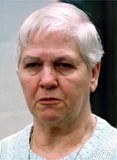
Forensic & Criminological Matrix
| Parameter | Forensic Detail |
|---|---|
| Forensic Heading / Aliases | Waneta Hoyt / The Newark Valley Cradle Killer |
| Legal Identity | Waneta Ethel Nixon (later Hoyt) |
| Confirmed Victims | 5 (her biological infants: Eric, Julie, James, Molly, and Noah) |
| Active Timeline | 1965 - 1971 |
| Jurisdiction / Area of Operations | Newark Valley and Richford, Tioga County, New York, USA |
| Criminological Classification | Familial Serial Killer / Munchausen syndrome by proxy variant |
| Forensic Modus Operandi | Deliberate asphyxiation of infants using pillows, towels, or her own shoulder during crying episodes, subsequently masking the homicides as natural deaths due to Sudden Infant Death Syndrome (SIDS). |
| Weapon / Mechanism of Death | Pillows, bath towels, and direct bodily compression |
| Motive / Behavioral Dynamics | Intolerance to infant crying, severe parental frustration, and localized control through lethal elimination |
| Judicial Outcome | Convicted on September 11, 1995, to 75 years to life imprisonment for depraved indifference to human life. Died in custody in 1998. |
1. Background and Profile
Waneta Ethel Nixon was born in May 1946, the sixth of eight children in a working-class family in Richford, New York. Her early life proceeded without major anomalies. She met her future husband, Tim Hoyt, on a school bus during the ninth grade. At age 17, she dropped out of high school to marry him. The couple settled in a modest rural farming community in Newark Valley, roughly 70 miles south of Syracuse. Tim worked as a security guard at Cornell University's art museum, while Waneta functioned as a homemaker. Neighbors perceived them as a quiet, stoic couple who silently bore an incomprehensible series of family tragedies, completely unaware of any underlying criminal culpability.
2. Crime Spree and Modus Operandi
Between 1965 and 1971, Waneta and Tim Hoyt suffered the consecutive losses of five infants: Eric, Julie, James, Molly, and Noah. The victims ranged in age from just 48 days to 28 months. In each instance, attending family physicians diagnosed the cause of death as Sudden Infant Death Syndrome (SIDS). The cases gained medical notoriety when one of the treating pediatricians, Dr. Alfred Steinschneider, published a seminal 1972 article in the journal Pediatrics, utilizing the Hoyt family as a paradigm to suggest a hereditary link in infant apnea—a publication that shielded the true etiology of the deaths for over two decades.
From a forensic standpoint, however, Hoyt committed systematic infanticide whenever she was left alone with her crying children. Her methodology involved mechanical asphyxiation: utilizing a pillow with Eric and Molly, a bath towel with James (which resulted in epistaxis due to the infant's physical struggle), and her shoulder or body compression with the others. Autopsies were cursory and performed by family physicians who were historically reluctant to suspect parental malice, erroneously classifying the homicides as natural crib deaths.
3. Investigation and Forensic Hunt
The case remained dormant for over twenty years until 1985, when prosecutor William Fitzpatrick of an adjacent county reviewed an unrelated SIDS case and consulted forensic pathologist Linda Norton. Upon reviewing Steinschneider's 1972 paper, Norton noted that the statistical odds of five natural crib deaths within a single family were virtually nonexistent, offhandedly remarking that there was a serial killer operating in Syracuse. In 1992, upon taking office as District Attorney, Fitzpatrick reopened the files and had New York State Police forensic expert Michael Baden review the autopsies. Baden concluded that none of the infants exhibited natural causes of death and that all demonstrated classic signs of homicidal suffocation.
In March 1994, investigators confronted Waneta Hoyt. Following a methodical interrogation session, Hoyt confessed in chilling detail to suffocating all five of her children because she could not tolerate their crying.
4. Legal Proceedings and Outcome
Waneta Hoyt's trial commenced in the spring of 1995 at the Tioga County Court. Although her signed confession detailed the mechanics of each murder, the defense attempted to suppress the statement, backed by her husband and surviving adopted son, who maintained her innocence. Nevertheless, testimony from nurses and emergency responders regarding Hoyt's complete lack of maternal bonding and emotional affect during the deaths dismantled her defense.
In April 1995, a jury found her guilty of second-degree murder under depraved indifference. On September 11, 1995, Judge Vincent Sgueglia sentenced her to 75 years to life in prison. Hoyt's imprisonment was cut short on August 13, 1998, when she died behind bars due to chronic health ailments, having served only a fraction of her sentence.