



Forensic & Criminological Matrix
| Parameter | Forensic Detail |
|---|---|
| Forensic Heading / Aliases | Tillie Klimek, The Chicago Poisoner |
| Legal Identity | Ottilie Klimek |
| Confirmed Victims | 5 (with suspicions extending to over 20) |
| Active Timeline | 1914 - 1921 |
| Jurisdiction / Area of Operations | Chicago, Illinois, United States |
| Criminological Classification | Serial killer / Domestic poisoner |
| Forensic Modus Operandi | Covert administration of arsenic (rat poison) in prepared meals, feigning precognitive dreams to predict the exact time of death and deflect suspicion. |
| Weapon / Mechanism of Death | Arsenic / Chemical poisoning |
| Motive / Behavioral Dynamics | Financial gain through life insurance payouts, inheritances, and domestic control |
| Judicial Outcome | Convicted and sentenced to life imprisonment in 1923; died in custody in 1936 |
1. Background and Profile
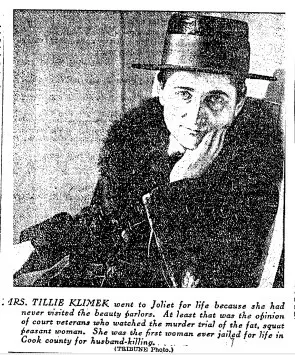
Ottilie "Tillie" Klimek was a Polish immigrant who settled in the Polish community of Chicago, Illinois. Behind an ordinary domestic façade, Klimek harbored calculated psychopathic traits and a profound manipulative capability, fitting the classic profile of a domestic poisoner who weaponized the household environment.
2. Crime Spree and Modus Operandi
Klimek's modus operandi relied on patience and the systematic administration of arsenic acquired from commercial rat poisons. Over nearly a decade, multiple husbands and acquaintances exhibited classic symptoms of heavy metal poisoning prior to their deaths. A chilling psychological component of her crimes was her claim of having precognitive dreams, accurately predicting the dates of her victims' deaths—dates she was actively orchestrating through her cooking.
3. Investigation and Forensic Pursuit
The investigation was sparked by mounting cumulative suspicions regarding the extraordinarily high mortality rate among her spouses and the subsequent collection of insurance money. Law enforcement and medical examiners exhumed several bodies, where rigorous toxicological screenings revealed lethal concentrations of arsenic in internal organs.
4. Legal Proceedings and Outcome
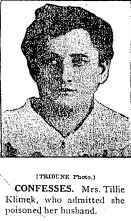
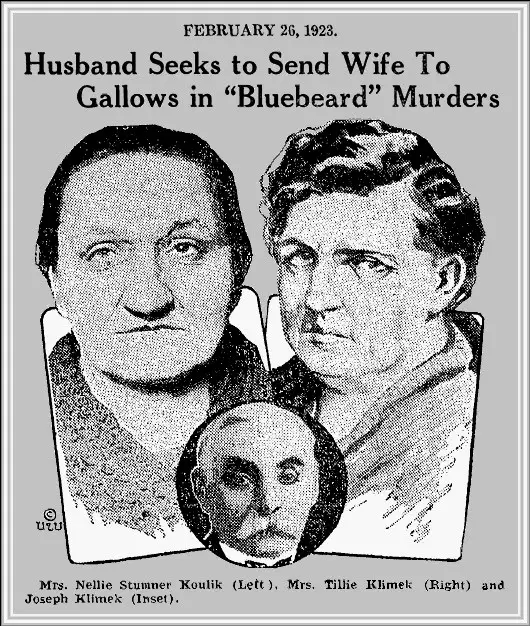
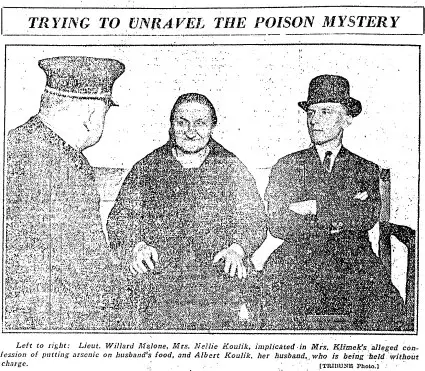
Arrested in 1921 alongside her cousin Rosie Stella, Klimek faced overwhelming forensic evidence. The ensuing trial captivated the public and judiciary of Chicago. In 1923, she was convicted of murder. As Illinois law precluded the execution of female offenders at the time, she received a mandatory sentence of life imprisonment, dying behind bars in 1936.