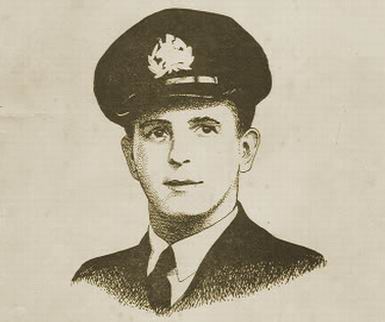





Forensic & Criminological Matrix
| Parameter | Forensic Detail |
|---|---|
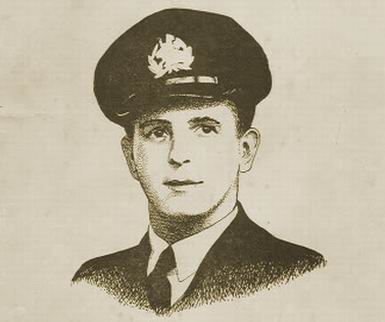
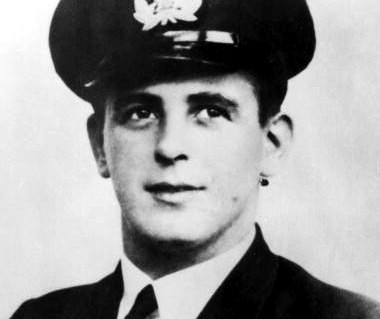
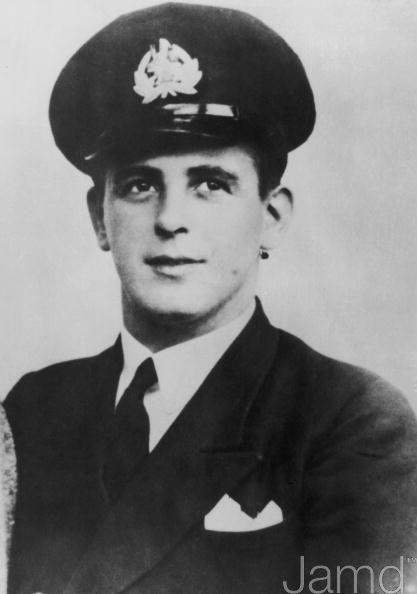
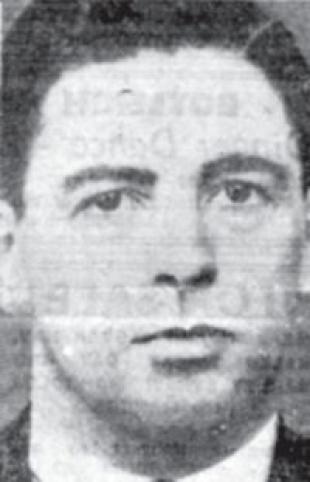
| Full Legal Name | James Camb |
| Historical Designation | The Porthole Murderer, The Durban Castle Mystery |
| Born | December 16, 1916, London, England, United Kingdom |
| Died | July 1979 (aged 62), England, United Kingdom |
| Manner of Death | Heart failure following decades of correctional custody and parole revocations |
| Criminological Classification | Predatory shipboard sexual assailant and maritime body concealer (no-body murder) |
| Crime Date | October 18, 1947 (early morning) |
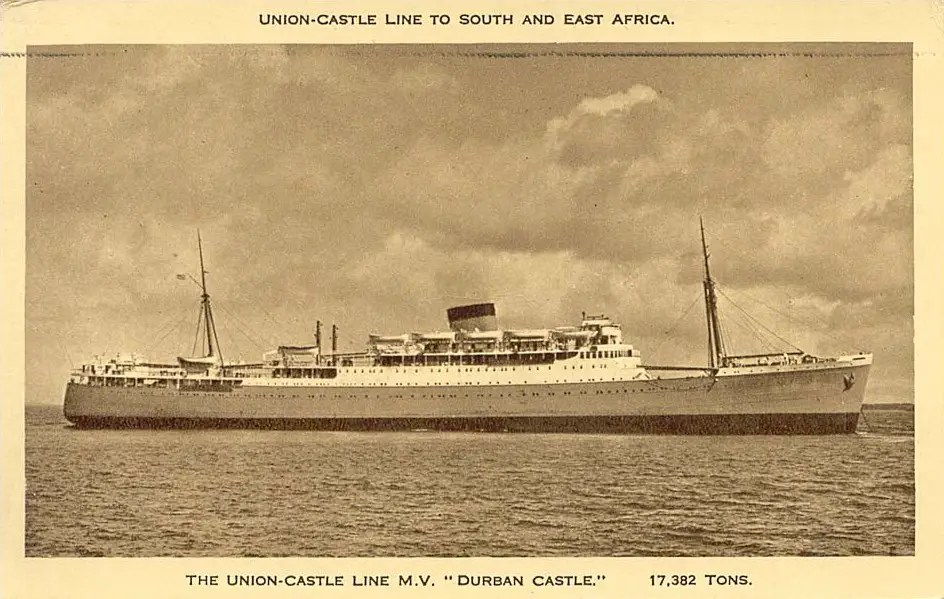
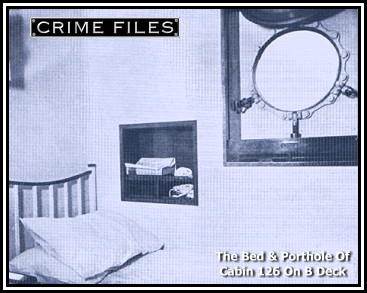
| Crime Scene | First-class Cabin B-126, passenger liner RMS Durban Castle, Atlantic Ocean off West Africa |
| Fatal Victim | Eileen "Gay" Gibson (21-year-old British stage and film actress) |
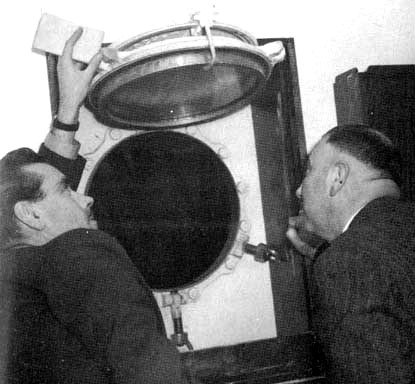
| Modus Operandi | Nocturnal intrusion into the private stateroom of an unaccompanied female passenger; sexual assault progressing to manual strangulation when the victim triggered emergency stewardess call bells; pushing her body through an 11-inch porthole into shark-infested ocean waters |
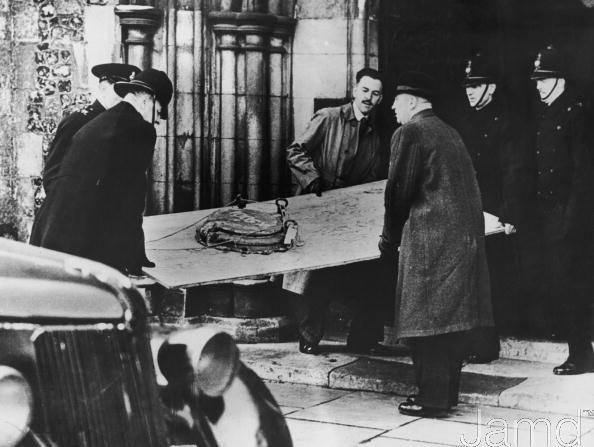
| Forensic Landmark | Landmark prosecution without a recovered body (corpus delicti), solved through pioneering blood, saliva, and involuntary muscle discharge micro-analysis conducted by British forensic pathologist Dr. Keith Simpson |
| Judicial Disposition | Convicted of murder at Winchester Assizes in March 1948; death sentence commuted to life imprisonment due to parliamentary debates on capital punishment abolition; paroled in 1959; recalled for further sex offenses in 1967; died in 1979 |
EXECUTIVE SUMMARY & LEGAL PRECEDENT
The October 1947 "Porthole Murder" aboard the passenger liner RMS Durban Castle is one of the most famous trials in British maritime jurisprudence. Occurring on the high seas off the West African coast, the case transfixed the post-war public with its blend of transoceanic luxury, the vanishing of a rising young actress, and a high-stakes legal contest over establishing murder in the total absence of a victim's corpse.
Forensically, the trial cemented the reputation of pathologist Dr. Keith Simpson, whose micro-analysis of stains on bed linen proved beyond reasonable doubt that 21-year-old Gay Gibson had been manually throttled to death rather than felled by a sudden medical collapse.
THE ATLANTIC CROSSING OF THE "DURBAN CASTLE"
In the autumn of 1947, the Union-Castle liner RMS Durban Castle was steaming from Cape Town to Southampton. Among the first-class passengers was Eileen "Gay" Gibson, a 21-year-old London actress returning from a theatrical tour of South Africa. She occupied Cabin 126 on B deck.
James Camb, a slick, 31-year-old deck steward with prior internal complaints for harassing female passengers, flirted with Gibson on the promenade deck, offering to deliver late-night brandies to her quarters.
THE MIDNIGHT EMERGENCY ALARM
At 2:50 a.m. on October 18, 1947, both emergency bells for Cabin 126 illuminated simultaneously on the night-watch station board—a distress summons requesting both steward and stewardess.
Night-watchman Frederick Steer investigated immediately. Knocking on Cabin 126, the door unlatched narrowly, revealing James Camb clad only in an undershirt with unbuttoned trousers. Looking panicked, Camb snapped, "It's all right, just a mistake," and shut the door.
At 7:30 a.m., stewardess Eileen Field entered the cabin. The bed was disheveled, Gibson was missing, and the heavy 11-inch bronze porthole hung wide open above the surging Atlantic swells.
DEFENSE FABRICATION VS. FORENSIC PATHOLOGY
Detained when the ship docked in Southampton, Camb admitted shoving Gibson’s body through the porthole, but concocted an intimate defense: he claimed that while engaged in consensual lovemaking, Gibson had suffered a sudden epileptic or asthmatic seizure, foamed at the mouth, and died in his arms. In blind terror of being accused of foul play, he pushed her corpse into the sea.
Dr. Keith Simpson boarded the liner and examined the impounded bedding:
- Biological Fluid Stains: Microscopic swabs identified dried lipstick, saliva, and blood belonging to Group O, matching Gibson’s blood group (Camb belonged to Group A).
- Involuntary Muscular Expulsion: Simpson demonstrated that urine staining in the center of the mattress was a definitive post-mortem signature of violent asphyxiation and ligature strangulation, completely inconsistent with sudden cardiac syncope.
- Forensic Scratch Analysis: Fresh defensive scratch marks along Camb's wrists matched fingernail gouges inflicted by a victim struggling against manual throat compression.
WINCHESTER ASSIZES TRIAL AND CAPITAL COMMUTATION
Tried in March 1948 at Winchester Assizes before Mr. Justice Hilbery, prosecuting counsel Anthony Hawke demolished Camb’s credibility by asking why he had discarded the victim into shark-inhabited waters rather than summoning the ship’s medical surgeon if she were merely experiencing an emergency seizure.
The jury took only forty-five minutes to convict Camb of capital murder, and he was sentenced to hang.
However, while his appeal was pending, Parliament was actively debating a clause in the Criminal Justice Bill to suspend hanging. To prevent executing a convict during an active statutory review, the Home Secretary commuted Camb's sentence to life imprisonment.
Paroled in 1959, Camb reoffended in 1967, facing fresh charges of sexual offenses against young girls. His parole was revoked, and he was returned to prison to serve out his life term. James Camb died of heart disease in July 1979 at age 62.