Forensic & Criminological Matrix
| Parameter | Forensic Detail |
|---|---|
| Forensic Heading / Aliases | The Spider Killer |
| Legal Identity | Saeed Hanaei |
| Confirmed Victims | 16 |
| Attributed / Indicted Victims | 19 |
| Active Timeline | 2000-2001 |
| Jurisdiction / Area of Operations | Mashhad, Iran |
| Criminological Classification | Serial Killer (Moralistic/Ideological) |
| Forensic Modus Operandi | Strangulation with headscarf (chador) after deception |
| Weapon / Mechanism of Death | Manual strangulation and ligature |
| Motive / Behavioral Dynamics | Moral cleansing / Religious fanaticism |
| Judicial Outcome | Executed by hanging (2002) |
1. Background and Profile
Saeed Hanaei was a construction worker and a veteran of the Iran-Iraq War. Living in the holy city of Mashhad, he developed a pathological obsession with public morality. His descent into serial murder was triggered by a personal incident where his wife was mistaken for a prostitute, leading him to view the eradication of sex workers as a divine duty.
2. Criminal Career and Modus Operandi
Between 2000 and 2001, Hanaei murdered 16 women. He would lure victims into his home while his family was away, strangle them with their own headscarves, and dump their bodies in public areas. Forensic evidence confirmed he sexually assaulted 13 of his victims prior to their deaths.
3. Investigation and Arrest
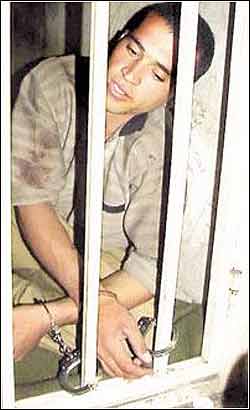
The investigation was initially hampered by the social stigma surrounding the victims. It was only after parliamentary intervention and the deployment of a special task force from Tehran that the case gained momentum. He was apprehended after a potential victim escaped and reported the incident to the authorities.
4. Legal Proceedings and Outcome
The trial became a flashpoint for Iranian social tensions. While some extremists hailed him as a hero, the judicial system proceeded with the case. He was found guilty of 16 murders, as well as theft and forgery. He was sentenced to death and executed by hanging on April 17, 2002.