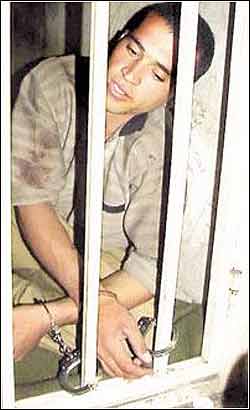




Forensic & Criminological Matrix
| Parameter | Forensic Detail |
|---|---|
| Full Legal Name | Ali Reza Khoshruy Kuran Kordiyeh (علیرضا خوشروی خوران کردیه, alias Golamreza Khoshru) |
| Media Monikers | The Vampire of Tehran, The Tehran Taxi Fiend |
| Nationality | Iranian |
| Date of Birth | December 31, 1968, Tehran, Iran |
| Date of Death | August 12, 1997 (aged 28, publicly executed by hanging from a crane following 214 lashes in Tehran) |
| Historical Penal Status | Convicted by the Islamic Revolutionary Court of 9 counts of kidnapping, aggravated rape, and premeditated murder |
| Confirmed Murder Victims | 9 female victims: adult women and girls aged between 10 and 47 |
| Active Criminal Timeline | February to June 1997 (five-month predatory wave) |
| Geographic Jurisdiction | Metropolitan Tehran and peri-urban desert zones of Kan and Chitgar, Iran |
| Lethal Modus Operandi | Posing as an unlicensed shared-taxi driver in a Paykan automobile; abducting female passengers; driving to isolated outskirts, violent rape, stabbing/strangulation, and corpse incineration with gasoline |
| Forensic & Social Significance | Sparked massive national hysteria in post-revolutionary Iran; prompted substantial overhauls in commercial transit licensing and led to one of Iran's largest public executions (over 10,000 spectators) |
| Diagnostic Motive | Sadistic sexual sociopathy, predatory misogyny, and opportunistic robbery of gold jewelry and currency |
1. Criminological Trajectory and Sociopathic Genesis
Ali Reza Khoshruy Kuran Kordiyeh, commonly known as Golamreza Khoshru, was raised on the periphery of Tehran. During his late teens and early twenties, he accumulated penal records for burglary, extortion, and sexual assault. In 1990, he was convicted in Mashhad for attempted sexual predation, but escaped detention through forged paperwork and bribes.
Relocating to western Tehran by late 1996, Kordiyeh acquired a white Paykan sedan and began cruising metropolitan transit corridors as an unlicensed shared-taxi driver (mosaferkesh), capitalizing on the dense urban transport system where commuters routinely board private cars.
2. The 1997 Murders
Between February and June 1997, Tehran was terrorized by the sequential recovery of charred female corpses in remote scrubland and dried riverbeds:
- The Transit Trap: Operating during late dusk and evening rush hours, Kordiyeh flagged lone women or mothers with small daughters. Presenting the exterior facade of an ordinary taxi, he invited them into the vehicle.
- Coercive Abduction: Once inside, Kordiyeh engaged child safety locks and deviated sharply toward the abandoned foothills of Kan and Chitgar Forest Park. When victims resisted, he bludgeoned them with an iron tire iron or drew a heavy butcher knife.
- Sexual Assault and Slaughter: In deserted gullies, he forcibly stripped the victims, subjected them to violent sexual assaults, and killed them through deep thoracic stab wounds or ligature strangulation.
- Incineration: To annihilate forensic touch-DNA, fingerprints, and seminal biological traces, Kordiyeh doused the cadavers with gasoline containers kept in his trunk and set them ablaze before looting their gold rings, necklaces, and cash.
3. Forensic Investigation and Apprehension
Dubbed "The Vampire of Tehran" by the state press, the serial murders incited intense public demands for action:
- In late June 1997, an abducted passenger jumped from his slowing vehicle around a mountain switchback, sustaining severe fractures but relaying vital vehicle details to traffic authorities.
- On July 5, 1997, Kordiyeh was cornered in an undercover dragnet near a western Tehran transport hub as he attempted to lure a female university student into his vehicle. Following a brief foot pursuit, officers tackled and subdued him.
- Search warrants executed on his car and dwelling yielded canisters of petrol, blood-stained edged weapons, and gold jewelry conclusively matched to four of the missing victims.
4. Summary Trial and Public Execution
During police interrogations, Kordiyeh confessed to nine separate murders with detached clinical indifference, remarking that he found aesthetic and physical satisfaction in witnessing the flames consume his victims.
Kordiyeh was tried summarily before Branch 1 of the Islamic Revolutionary Court of Tehran, presided over by Judge Hossein Asgharzadeh. Within two weeks, the court returned guilty verdicts for nine premeditated homicides, armed rape, and "spreading corruption on Earth" (Mofsed-e-filarz), decreeing capital punishment preceded by public flogging.
At dawn on August 12, 1997, before a crowd exceeding 10,000 spectators in Azadi Square:
- Kordiyeh was bound to a wooden post and subjected to 214 lashes across his back delivered by judicial officers and victim kin.
- Immediately following the flogging, a heavy noose was secured around his neck, and an industrial mobile crane hoisted him into the air, where he was suspended until death by hanging was certified by medical coroners.