Forensic & Criminological Matrix
| Parameter | Forensic Detail |
|---|---|
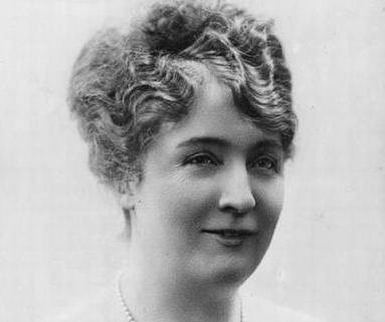
| Forensic Heading / Aliases | Marie Boyer |
| Legal Identity | Marie Boyer (Daughter of M. Boyer and Marie Salat) |
| Confirmed Victims | 1 (Marie Salat Boyer, her mother) |
| Active Timeline | March 19, 1877 |
| Jurisdiction / Area of Operations | Marseille and Montpellier, France |
| Criminological Classification | Parricide driven by affective rivalry and jealousy |
| Forensic Modus Operandi | Stabbing with a knife within the context of severe domestic conflict over the mother's lover |
| Weapon / Mechanism of Death | Knife |
| Motive / Behavioral Dynamics | Edipal/affective rivalry, cross-jealousy, and economic disputes over family inheritance |
| Judicial Outcome | Sentenced to penal servitude for life; released in 1892 following exemplary and repentant prison conduct |
1. Background and Psychopathy
Marie Boyer was born in France around 1859, the only child of a retired merchant from Montpellier, M. Boyer, and his former domestic servant turned wife, Marie Salat. During her adolescence, Marie was educated in a convent in Marseille, where she initially developed an intense inclination toward religious life and mystical devotion, famously refusing to visit her dying father under the pretext of praying in the chapel. Following her father's death and the inheritance of a substantial fortune estimated at 100,000 francs, her family dynamics shifted dramatically. Her mother withdrew her from the convent to manage her capital, exposing her to a worldly environment and introducing her to the young bookseller and mother's lover, Léon Vitalis.
2. Crime Spree
The household devolved into a theater of extreme psychological tension characterized by a triangular rivalry between mother, daughter, and lover. Madame Boyer, consumed by an unbridled passion for Léon Vitalis, openly paraded her affair before her daughter and attempted to corrupt her moral boundaries. Rather than alienating Marie from Vitalis, this exposure fostered deep resentment toward her mother and a developing attachment to the bookseller, who discreetly courted the young woman in anticipation of her future inheritance. Domestic life deteriorated further amid internal thefts of bonds and a stifling atmosphere of cross-jealousy. On March 19, 1877, the accumulated tension culminated in an extreme act of violence when Marie Boyer seized a knife and murdered her mother, Marie Salat Boyer.
3. Investigation and Forensic Pursuit
Law enforcement reaction was swift regarding a crime that shocked French society due to its parricidal nature and its sordid backdrop of moral depravity and passion. Police investigation quickly focused on the immediate family circle. Four days after the homicide, Marie Boyer was arrested as the primary and sole perpetrator of the stabbing, exposing to investigators a complex web of hidden passions, financial thefts, and economic grievances linked to the paternal inheritance.
4. Arrest and Judicial Proceedings
Following her arrest in late March 1877, Marie Boyer underwent rigorous judicial proceedings in French courts. The trial publicly laid bare the sordid details of the household dynamics, the mother's infidelity, and the manipulation exerted by Léon Vitalis. While the defense attempted to contextualize the crime within an environment of severe psychological pressure and moral corruption inflicted upon an impressionable young woman, the evidence of parricide was irrefutable. Ultimately, she was found guilty and sentenced to penal servitude for life.
5. Psychiatric Assessment and Outcome
From a criminological standpoint, Marie Boyer's case exemplifies a parricide driven by severe relational pathology, intense jealousy, and a dysfunctional mother-daughter rivalry exacerbated by financial incentives. Upon entering the penal system to serve her life sentence, Marie's behavior underwent a radical transformation. Her profound remorse and exemplary, docile conduct throughout her imprisonment convinced penal authorities of her complete rehabilitation, leading to her eventual release in 1892.