Forensic & Criminological Matrix
| Parameter | Forensic Detail |
|---|---|
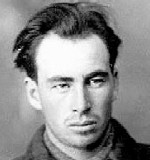
| Forensic Heading / Aliases | The Smuttynose Murderer |
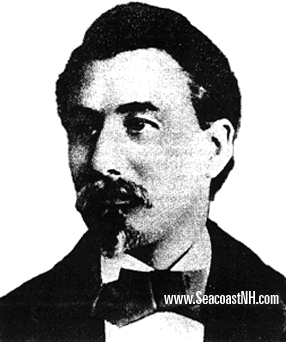
| Legal Identity | Louis Wagner |
| Confirmed Victims | 2 |
| Attributed / Indicted Victims | 2 |
| Active Timeline | March 6, 1873 |
| Jurisdiction / Area of Operations | Smuttynose Island, York County, Maine |
| Criminological Classification | Multiple Murderer (Robbery-Homicide) |
| Forensic Modus Operandi | Nocturnal ax attack following home invasion |
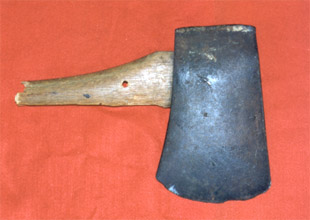
| Weapon / Mechanism of Death | Hand ax |
| Motive / Behavioral Dynamics | Financial gain / Robbery |
| Judicial Outcome | Death sentence by hanging (executed June 25, 1875) |
1. Background and Psychopathy
Louis Wagner was a Prussian immigrant and fisherman who lived among a group of Norwegian immigrants on Smuttynose Island. After moving to Portsmouth, he struggled with poverty and debt. His familiarity with the Hontvet household and their financial situation provided the motive for his return to the island.
2. Crime Spree
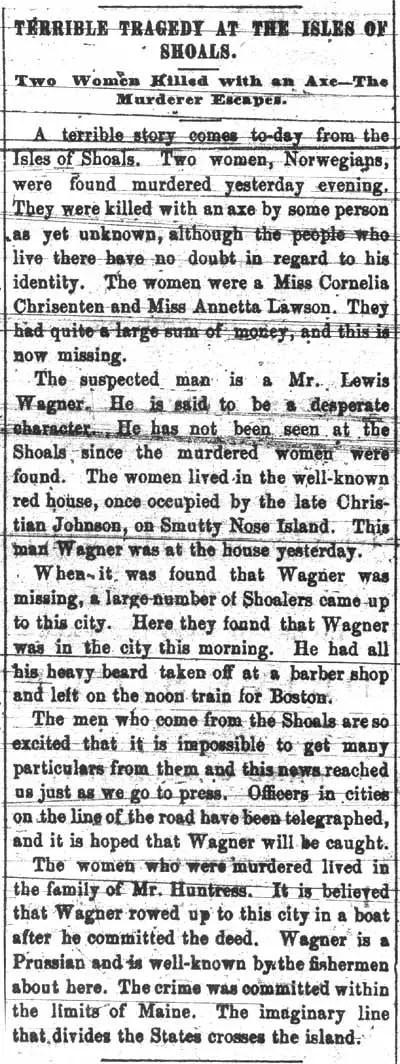
On the night of March 6, 1873, Wagner rowed to Smuttynose Island. He entered the Hontvet house, where he encountered Karen and Anethe Christensen. Using an ax, he killed both women. Maren Hontvet, the third woman present, managed to escape through a window and hid in the cold until she could signal for help the following morning.
3. Investigation and Arrest
Police investigation relied heavily on Maren Hontvet's eyewitness account. Forensic evidence, including a button found in Wagner's possession that matched the victims' clothing and the discovery of the stolen dory, linked him directly to the scene. Wagner's behavior in Boston—changing his appearance and making incriminating statements—further solidified the case against him.
4. Legal Proceedings and Outcome
The trial was a landmark event in Maine, complicated by jurisdictional debates. Wagner's defense was undermined by his own inconsistent testimony and lack of a credible alibi. He was convicted of first-degree murder and sentenced to death. He was executed by hanging on June 25, 1875, maintaining his innocence until the end.