



Forensic & Criminological Matrix
| Parameter | Forensic Detail |
|---|---|
| Full Legal Name | Bathsheba Ruggles Spooner |
| Birth Legal Identity | Bathsheba Ruggles |
| Judicial / Historical Epithet | First woman executed in post-Declaration of Independence United States |
| Date of Birth | February 15, 1746 |
| Place of Birth | Sandwich, Province of Massachusetts Bay |
| Date of Execution | July 2, 1778 (aged 32) |
| Place of Execution | Worcester, Massachusetts, United States |
| Legal Cause of Death | Judicial execution by hanging |
| Procedural Status | Executed |
| Proven Victims | 1 (Joshua Spooner) |
| Criminological Classification | Spousal homicide by inducement / Premeditated capital conspiracy |
| Motive | Severe marital aversion, adultery, and concealment of extramarital pregnancy |
| Modus Operandi | Contract ambush and blunt-force trauma followed by concealment in an artesian well |
| Judicial Sentence | Capital punishment by hanging ratified by Worcester County Court |
Criminological Profile & Background
Bathsheba Ruggles was born into the upper tier of the colonial Massachusetts social and judicial elite. Her father, Brigadier General Timothy Ruggles, had presided as Chief Justice of the Court of Common Pleas in Worcester and was one of the wealthiest landowners and leading Loyalist (Tory) figures in New England prior to the Revolutionary War. Bathsheba was raised with high privilege and education in Hardwick.
In 1766, an arranged marriage linked her to Joshua Spooner, a wealthy gentleman farmer in Brookfield. Despite having four children and maintaining a prominent two-story country estate, the union deteriorated into severe mutual resentment; historical records recount that Bathsheba developed an incurable psychological aversion toward her authoritarian husband.
In the spring of 1777, while her father was banished from Massachusetts due to his allegiance to the British Crown, Bathsheba nursed back to health Ezra Ross, a sixteen-year-old Continental Army soldier returning home from Washington's winter camp. An illicit liaison ensued over successive visits, leading by late 1777 to an extramarital pregnancy that threatened irreversible public disgrace under puritanical colonial codes.
Criminal Conspiracy and Execution of the Homicide
Determined to eliminate her spouse before the advanced gestation became undeniable, Bathsheba initially attempted to persuade Ross and household servants to administer poison, which failed to materialize. In late February 1778, she recruited two escaped British soldiers from General Burgoyne's defeated army, William Brooks and James Buchanan, enticing them with banknotes, fine tailored clothing, and horses.
On the night of March 1, 1778, as Joshua Spooner returned from a local tavern, the conspirators ambushed him in the front yard. Brooks inflicted fatal blunt-force trauma with a weapon. The perpetrators then hoisted the body into the estate well in an attempt to simulate an accidental fall or sudden disappearance.
Apprehension, Forensic Controversy, and Execution
The concealment unravelled within hours. Bloodstains on the snow and grass prompted a search that yielded the victim's remains from the well, leading to Bathsheba's immediate apprehension. Soon afterward, Ross, Brooks, and Buchanan were captured in Worcester carrying the deceased man's boots, silver buckles, and clothing.
Tried in Worcester in April 1778, all four were convicted of capital murder. Bathsheba submitted a formal petition for respite based on pregnancy (plea of belly). A council of matrons and examiners initially split on the finding, but the court denied the reprieve amidst fierce anti-Loyalist wartime fervor.
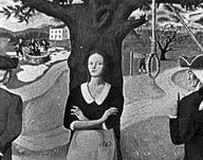
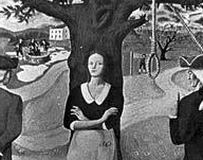
On July 2, 1778, Bathsheba Spooner was publicly hanged alongside her three co-conspirators before thousands in Worcester. A post-mortem autopsy performed at her prior request verified that she was indeed carrying a five-month-old male fetus, sealing the case as one of early American jurisprudence's most contentious legal proceedings.