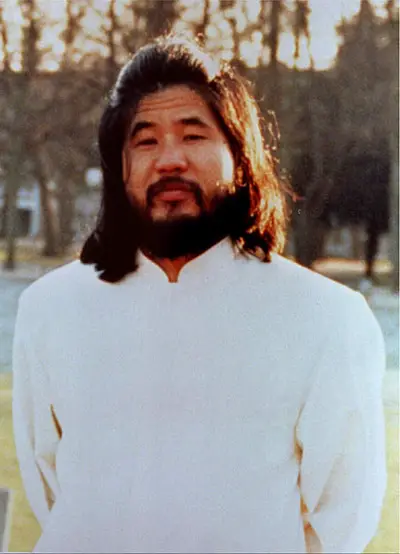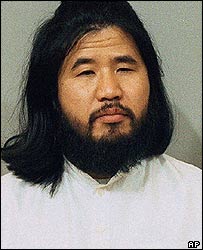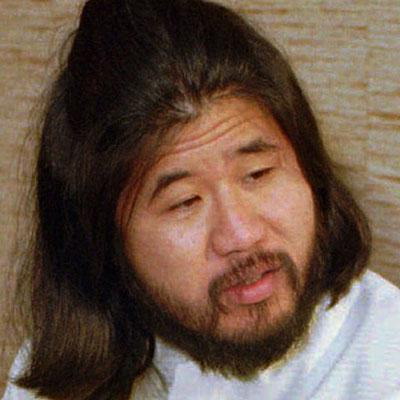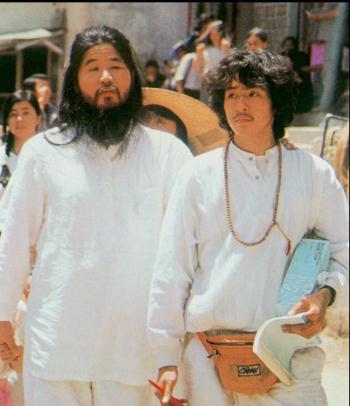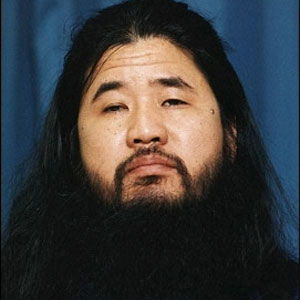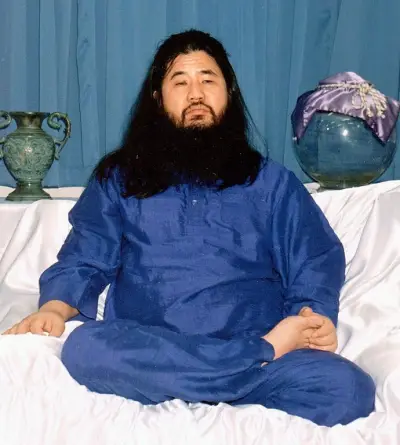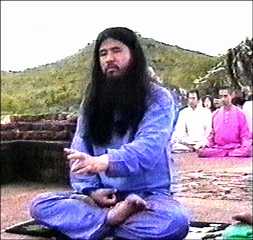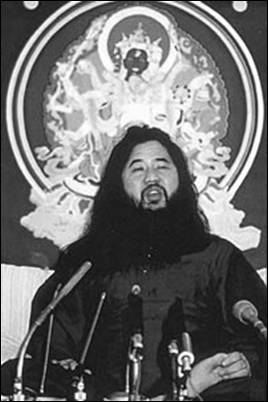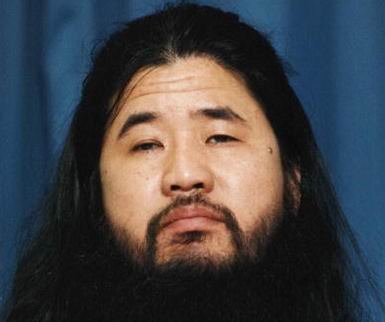



Forensic & Criminological Matrix
| Parameter | Forensic Detail |
|---|---|
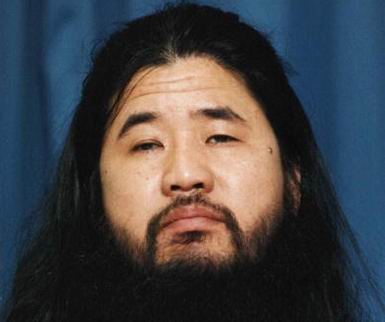
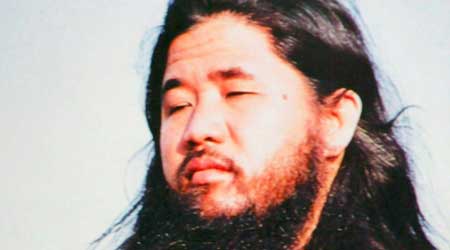
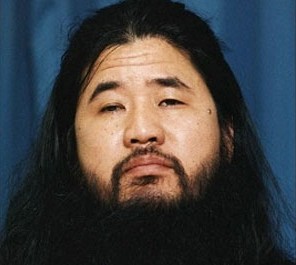
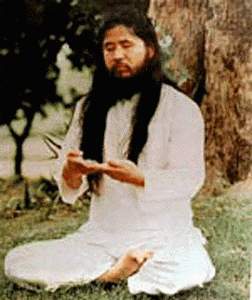
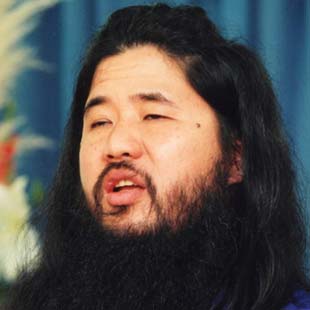
| Legal Birth Name | Chizuo Matsumoto (松本 智津夫) |
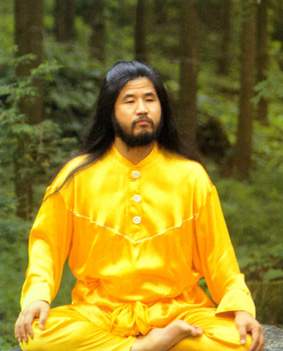
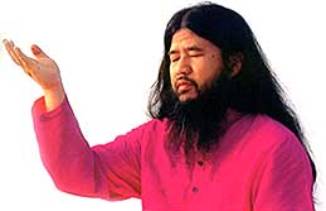
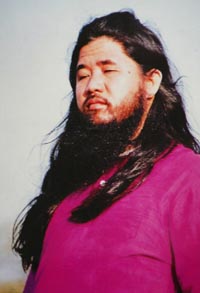
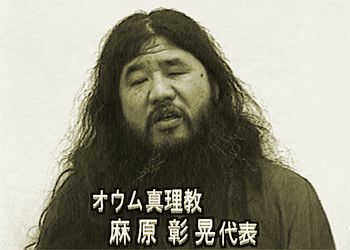
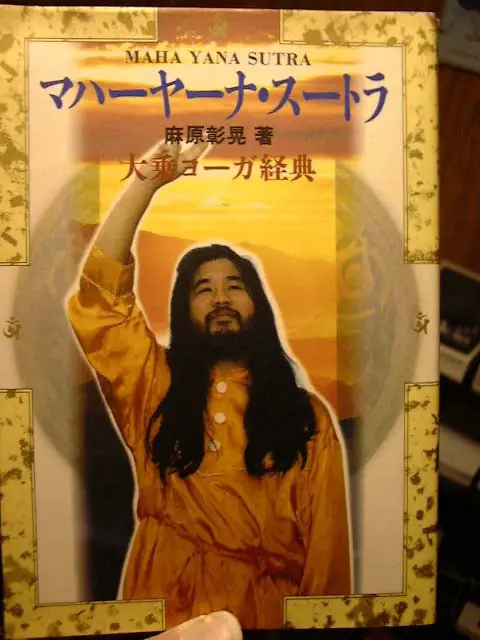
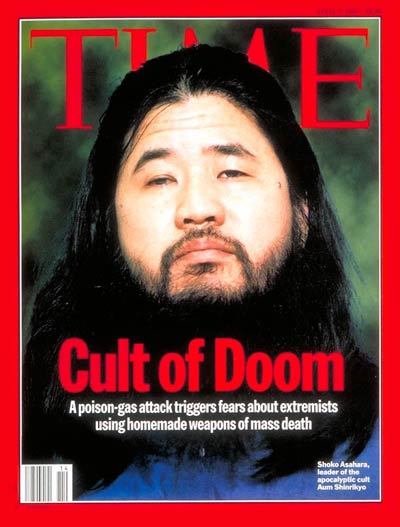
| Spiritual Moniker | Shoko Asahara (麻原 彰晃), Supreme Master of Aum |
| Nationality | Japanese |
| Date and Place of Birth | March 2, 1955, Yatsushiro, Kumamoto Prefecture, Japan |
| Date and Place of Death | July 6, 2018, Tokyo Detention House, Katsushika, Tokyo (aged 63) |
| Cause of Death | Judicial execution by hanging (simultaneous coordinated executions of 7 cult leaders) |
| Criminal Classification | Doomsday cult supreme leader / Chemical & biological mass terrorist |
| Terrorist Entity | Aum Shinrikyo (Supreme Truth) |
| Primary Mass Attack | Tokyo subway sarin attack (March 20, 1995, morning rush hour) |
| Ancillary Crimes | Matsumoto sarin gas attack (June 1994, 8 dead); Sakamoto family homicide (1989, lawyer Tsutsumi Sakamoto, wife, and 14-month-old infant); VX assassination campaign |
| Total Legally Proven Fatalities | 27 direct homicides (13 directly resulting from the Tokyo subway deployment) |
| Injuries & Casualties | In excess of 6,000 injured; hundreds left with permanent optical, pulmonary, and neurological damage |
| Weapons of Mass Destruction Developed | Industrial military synthesis of Sarin (GB), VX nerve agent, Phosgene, Clostridium botulinum toxin, and Bacillus anthracis |
| Judicial Sentence | Sentenced to death by hanging at Tokyo District Court (2004); finalized by Supreme Court of Japan (2006) |
From Alternative Medicine to Apocalyptic Megalomania
Chizuo Matsumoto was born visually impaired into an impoverished tatami-weaver family in Kumamoto Prefecture. Educated in schools for the blind where he studied acupuncture and traditional herbal medicine, Matsumoto was denied admission to the prestigious University of Tokyo. In the early 1980s, he received criminal fines for peddling unauthorized medicines in Tokyo.
In 1984, adopting the spiritual moniker "Shoko Asahara," he launched a yoga study group that evolved into Aum Shinrikyo ("Supreme Truth") in 1987. Fusing esoteric Tibetan Buddhism, Shiva Hindu iconography, and Nostradamus's prophecies with Christian apocalyptic texts, Asahara proclaimed himself the Lamb of God and Christ incarnate. He prophesied that a thermonuclear World War III would destroy modern civilization by the close of the millennium, declaring that only his spiritual elect would survive.
Asahara successfully recruited brilliant graduate students, organic chemists, physicians, and engineers from elite institutions such as the University of Tokyo and Kyoto University, who assigned their financial inheritances to the cult.
Industrial Chemical Warfare and Clandestine Purges
Under religious tax exemptions, Asahara erected a vast fortress compound at Kamikuishiki near Mount Fuji. Known as Satian 7, the facility housed industrial chemical synthesis plants. Led by cult chief chemist Masami Tsuchiya, Aum successfully manufactured military-grade sarin nerve agent, VX, mustard gas, and biological pathogens.
Defectors and investigative threats were methodically eliminated. In November 1989, an Aum strike team invaded the residence of Tsutsumi Sakamoto, a Yokohama attorney preparing civil fraud litigation against the cult. Under Asahara's explicit directives, the team injected Sakamoto, his wife Satoko, and their 14-month-old infant son Tatsuhiko with potassium chloride and manually strangled them, burying their remains across three remote mountain prefectures.
In June 1994, Asahara deployed nerve gas in Matsumoto (Nagano Prefecture). A customized delivery truck sprayed sarin into a residential courtyard targeting judges deliberating a real estate lawsuit against Aum; eight residents died and more than five hundred required emergency hospitalization.
March 20, 1995: The Tokyo Subway Sarin Strike
In early 1995, receiving intelligence that the Tokyo Metropolitan Police planned imminent raids on Aum compounds, Asahara ordered an indiscriminate chemical terror attack on Tokyo's mass transit system to trigger societal collapse and divert state investigators.
During the 8:00 AM rush hour on Monday, March 20, 1995, five Aum operatives boarded commuter trains across three intersecting lines (Chiyoda, Marunouchi, and Hibiya) converging on Kasumigaseki station, the administrative center of the Japanese government. Each attacker carried double-layered plastic pouches containing 900ml of liquid sarin concealed in newspaper bundles.
Operatives dropped the packages onto crowded floorboards, punctured them with sharpened umbrella tips, and exited into waiting getaway cars. The liquid sarin volatilized rapidly into lethal toxic vapors.
Commuters and transit personnel collapsed in convulsions, hemorrhaging from respiratory passages, vomiting, and experiencing catastrophic pinpoint pupillary constriction (miosis). The attack killed 13 people, injured more than 6,000, and traumatized the nation.
Concealment in the Ceiling, Trial, and Coordinated Executions
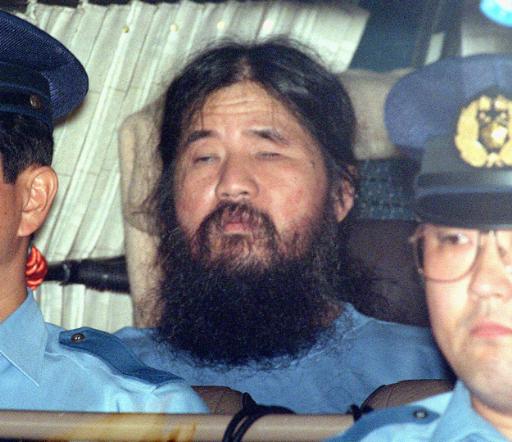
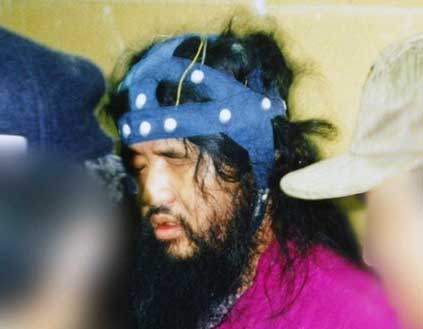
On May 16, 1995, heavily armed police breached the Kamikuishiki headquarters. Following a day-long search, detectives located Asahara curled inside a hidden false crawlspace between the second and third floor ceilings, meditating with millions of yen in currency.
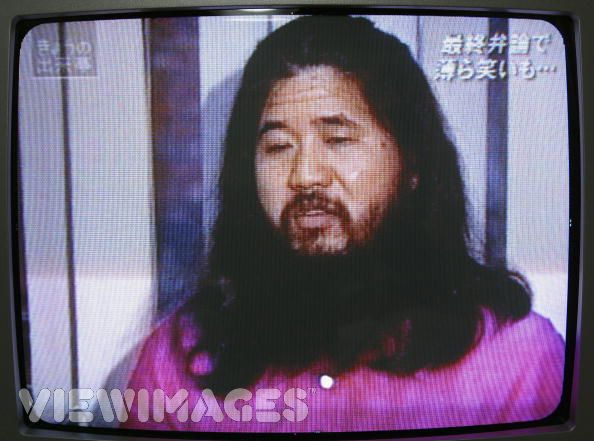
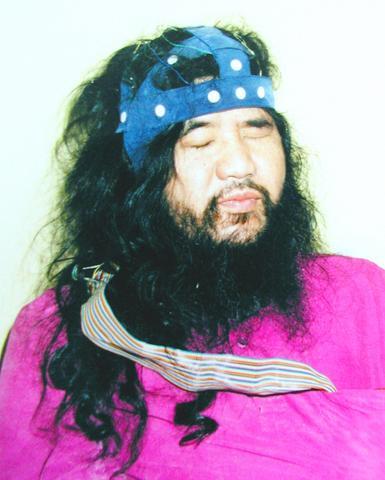
Asahara's trial spanned nearly eight years at the Tokyo District Court. Throughout the proceedings, he feigned catatonia, mumbled incoherent chants, and refused to address his victims' families. On February 27, 2004, the court convicted him on 13 criminal counts including 27 murders, handing down the death penalty.
On July 6, 2018, the Japanese Ministry of Justice carried out the simultaneous judicial execution by hanging of Shoko Asahara and six of his senior lieutenants across detention facilities in Tokyo, Osaka, Hiroshima, and Fukuoka, closing the darkest chapter of domestic terrorism in modern Japanese history.