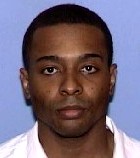




Forensic & Criminological Matrix
| Parameter | Forensic Detail |
|---|---|
| Forensic Heading / Aliases | The Lubbock Double Murderer / Birdsall-McVade Case |
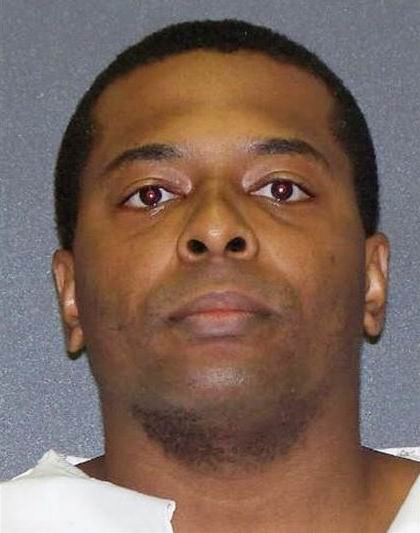
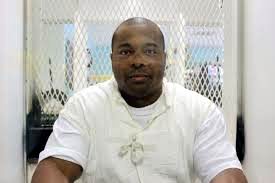
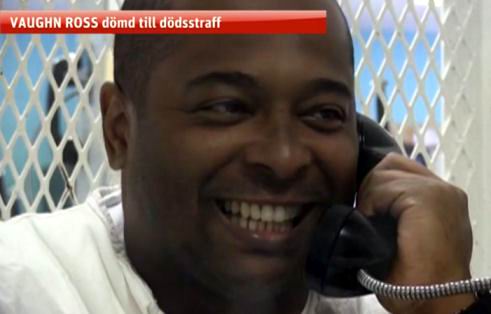
| Legal Identity | Vaughn Ross (born to Johnnie Ross and Hershall Sumpton) |
| Confirmed Victims | 2 fatal victims |
| Attributed / Indicted Victims | 2 fatal victims (and 1 prior aggravated stabbing assault in 1997) |
| Active Timeline | January 30–31, 2001 |
| Jurisdiction / Area of Operations | Lubbock, Lubbock County, Texas, United States |
| Criminological Classification | Spree/Dispute-driven homicide / Premeditated double murderer |
| Forensic Modus Operandi | Isolation of scene, wearing surgical latex gloves, ambush shooting in a dark alleyway, close-range headshots, vehicle staging and body concealment in a rural ravine |
| Weapon / Mechanism of Death | Handgun (.38-caliber revolver) / Fatal gunshot wounds to the cranium |
| Motive / Behavioral Dynamics | Pathological rage, extreme jealousy, poor impulse control ignited by interpersonal telephone disputes |
| Judicial Outcome | Convicted of Capital Murder; sentenced to death; executed via lethal injection on July 18, 2013, at Huntsville Unit, Texas |
1. Background and Profile
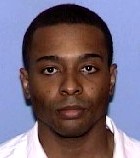
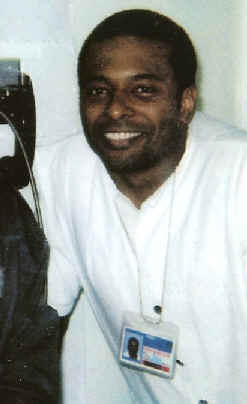
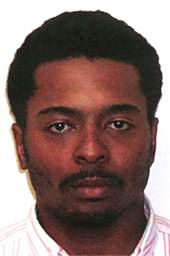
Vaughn Ross was born on September 4, 1971, in Saint Louis, Missouri. Raised primarily by his mother, Johnnie Ross, in a household with three sisters (Valeria, Tiffany, and Michelle), Ross grew up without a consistent male authority figure after his biological father, Hershall Sumpton, abandoned the family when Vaughn was approximately eight years old. Forensic and psychological background reviews conducted during post-conviction litigation underscored persistent maternal conflict and chronic emotional isolation stemming from his father's absence.
Despite childhood challenges, Ross exhibited academic and professional competence. He graduated from high school in a Saint Louis suburb with no major juvenile delinquency record, subsequently enrolling at Central Missouri State College. There, he earned both an Associate of Science and a Bachelor of Science degree, focused on architectural design and clerical drafting. Ross was socially active, served as president of his university fraternity chapter, and held professional positions at several architectural drafting firms.
However, Ross masked severe underlying impulsivity and explosive anger. On July 13, 1997, in Missouri, Ross attacked his then-girlfriend, Regina Carlisle, during a confrontation involving a butcher knife. Carlisle suffered nine incised lacerations, three deep stab wounds to her thigh and arm, and a life-threatening cut to the left side of her neck, while Ross demanded that she yield her neck and declared she was going to die. Ross then stole her automobile. On October 7, 1997, Ross pled guilty to Class B felony assault and Class C felony vehicle theft, receiving a three-year probation term conditioned on completing mandatory anger management rehabilitation.
Upon finishing his probation in 2000, Ross relocated to Lubbock, Texas, to pursue graduate architectural studies at Texas Tech University. During this period, he resided at the Chateau De Ville apartment complex and entered into a volatile romantic relationship with Liza Shontell McVade, who lived with him intermittently alongside her three-year-old child.
2. Criminal Career and Modus Operandi
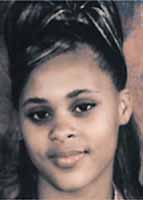
On the night of January 30, 2001, an explosive interpersonal confrontation erupted inside Ross’s apartment at 2024 10th Street in Lubbock. Liza’s 18-year-old sister, Viola Ross McVade, repeatedly telephoned the residence. During these exchanges, Viola handed the phone to Clarence Garner, Liza’s ex-boyfriend. Garner engaged in a heated verbal altercation with Ross, mocking him as a coward. Consumed by rage and jealousy, Ross engaged in reciprocal arguments with both Viola and Liza.
Concurrently, Douglas Birdsall, the 53-year-old Associate Dean of Libraries at Texas Tech University, was cruising the area in his black Saab sedan in search of commercial sex. Birdsall crossed paths with Viola McVade through a mutual acquaintance, Teresa Williams. Birdsall agreed to transport Viola in his vehicle, ultimately driving her toward Ross’s apartment complex where Viola intended to collect her sister Liza and her young nephew.
Anticipating Viola’s arrival following explicit telephone death threats, Ross exhibited calculated premeditation. He donned surgical latex gloves and commanded Liza to vacate the apartment immediately with her child, stating ominously: "If I do something, I don't want nobody around." Liza fled on foot to her father's home shortly before 22:15 hours.
Around 22:30 hours, Birdsall parked his Saab in the darkened service alley behind the 9th and 10th street corridors, less than 30 yards from Ross's apartment door. Armed with a .38-caliber handgun, Ross ambushed the vehicle. He fired multiple shots through the side glass, striking Viola McVade three times in the head at close range as she leaned forward in terror in the front passenger seat. Birdsall was shot multiple times in the cranium and upper torso. Ross then maneuvered Birdsall's bleeding body into the rear passenger seat, got behind the wheel of the bloodstained Saab, and navigated the car approximately 4.2 miles away to Canyon Lake Park No. 6, dumping the car with both corpses inside into a drainage ravine.
3. Investigation and Arrest
On Wednesday morning, January 31, 2001, a passing bicyclist noticed the black Saab abandoned at the bottom of the ravine in Canyon Lake Park No. 6 and alerted municipal workers, who promptly summoned the Lubbock Police Department. Responding officers discovered Douglas Birdsall dead in the rear passenger compartment, soaked in blood with catastrophic cranial trauma, and Viola McVade dead in the front passenger seat with three close-contact bullet entry wounds to the skull.
Detective D'Wayne Proctor linked the double execution to a dispatch report from the previous evening involving gunfire in the alley behind Chateau De Ville apartments. Forensic crime scene technicians documented shards of tempered automobile window glass, two expansive pools of blood, and an ejected .38-caliber cartridge casing in the alleyway. Comparative laboratory analysis verified that the glass matched Birdsall's Saab and the casing shared identical toolmark striations with ballistic fragments extracted during the victims' autopsies.
The forensic breakthrough arrived from micro-trace evidence inside the vehicle: investigators recovered a torn fingertip from a latex glove discarded among the broken window glass. Serological and molecular genetic profiling by forensic laboratories yielded a dual DNA profile: the exterior of the latex piece bore the blood of Douglas Birdsall, while cellular biological material recovered from the inside of the glove fingertip generated an exact DNA match with Vaughn Ross.
During police interviews, Ross claimed he had worn latex gloves merely to sanitize his kitchen with bleach, but consented to a search of his residence. Investigators recovered matching latex gloves and a gray sweatshirt. DNA analysis detected human blood on the exterior of the sweatshirt matching Douglas Birdsall, while sweat and skin epithelial cells inside the collar matched Ross. In addition, phone monitors at the Lubbock County Jail captured Ross admitting to his mother that he "might have" committed the killings when directly questioned about his culpability.
4. Legal Proceedings and Outcome
In February 2001, a Lubbock County grand jury indicted Vaughn Ross on two counts of Capital Murder. His trial commenced in September 2002 before the 137th District Court of Lubbock County, prosecuted by District Attorney Matt Powell. Defense attorneys Floyd Holder Jr. and Patrick S. Metze argued that the latex glove tip was fabricated or contaminated and posited that the physical manipulation of Birdsall’s body required multiple assailants. The physical and DNA evidence, however, proved irrefutable.
On September 23, 2002, the jury returned a verdict of guilty on capital murder charges. In the subsequent penalty phase, the prosecution introduced evidence of Ross's unprovoked 1997 near-fatal knife attack against Regina Carlisle, as well as an incident at the Lubbock County Jail where Ross had violently torn off his inmate identification band and cursed correctional officers. The jury answered affirmatively to the statutory issues of future dangerousness and culpability, finding no mitigating circumstances sufficient to warrant a life sentence. On September 27, 2002, Ross was sentenced to death.
Post-conviction appeals spanned over a decade. The Texas Court of Criminal Appeals affirmed the conviction and death sentence on direct appeal on May 5, 2004 (Ross v. State, 133 S.W.3d 618). Ross initiated extensive federal habeas corpus proceedings (Ross v. Thaler, 511 Fed.Appx. 293), asserting ineffective assistance of counsel for failing to adequately investigate mitigating family circumstances and Carlisle's prior criminal history. The U.S. District Court for the Northern District of Texas and the U.S. Court of Appeals for the Fifth Circuit denied relief, ruling that new affidavits submitted after state proceedings were procedurally barred under Cullen v. Pinholster.
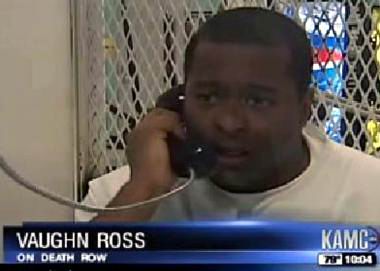
Following the U.S. Supreme Court’s denial of a final stay application, Vaughn Ross was executed by lethal injection at the Huntsville Unit on July 18, 2013. Strapped to the gurney in the death chamber, Ross offered no apology to the Birdsall or McVade families, maintaining defiance in his final statement: "Who are they? I know this is hard for y'all, but we are going to have to go through it. You know I don't fear death. We know the lies that were told against me in court. We know it's not true. I want y'all to be strong and keep going. That's it." Ross was pronounced dead at 18:38 hours at the age of 41.