





Forensic & Criminological Matrix
| Parameter | Forensic Detail |
|---|---|
| Forensic Heading / Aliases | Mary Mabel Rogers |
| Legal Identity | Mary Mabel Bennett Rogers |
| Confirmed Victims | 1 (Marcus Rogers); suspected prior infant homicide |
| Active Timeline | 1901 - 1902 |
| Jurisdiction / Area of Operations | Bennington, Vermont, United States |
| Criminological Classification | Profit-motivated murderer / Domestic homicide |
| Forensic Modus Operandi | Interactive deception (simulated rope trick) to restrain the victim, chemical incapacitation via chloroform, and subsequent lethal immersion |
| Weapon / Mechanism of Death | Ligatures, chloroform, and mechanical asphyxia by drowning |
| Motive / Behavioral Dynamics | Financial gain (life insurance policy), marital dissolution, and removal of domestic impediments |
| Judicial Outcome | Sentenced to death by hanging; executed on December 8, 1905, at the Vermont State Prison |
1. Background and Profile
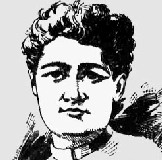
Mary Mabel Bennett was born on March 9, 1883, in upstate New York. Her early development was characterized by domestic instability and severe socioeconomic deprivation. At the age of 16, she married Marcus Rogers, a 27-year-old laborer. Acquaintances frequently described Mary as emotionally unstable, restless, and prone to abandoning the household during marital disputes. In 1901, she gave birth to a daughter; six months later, the infant died of a fractured skull under ambiguous circumstances. Although neighborhood suspicions pointed toward maternal culpability or deliberate neglect, no formal charges were pursued at that time.
2. Crime Spree and Modus Operandi
As the marriage deteriorated and Marcus sought employment in Hoosick Falls while urging reconciliation, Mary engaged in illicit relationships with local laborers, including Morris Knapp and brothers Leon and Levi Perham. Motivated by the desire to eliminate her husband to collect a life insurance payout and marry her new partner, Mary planned his murder. After Levi declined her initial overture, she successfully recruited Leon Perham in August 1902.
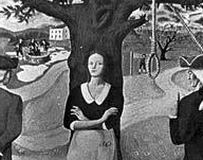
On the evening of August 12, 1902, Mary lured Marcus to a secluded picnic grove in Bennington under false pretenses of reconciliation. Feigning interest in a rope-escape trick, she orchestrated the binding of her husband's wrists behind his back with Leon's assistance. Once immobilized, Mary subdued him by forcing chloroform into his respiratory tract until he lost consciousness. She then stole his insurance documentation, and both perpetrators rolled the victim into a nearby river to simulate an accidental drowning or suicide, securing his hat to a tree with a fabricated note.
3. Investigation and Arrest
The discovery of Marcus Rogers' body in the river initiated a rigorous investigation by local law enforcement. Under interrogation, Leon Perham confessed to his role and detailed Mary's orchestration of the conspiracy. Physical evidence from the crime scene, coupled with prior domestic tensions and historical allegations of attempted poisoning via tainted tea, cemented the prosecution's case against Rogers.
4. Legal Proceedings and Outcome
During the 1904 trial, Leon Perham served as the state's primary witness, securing leniency due to his youth and cooperation, whereas the prosecution portrayed Mary Rogers as an unwomanly and calculating figure. Despite defense arguments focusing on her difficult upbringing and psychological immaturity, the jury returned a verdict of guilty of first-degree murder, resulting in a mandatory death sentence by hanging.
5. Psychiatric Assessment and Execution
Following her conviction, extensive commutation efforts were launched by legal counsel and state representatives, questioning her mental stability and challenging the death penalty's application. The litigation reached the Supreme Court of the United States, which ruled in November 1905 that no federal constitutional rights had been violated.
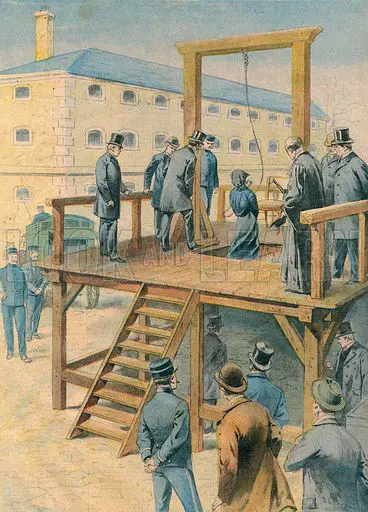
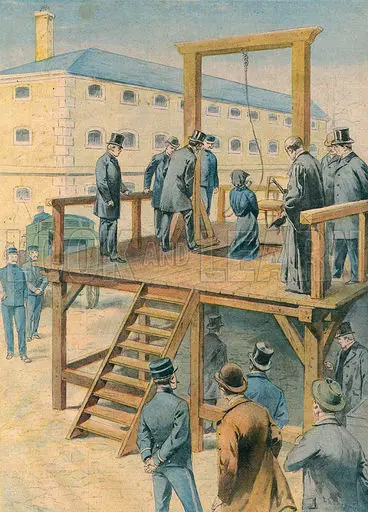
Governor Charles J. Bell denied further clemency requests, and the execution warrant was upheld. On December 8, 1905, Mary Mabel Rogers walked calmly to the scaffold at the Vermont State Prison and was executed by hanging, marking her place in history as the final female prisoner legally executed in the state of Vermont.