



Forensic & Criminological Matrix
| Parameter | Forensic Detail |
|---|---|
| Forensic Heading / Aliases | Silky |
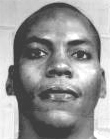
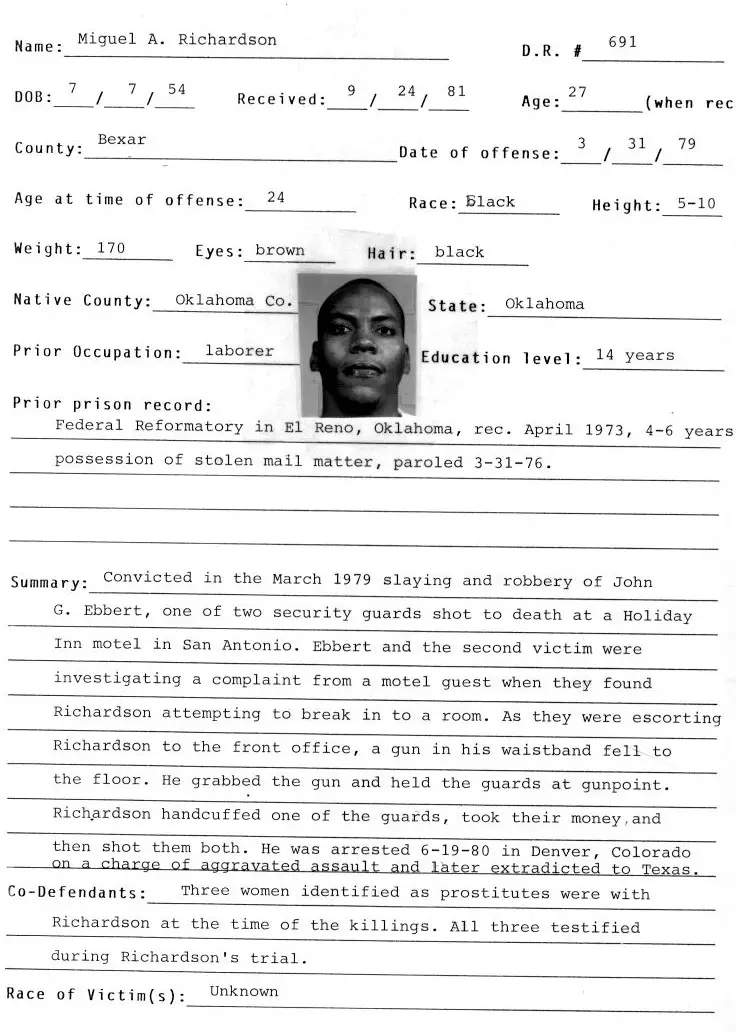
| Legal Identity | Miguel A. Richardson |
| Confirmed Victims | 2 |
| Attributed / Indicted Victims | 2 |
| Active Timeline | 1979 |
| Jurisdiction / Area of Operations | San Antonio, Texas, USA |
| Criminological Classification | Murderer |
| Forensic Modus Operandi | Armed robbery, disguise, summary execution |
| Weapon / Mechanism of Death | .38 caliber pistol |
| Motive / Behavioral Dynamics | Robbery and witness elimination |
| Judicial Outcome | Death penalty (executed) |
1. Background and Profile
Miguel A. Richardson was born in Oklahoma in 1954. His criminal history began with a 1973 federal conviction for mail theft. After his 1976 parole, he continued a pattern of violent behavior. He adopted the nickname "Silky" from a 1970s book character. Throughout his incarceration, he demonstrated extreme volatility, attacking jail staff in Denver and attempting multiple escapes, including a 1997 incident during a prison transport.
2. Crime Spree
On March 31, 1979, while staying at a San Antonio Holiday Inn with three underage prostitutes, Richardson attempted to rob a guest. He was confronted by security guards John Ebbert and Howard Powers. After his concealed .38 caliber pistol fell from his waistband, he seized control, handcuffed one guard, robbed them, and executed both men at close range. He then coerced his companions to destroy evidence, including cleaning the crime scene and flushing shell casings down a toilet.
3. Investigation and Arrest
Richardson fled to Denver, Colorado, where he was apprehended in June 1980 during a separate robbery attempt. He fought extradition to Texas for two years. During his pre-trial detention in Denver, he stabbed a deputy sheriff in the neck with a homemade shank, further cementing his reputation as a high-risk, dangerous offender.
4. Legal Proceedings and Outcome
Convicted of capital murder in 1981, Richardson spent two decades on death row. His legal team filed numerous appeals to the U.S. Supreme Court, primarily challenging his mental competency and the involuntary administration of anti-psychotic medication. All appeals were ultimately exhausted.
5. Psychiatric Evaluation and Execution
Miguel Richardson was executed by lethal injection on June 26, 2001, in Huntsville, Texas. His final moments were characterized by a bizarre, religious-themed monologue in which he claimed to be a "minister of love." He was pronounced dead at 6:28 p.m.