



Forensic & Criminological Matrix
| Parameter | Forensic Detail |
|---|---|
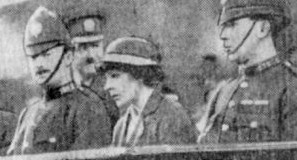
| Forensic Heading / Aliases | Susan Newell (Scotland's last executed woman) |
| Legal Identity | Susan McAllister Newell |
| Confirmed Victims | 1 (John Johnston, 13) |
| Active Timeline | 1923 |
| Jurisdiction / Area of Operations | Glasgow, Scotland, United Kingdom |
| Criminological Classification | Homicidal offender / Child murderer |
| Forensic Modus Operandi | Abduction and lethal assault of a juvenile newspaper delivery boy within a residential environment, followed by evidence concealment. |
| Weapon / Mechanism of Death | Manual strangulation / Physical trauma |
| Motive / Behavioral Dynamics | Unknown / Insanity defense rejected by the court |
| Judicial Outcome | Sentenced to death by hanging; executed at Duke Street Prison, Glasgow, on October 10, 1923. |
1. Background and Profile
Susan McAllister Newell was born in Scotland in the late 19th century, living a life largely obscured by socioeconomic hardship prior to her historic conviction. Although she lacked a prominent prior criminal record, her psychological framework and behavioral stability became central topics of debate during her judicial proceedings as experts evaluated her mental state.
2. Crime Spree
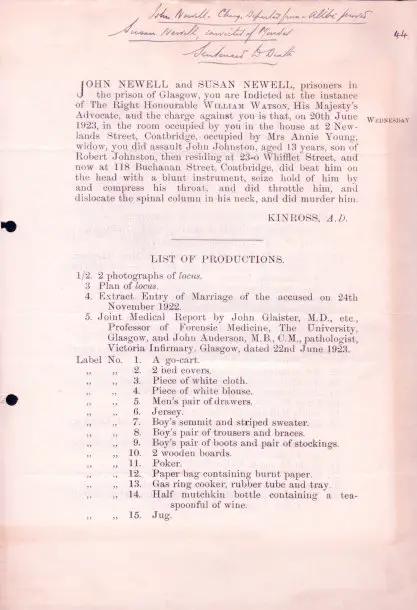
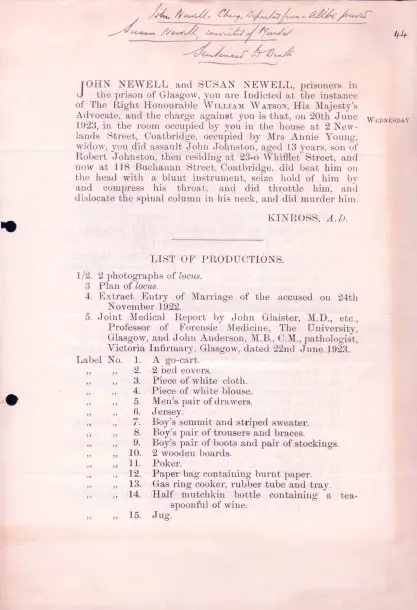
Newell's sole confirmed crime occurred in 1923 in Glasgow. The victim, John Johnston, was a 13-year-old newspaper delivery boy who went missing while executing his daily route. His body was subsequently discovered linked to Newell's premises, revealing a violent assault executed without provocation or warning. Newell steadfastly refused to offer any confession or rationale explaining why the boy had to die.
3. Investigation and Arrest
Law enforcement initiated a rapid investigation following the discovery of the juvenile's remains. Circumstantial evidence gathered at the scene and witness testimonies regarding the victim's last known whereabouts pointed directly toward Newell. Police apprehended her on the exact same day the body was discovered, securing critical physical evidence linking her to the homicide.
4. Legal Proceedings and Outcome
During her trial in Scotland, Newell's defense counsel entered a plea of insanity, contending that she suffered from severe mental impairment at the time of the offense. The court, however, rejected the plea due to insufficient medical substantiation of legal insanity. The jury found her guilty of murder based on the compelling circumstantial evidence, and she was sentenced to death.
5. Psychiatric Assessment and Execution
Despite forensic examinations into her psychological condition, no mitigating psychiatric disorder was officially accepted to commute her sentence. Susan Newell holds a definitive place in British legal history as the final female prisoner to undergo capital punishment by hanging in Scotland. Her execution was carried out at Duke Street Prison in Glasgow on October 10, 1923.