




Forensic & Criminological Matrix
| Parameter | Forensic Detail |
|---|---|
| Forensic Heading / Aliases | null |
| Legal Identity | Louis Kenneth Neu |
| Confirmed Victims | 2 |
| Attributed / Indicted Victims | 2 |
| Active Timeline | September 1933 |
| Jurisdiction / Area of Operations | New York, New Jersey, and Louisiana, USA |
| Criminological Classification | Predatory murderer / Opportunistic thief |
| Forensic Modus Operandi | Deception, blunt force trauma, and strangulation |
| Weapon / Mechanism of Death | Electric iron, blackjack, and manual strangulation |
| Motive / Behavioral Dynamics | Financial gain and potential personality disorder |
| Judicial Outcome | Death sentence by hanging |
1. Background and Profile
Born in 1910, Louis Kenneth Neu was an aspiring entertainer who struggled to find success during the Great Depression. With a history of mental health issues, including confinement in the Georgia State Mental Home, Neu exhibited a parasitic lifestyle. His profile was marked by superficial charm, narcissism, and a lack of empathy, which he exploited to manipulate his victims.
2. Crime Spree
On September 2, 1933, Neu met Lawrence Shead in Times Square. After gaining his trust, he was invited to Shead's apartment, where he bludgeoned him with an electric iron and strangled him. Neu then stole Shead's suit, watch, and car. He later traveled to New Orleans, where he attempted to blackmail Sheffield Clark Sr. When Clark resisted, Neu murdered him with a blackjack and fled in the victim's vehicle.
3. Investigation and Arrest
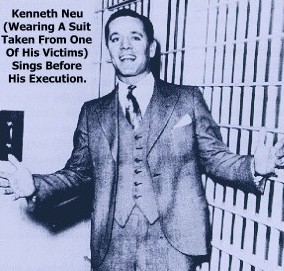
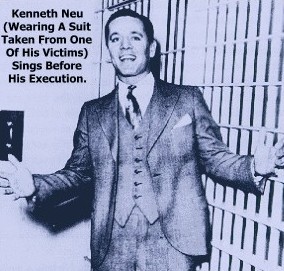
Neu's arrest was triggered by a traffic stop in New Jersey. He was driving Clark's stolen car with a handwritten sign reading "New Car In Transit" instead of license plates. Police became suspicious, and during questioning, Neu confessed to both murders, even boasting about wearing Shead's suit at the time of his arrest.
4. Legal Proceedings and Outcome
Neu was extradited to Louisiana to stand trial for Clark's murder. Despite defense claims of insanity due to syphilis, the jury found him fit to stand trial and convicted him of first-degree murder. Throughout the proceedings, Neu maintained a theatrical demeanor, singing and composing songs about his impending death.
5. Psychiatric Evaluation and Execution
Despite documented mental health history, the court deemed him criminally responsible. He was executed by hanging on February 1, 1935, in New Orleans. His final moments, which included singing to his executioners, cemented his notoriety as the "singing murderer."