

Forensic & Criminological Matrix
| Parameter | Forensic Detail |
|---|---|
| Forensic Heading / Aliases | N/A |
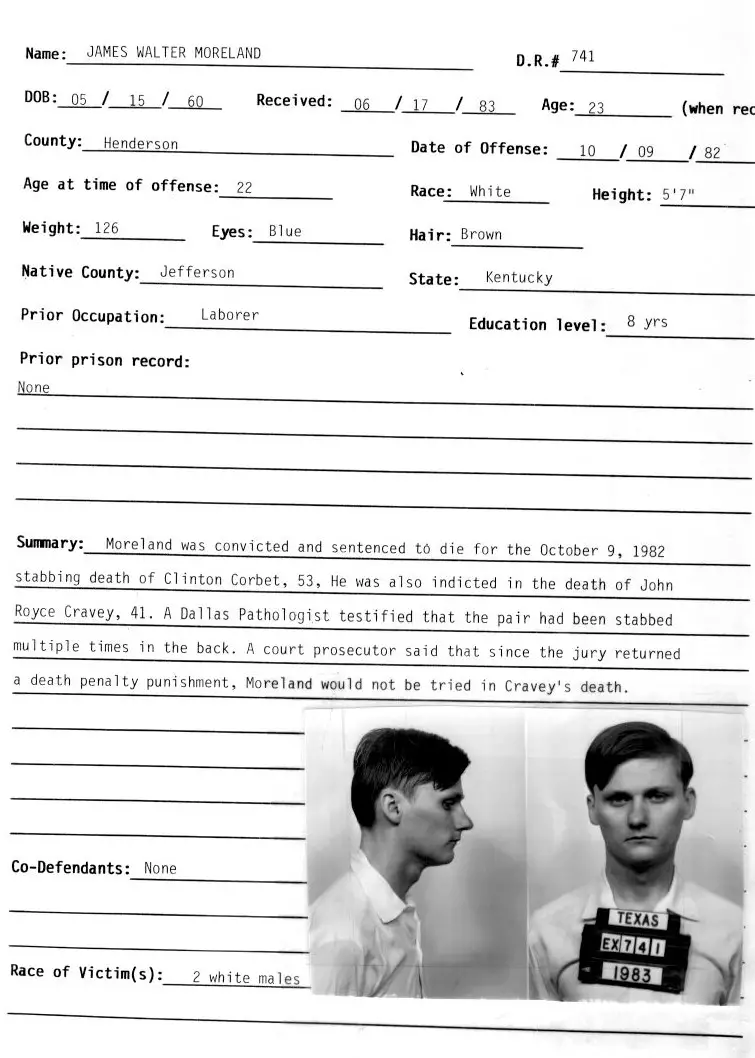
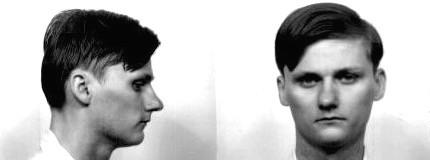
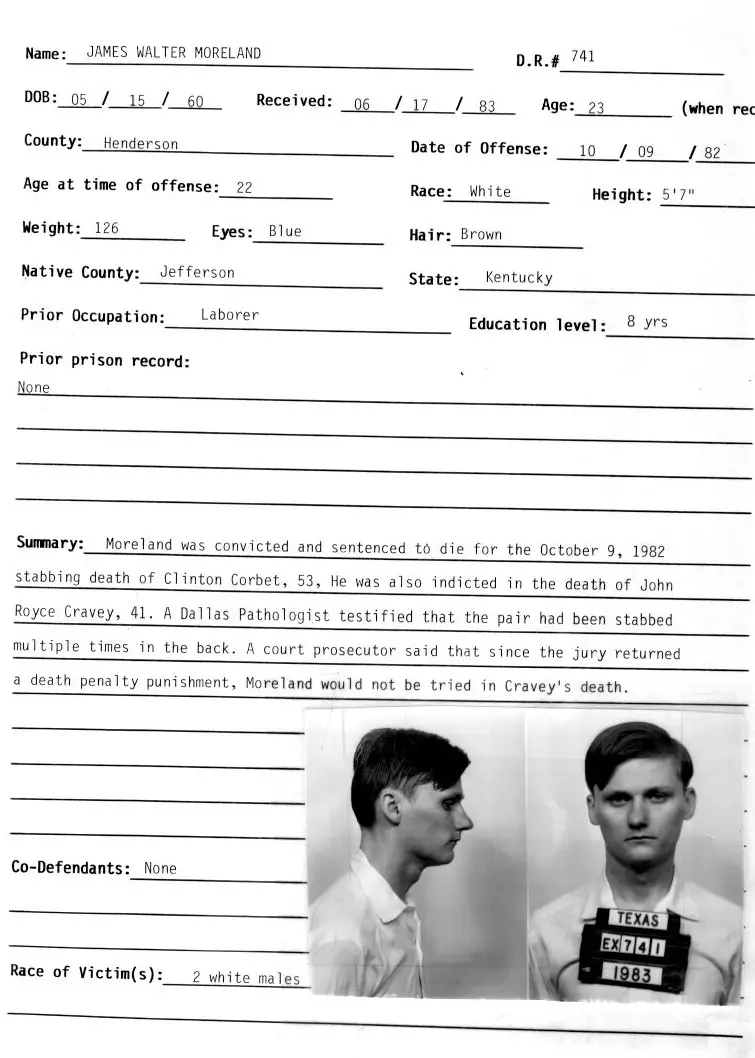
| Legal Identity | James Walter Moreland |
| Confirmed Victims | 2 |
| Attributed / Indicted Victims | 2 |
| Active Timeline | October 9, 1982 |
| Jurisdiction / Area of Operations | Eustace, Texas, USA |
| Criminological Classification | Multiple Murderer |
| Forensic Modus Operandi | Multiple stabbings to the back |
| Weapon / Mechanism of Death | Kitchen knives |
| Motive / Behavioral Dynamics | Robbery and rejected 'gay panic' defense |
| Judicial Outcome | Death penalty by lethal injection |
1. Background and Profile
James Walter Moreland was born on May 15, 1960. Prior to the 1982 murders, he had a criminal record involving burglaries in Texas and Florida, as well as misdemeanor offenses related to alcohol consumption and resisting arrest in Indiana. His behavioral profile was heavily influenced by chronic alcohol abuse, which he frequently cited as a catalyst for his violent outbursts.
2. Criminal Career and Modus Operandi
On October 9, 1982, Moreland murdered Clinton Corbet Abbott (53) and John Royce Cravey (41) at Cravey's trailer home in Eustace, Texas. After meeting the victims while hitchhiking, he was invited to drink with them. Forensic evidence indicated that the victims were stabbed multiple times in the back while they were either intoxicated or asleep, as there were no signs of a struggle. Moreland subsequently robbed the victims before fleeing the scene.
3. Investigation and Arrest
The investigation was initiated after the victims' bodies were discovered by Cravey's ex-wife. Local authorities, aided by information from Moreland's cousin, tracked him to Bedford, Indiana, where he was arrested on October 13, 1982. Evidence recovered from his sister's home, including shredded boots belonging to Cravey and a medicine bottle with the victim's name, proved crucial to the prosecution.
4. Legal Proceedings and Outcome
Moreland was tried in the 173rd District Court of Henderson County. His defense attempted to employ a 'gay panic' strategy, claiming he acted in self-defense against unwanted sexual advances. The jury rejected this claim, citing forensic evidence that showed the victims were attacked from behind while incapacitated. He was convicted of capital murder and sentenced to death.
5. Forensic Psychiatric and Final Outcome
Following numerous failed state and federal appeals, James Walter Moreland was executed by lethal injection on January 27, 2000, in Texas. In his final statement, he apologized for his actions, acknowledging the loss of two lives and attributing his behavior to the influence of alcohol.