



Forensic & Criminological Matrix
| Parameter | Forensic Detail |
|---|---|
| Forensic Heading / Aliases | The Butcher of Giles |
| Legal Identity | Luis Fernando Iribarren |
| Confirmed Victims | 5 |
| Attributed / Indicted Victims | 5 |
| Active Timeline | 1986 - 1995 |
| Jurisdiction / Area of Operations | San Andrés de Giles, Argentina |
| Criminological Classification | Mass murderer |
| Forensic Modus Operandi | Execution via firearm (.22 carbine) and blunt force (axe) |
| Weapon / Mechanism of Death | .22 caliber carbine and axe |
| Motive / Behavioral Dynamics | Economic, narcissism, paranoid traits |
| Judicial Outcome | Life imprisonment with indefinite accessory penalty |
1. Background and Profile
Born in 1965, Luis Fernando Iribarren was raised in the rural area of Tuyutí, San Andrés de Giles. While perceived by acquaintances as polite and well-mannered, subsequent psychiatric evaluations identified a narcissistic personality structure with paranoid traits and psychopathic defense mechanisms. His high intelligence allowed him to maintain a facade of normalcy for nearly a decade following his initial criminal acts.
2. Crime Spree
In July 1986, Iribarren murdered his father Luis Juan (49), his mother Marta Langebbein (42), his brother Marcelo (15), and his sister María Cecilia (9). He utilized a .22 caliber carbine following a family dinner. Later, in August 1995, he murdered his great-aunt Alcira Iribarren (63) with an axe, claiming an act of mercy due to her terminal illness, though the primary motive was financial. He concealed the bodies in mass graves, demonstrating extreme emotional coldness.
3. Investigation and Arrest
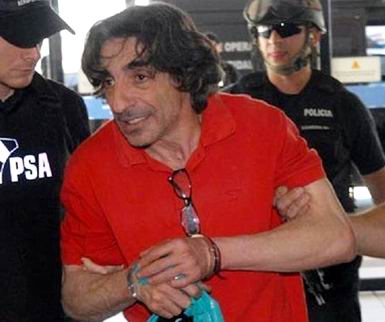
His arrest occurred on August 31, 1995, following neighbor complaints regarding foul odors at his residence on Cámpora Street. Police discovered the body of Alcira Iribarren. During interrogation, Iribarren confessed not only to this crime but also to the 1986 family massacre, leading forensic experts to a mass grave near a pigsty on the family farm.
4. Legal Proceedings and Outcome
The oral trial took place in 2002 before the Third Chamber of the Court of Appeals of Mercedes. Despite defense attempts to argue insanity due to psychotic disorders, eight out of ten forensic experts concluded that Iribarren was fully aware of his actions and capable of directing his conduct.
5. Psychiatric Evaluation and Final Verdict
On August 21, 2002, judges Mario Alberto Bruno, Francisco Lilo, and Héctor Barreneche sentenced Iribarren to life imprisonment with an indefinite accessory penalty, citing the subject's dangerousness and the premeditated nature of his crimes.