

Forensic & Criminological Matrix
| Parameter | Forensic Detail |
|---|---|
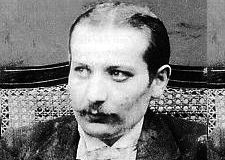
| Full Legal Name | Louis Marie Joseph Voisin. |
| Historical Case Title | The Regent Square Murder / The Bloomsbury Trunk and Sack Mystery. |
| Criminological Typology | Utilitarian dismemberment killer / Skilled butcher homicide. |
| Date of Crime | Night of October 31 – November 1, 1917. |
| Crime Scene | Basement of 101 Charlotte Street, Fitzrovia / Regent Square, Bloomsbury, London, United Kingdom. |
| Fatal Victim | Émilienne Gérard (aged 32), French seamstress and Voisin's mistress. |
| Critical Forensic Marker | A slip of paper placed inside the sack inscribed "Blodie Belgiam", phonetic misspelling duplicated by Voisin during a police spelling handwriting dictation test. |
| Forensic Autopsy | Conducted by legendary Home Office pathologist Sir Bernard Spilsbury, confirming professional joint-severing butchery skill. |
| Judicial Penalty | Capital execution by hanging. Hanged at Pentonville Prison on March 2, 1918, by executioner John Ellis. |
Background and Wartime London
Louis Marie Joseph Voisin was born in France around 1875. Living in Central London during the height of the First World War, he worked as an experienced butcher and slaughterman across the French quarter of Soho and Fitzrovia. He maintained an extramarital affair with Émilienne Gérard, a French national whose husband was deployed in the French trenches, while simultaneously cohabiting with a companion named Berthe Roche.
In late October 1917, during German Zeppelin and Gotha bomber raids on London, Gérard went to Voisin's lodgings on Charlotte Street, reportedly to seek air-raid shelter and retrieve personal savings she had entrusted to his care.
The Murder and Butcher's Dissection
Inside the residence, an altercation broke out between Gérard, Voisin, and Roche. Voisin struck Gérard repeatedly over the head, fracturing her skull, before strangling her with a towel.
Drawing upon his professional slaughterhouse background, Voisin dragged the body into the basement cellar, cleanly decapitating the head and severing both hands at the wrist joints to thwart dental and fingerprint identification. He wrapped the torso in a bedsheet and tied it inside a potato sack, stuffing a piece of cardboard inside reading "Blodie Belgiam"—an attempt to mislead investigators into blaming Belgian wartime refugees.
In the foggy early hours of November 2, 1917, a street sweeper discovered the bundle propped against the railings of Regent Square gardens in Bloomsbury. The head and hands were stuffed into an aluminum cask and submerged in a nearby drain.
Sir Bernard Spilsbury and the Handwriting Trap
Forensic pathologist Sir Bernard Spilsbury performed the post-mortem, testifying that the clean separation of the cervical vertebrae and wrist joints exhibited the unmistakable anatomical precision of an expert meat cutter.
Detectives traced the victim's identity when Gérard's landlady reported her missing. When Scotland Yard officers inspected Voisin's Charlotte Street basement, they uncovered telltale traces of blood behind casks despite attempts to scour the flagstones with bleach.
At Bow Street Police Court, Chief Inspector Arthur Neil conducted a classic forensic handwriting test, asking Voisin to write down the words "Bloody Belgium". Untrained in English phonetics, Voisin penned the exact erroneous phrase five times: "Blodie Belgiam". The orthographic match sealed his indictment.
Old Bailey Conviction and Hanging
Voisin was tried at the Central Criminal Court (Old Bailey) in January 1918. He claimed he merely stumbled upon Gérard's corpse and butchered it in a panic to avert wrongful suspicion. The jury rejected the defense after brief deliberation, returning a capital verdict.
On March 2, 1918, Louis Marie Joseph Voisin was hanged at Pentonville Prison by executioner John Ellis. His companion Berthe Roche received a seven-year sentence for accessory after the fact, dying in Aylesbury Prison shortly thereafter.