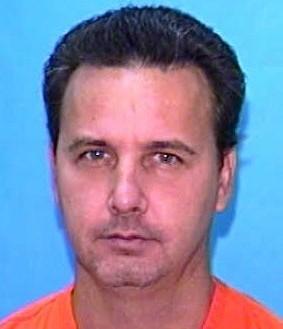





Forensic & Criminological Matrix
| Parameter | Forensic Detail |
|---|---|
| Forensic Heading / Aliases | null |
| Legal Identity | Terry Allen Langford |
| Confirmed Victims | 2 |
| Attributed / Indicted Victims | 2 |
| Active Timeline | July 1988 |
| Jurisdiction / Area of Operations | Ovando, Montana, USA |
| Criminological Classification | Nomadic murderer / Multiple homicide |
| Forensic Modus Operandi | Intrusion, restraint, firearm execution, and robbery |
| Weapon / Mechanism of Death | Firearms and bladed weapon |
| Motive / Behavioral Dynamics | Robbery and pursuit of capital punishment |
| Judicial Outcome | Death sentence; executed in 1998 |
1. Background and Psychopathy
Born in 1966, Terry Allen Langford had a prior criminal record for forgery and vehicle tampering in North Carolina. Psychiatric evaluations conducted during his 54-day stay at a state hospital found no mental disease or defect, though he exhibited self-destructive tendencies and a poor relationship with his parents.
2. Crime Spree
In July 1988, Langford entered the home of Edward and Celene Blackwood in Ovando, Montana. The victims were bound and shot; Mrs. Blackwood also suffered a slashed throat. Langford stole several firearms and the couple's pickup truck, which was later recovered with his fingerprints inside.
3. Investigation and Arrest
Authorities in Indiana linked Langford to the murders after recovering a bag of the Blackwoods' stolen guns, abandoned by a suspect who had registered at a motel under Langford's name. He was arrested in Raleigh, North Carolina, and subsequently confessed to the Montana authorities.
4. Legal Proceedings and Outcome
Langford was tried in the Third Judicial District Court of Powell County, Montana. He insisted on pleading guilty and seeking the death penalty, despite his counsel's attempts to mount a defense. He was convicted of two counts of deliberate homicide, aggravated kidnapping, robbery, and theft. His appeals regarding ineffective assistance of counsel and the constitutionality of the death penalty were consistently rejected.
5. Psychiatric Evaluation and Final Disposition
The courts found Langford to be fully competent and determined that his request for the death penalty was a strategic choice to avoid life imprisonment. After exhausting all appeals, he was executed by lethal injection in 1998.