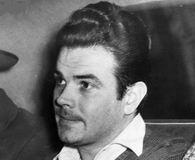
Forensic & Criminological Matrix
| Parameter | Forensic Detail |
|---|---|
| Forensic Heading / Aliases | None |
| Legal Identity | Barton Kay Kirkham |
| Confirmed Victims | 2 |
| Attributed / Indicted Victims | 2 |
| Active Timeline | 1956 |
| Jurisdiction / Area of Operations | Salt Lake City, Utah, USA |
| Criminological Classification | Multiple Homicide (Robbery-Homicide) |
| Forensic Modus Operandi | Armed robbery followed by summary execution |
| Weapon / Mechanism of Death | Firearm |
| Motive / Behavioral Dynamics | Financial gain / Antisocial behavior |
| Judicial Outcome | Death penalty (Execution by firing squad) |
1. Background and Profile
Barton Kay Kirkham (1936–1958) was an American individual with a history of rebellion and military service. His transition to civilian life was marked by significant maladjustment, leading to a pattern of antisocial behavior that ultimately resulted in lethal violence.
2. Criminal Career and Modus Operandi
In 1956, Kirkham entered a grocery store in Salt Lake City to commit an armed robbery. During the incident, he executed two individuals to eliminate witnesses. His modus operandi was defined by the use of a firearm to ensure the success of the robbery through lethal force.
3. Investigation and Arrest
Local law enforcement in Utah conducted a swift investigation, identifying Kirkham through forensic evidence and witness accounts. His capture was immediate, as he lacked the sophistication to evade detection following the double homicide.
4. Legal Proceedings and Outcome
Kirkham was tried and convicted for the murders. During the legal proceedings, he expressed remorse, stating, "I’ve asked God to forgive me." Despite this, the court sentenced him to death.
5. Forensic Psychiatric and Final Outcome
Barton Kay Kirkham was executed on June 4, 1958, in Utah. His case remains a documented instance of the severe judicial response to violent crime in the mid-20th century.