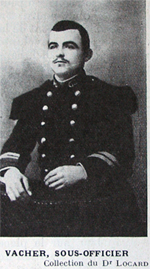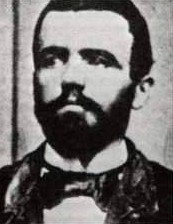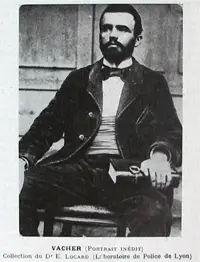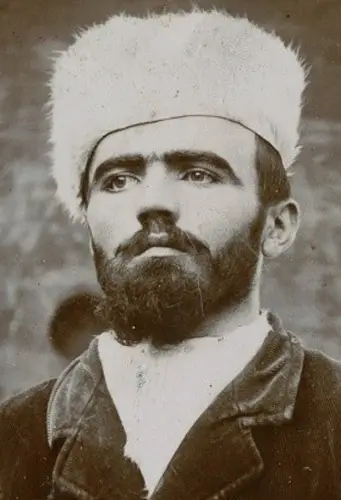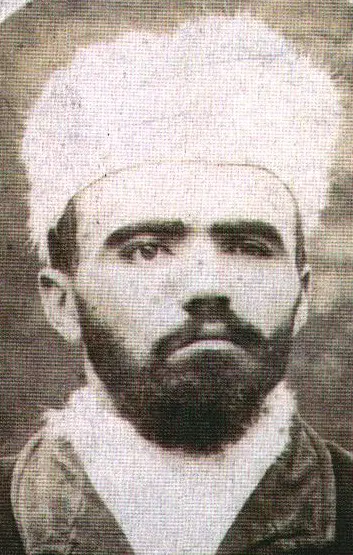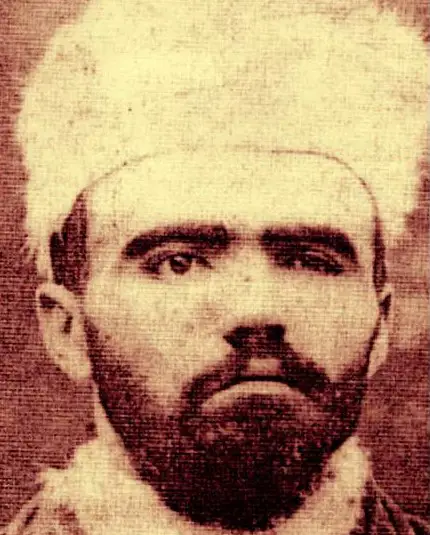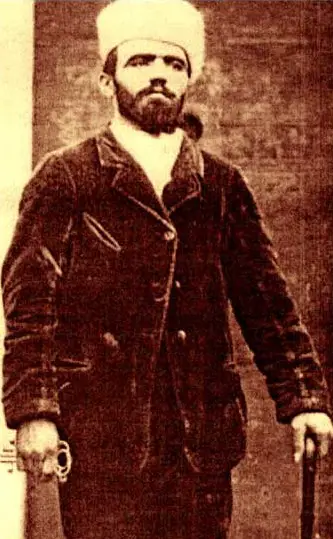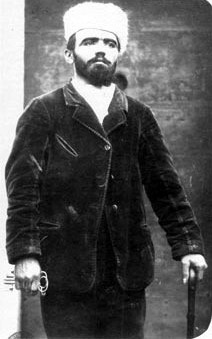





Forensic & Criminological Matrix
| Parameter | Forensic Detail |
|---|---|
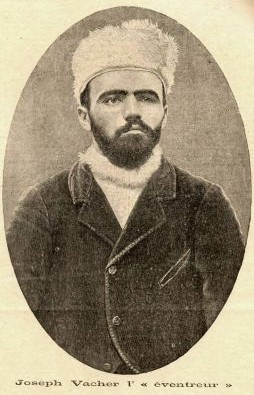
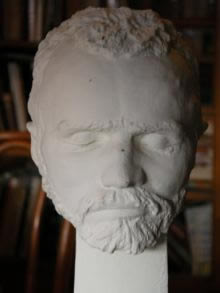
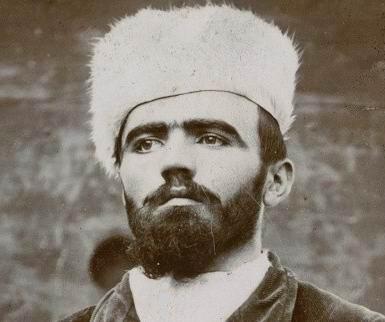
| Identity | Joseph Vacher |
| Known Aliases | "L'Éventreur du Sud-Est" (The French Ripper), "The Ripper of the Southeast" |
| Criminal Classification | Serial killer, itinerant lust murderer, disemboweler, and sexual sadist |
| Date of Birth | November 16, 1869 (Beaujolais, Rhône, France) |
| Date of Death | December 31, 1898 (Aged 29, Bourg-en-Bresse, Ain, France; executed by guillotine) |
| Criminal Indictment | Convicted of aggravated first-degree murder, violent rape, and corpse evisceration across multiple jurisdictions |
| Fatalities | 11 formally confessed and verified victims (adolescent shepherds, shepherdesses, and rural farmhands aged 13 to 27; suspected of exceeding 30 homicides) |
| Crime Scenes | Rural departments of Ain, Isère, Ardèche, Loire, Rhône, and Normandy, France |
| Active Period | 1894 – 1897 |
| Modus Operandi | Tramping on foot across isolated rural roads disguised as an itinerant laborer or beggar, stalking solitary young shepherds in pastures, throat slitting with straight razors, violent sexual assault across both male and female victims, abdominal disembowelment, genital mutilation, and rapid cross-county flight. |
| Motive | Psychopathic sexual sadism, destructive necro-mutilation, and staged religious lunacy to evade penal responsibility. |
| Legal Status | Sentenced to capital punishment in October 1898. Executed by guillotine by Louis Deibler on December 31, 1898. |
Forensic Synopsis and Medico-Legal Legacy
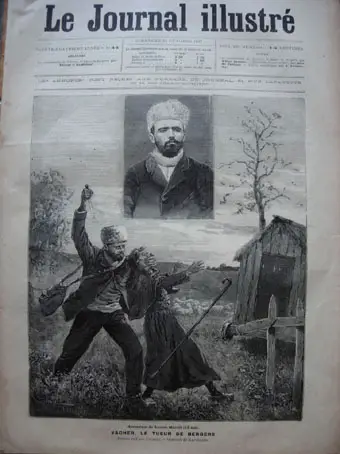
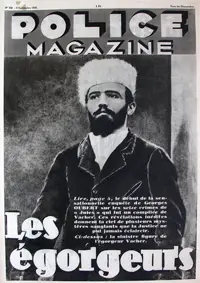
The trial of Joseph Vacher, known internationally as the "French Ripper", is a landmark cornerstone in the development of modern forensic psychiatry, criminal anthropology, and serial murder profiling. Roaming on foot across thousands of miles through the French provinces between 1894 and 1897, Vacher violated, disemboweled, and slaughtered at least eleven young shepherds and farm laborers, generating terror rivaling that of Jack the Ripper.
The case established worldwide renown through the forensic collaboration between examining magistrate Émile Fourquet and Professor Alexandre Lacassagne, chair of forensic medicine at the University of Lyon. In a forensic assessment that redefined criminal insanity jurisprudence, Lacassagne and his colleagues systematically shattered Vacher’s theatrical insanity defense—wherein he claimed to have contracted canine rabies that turned him into an uncontrollable divine avenger—proving he operated with calculating, cold-blooded psychopathic premeditation.
Military Discharge, Suicidal Disfigurement, and Wandering
Born into an impoverished peasant family in the Rhône department, Vacher entered military service, where severe antisocial and aggressive traits quickly manifested:
- The 1893 Shooting: After young servant Louise Barlat rejected his romantic demands, Vacher shot her four times before firing two rounds into his own face. The botched suicide attempt left a bullet lodged in his ear canal, causing permanent facial paralysis and a grotesque eyelid spasm.
- Asylum Release: Confined to the Saint-Robert mental asylum, he was discharged in April 1894 as cured by resident alienists, instantly taking to the roads as a transient beggar.
The Three-Year Killing Trail: 1894 – 1897
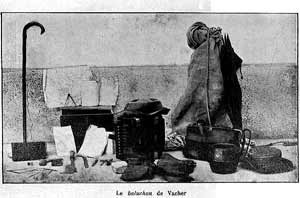
Outfitted with a ragged overcoat, straw hat, and walking stick, Vacher spent thirty-six months hiking cross-country, stalking rural pastoral youths:
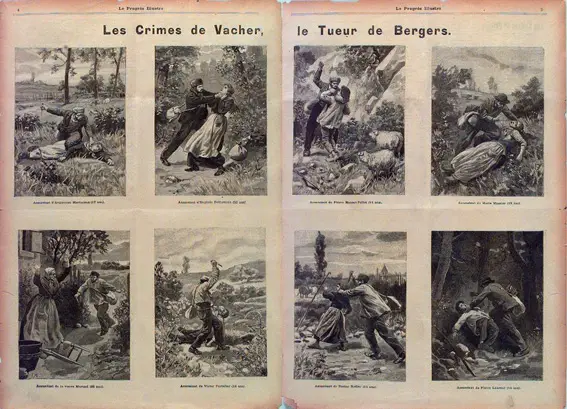
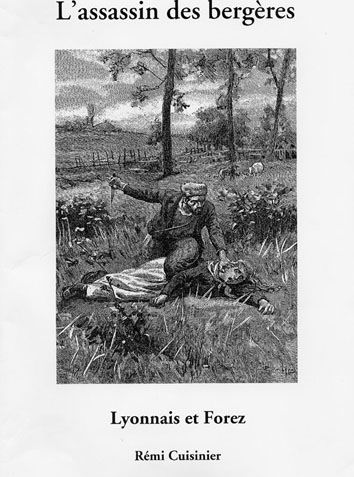
- The First Murders: In June 1894, he slit the throat of 21-year-old Eugénie Delhomme in Beaurepaire. In subsequent months, he attacked both male and female targets, including 16-year-old shepherd boy Victor Portalier, 19-year-old Alina Joly, and 17-year-old Augustine Mortureux.
- Sadistic Disembowelment: Vacher slashed victims’ throats from behind with a straight razor, engaged in post-mortem sexual abuse, excised abdominal viscera, and mutilated genital organs.
- Evasive Mobility: Following each homicide, Vacher walked thirty to fifty kilometers across rural hills under cover of night, evading localized gendarmerie forces who lacked centralized inter-departmental communications.
Apprehension and Magistrate Fourquet's Investigation
In August 1897, Vacher ambushed a field laborer's wife in an Ardèche orchard. Her screams summoned neighboring farmers who tackled Vacher with pitchforks, arresting him as a petty vagrant:
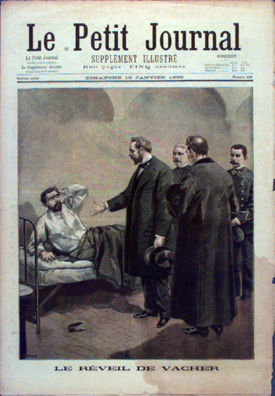
- The Cross-Departmental Net: Investigating magistrate Émile Fourquet of Belley, who had collected homicide autopsy reports across adjacent jurisdictions, recognized the facial paralysis description of the elusive Southeast Ripper.
- The Confession Memory: Confronting Vacher with clothing articles recovered from crime scenes, Fourquet secured a comprehensive written confession detailing eleven murders.
Lacassagne's Sanity Evaluation and Execution
The defense mounted an absolute insanity plea under Article 64 of the Penal Code:
- The Lacassagne Report: Professor Alexandre Lacassagne conducted a pioneering months-long psychiatric evaluation. Monitoring Vacher’s behavioral patterns, Lacassagne demonstrated that Vacher feigned psychotic seizures exclusively during official clinical interviews while displaying lucid intellect, sharp financial reasoning, and legal strategy in private letters. Lacassagne concluded: "Vacher is not an irresponsible lunatic; he is a lucid, calculating sadist whose atrocities were executed for raw hedonistic gratification."
- The Assizes Verdict: On October 28, 1898, the Ain Assize Court jury convicted Vacher of first-degree premeditated murder in less than two hours.
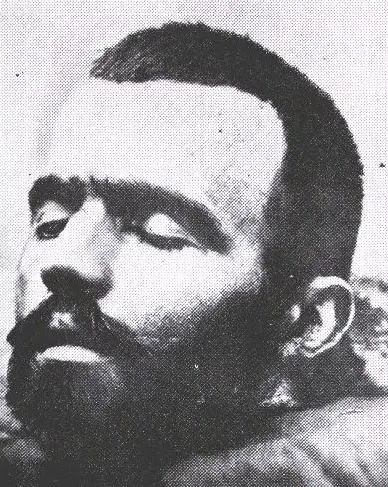
- The Guillotine: On the morning of December 31, 1898, Joseph Vacher was executed on the guillotine in the public square of Bourg-en-Bresse by executioner Louis Deibler.