



Forensic & Criminological Matrix
| Parameter | Forensic Detail |
|---|---|
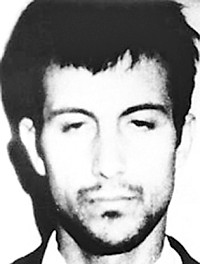
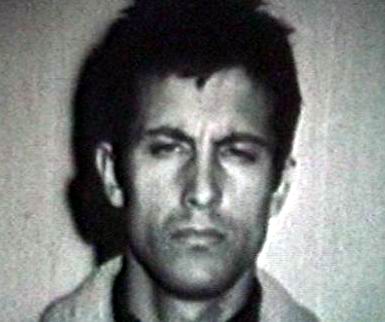
| Full Legal Name | Ion Rîmaru |
| Criminal Monikers | The Vampire of Bucharest (Vampirul din București), The Butcher of the Night |
| Born | October 12, 1946, Corabia, Olt County, Socialist Republic of Romania |
| Died | October 23, 1971 (aged 25), Jilava Military Prison, Ilfov, Romania |
| Manner of Death | Judicial execution by firing squad |
| Criminological Classification | Predatory sexual serial killer, necrophile, cannibal, and clinical hematomaniac ("vampire") |
| Active Spree Range | April 1970 – May 1971 |
| Geographical Range | Bucharest metropolitan area, Socialist Republic of Romania |
| Confirmed Fatal Casualties | 4 proven murders (Elena Oprea, Fănică Ilie, Gheorghița Popa, and Mihaela Ursu); 6 attempted homicides with severe mutilations and numerous aggravated rapes |
| Modus Operandi | Stalking lone female restaurant staff and waitresses returning from night shifts during torrential blizzards, rainstorms, and thick fog; ambushing victims from behind with meat axes, crowbars, or knives; dragging bodies into deserted alleys or cemeteries; executing prolonged sexual assaults during death agonies or post-mortem; ripping out breast and pubic flesh with human bite marks and sucking blood from open wounds |
| Weapons Used | Hand butcher axe, ribbed construction rebar, kitchen butcher knife, and blunt rocks |
| Law Enforcement Response | Prompted "Operation Vulture" (Operațiunea Vulturul), the largest domestic security mobilization under Nicolae Ceaușescu's communist administration, involving 6,000 Securitate and Militia officers patrolling nightly |
| Final Legal Outcome | Condemned to death by the Bucharest Military Tribunal; executed by firing squad at Jilava Prison on October 23, 1971 |
EXECUTIVE SUMMARY & HISTORICAL CONTEXT
Ion Rîmaru stands as the most infamous serial killer in Romanian criminal history. Operating in Bucharest during Nicolae Ceaușescu's totalitarian regime—where official state ideology held that serial violent crime was an exclusive pathology of decaying capitalist societies—Rîmaru’s grotesque nocturnal crimes shattered state censorship and sparked unbridled panic across the capital.
Forensic psychiatrists and criminologists classified Rîmaru among the rarest criminal typologies: a necrophilic sadist who practiced sexual cannibalism and hematomania (drinking human blood). Decades following his execution, forensic cold-case investigators confirmed that his father, Florea Rîmaru, was also an unapprehended serial killer who had murdered four women in Bucharest in 1944.
BACKGROUND AND PSYCHOPATHOLOGICAL DEVOLUTION
Born in 1946 in Corabia, Rîmaru was raised in a violently dysfunctional household dominated by an alcoholic father. Admitted to the Faculty of Veterinary Medicine in Bucharest in 1966, he struggled academically and was regarded by faculty as sullen, semi-literate, and emotionally detached.
In student dormitories, he displayed alarming antisocial behavior, prowling female quarters at night. During rage states, he engaged in severe self-mutilation, carving over twenty deep lacerations into his own arms and legs. In 1967, clinical evaluations diagnosed him with severe psychiatric instability and uninhibited psychosexual deviance.
THE KILLING SPREE AND "OPERATION VULTURE" (1970–1971)
Rîmaru targeted female waitresses and nocturnal workers walking alone between midnight and 3:00 a.m., deliberately striking under extreme weather conditions (raging snowstorms and torrential downpours):
- Elena Oprea (April 1970): Struck down with an axe; the assault was halted when a neighbor shouted.
- Florica Marcu (June 1970): Abducted outside her home, thrown over the stone wall of Sfânta Vineri cemetery, raped, stabbed, and bitten on the neck as Rîmaru drank her blood before a truck driver scared him off.
- Fănică Ilie (March 1971): Ambushed, throat slashed, and subjected to post-mortem violation.
- Gheorghița Popa (April 1971): His most savage attack. The victim suffered 48 stab wounds to the head, chest, and groin, multiple blunt impacts, crushed ribs from stomping, and had her external genitalia bitten off and ingested.
Public terror paralyzed Bucharest. Nightlife collapsed as women refused to exit buildings after 9:00 p.m. Ceaușescu's administration launched Operation Vulture: over 6,000 security personnel from the Militia and the Securitate, accompanied by 100 patrol cars and canine units, enforced curfews and questioned over 8,000 individuals.
THE MEDICAL VOUCHER CLUE AND ARREST
On May 4, 1971, Rîmaru murdered nursing student Mihaela Ursu. Ursu resisted fiercely, tearing strands of hair from her killer's head. Beneath her soaked corpse, crime scene technicians discovered a bloodstained medical consultation voucher from the Bucharest Student Polyclinic.
Forensic examination identified the stamp of Dr. Octavian Ieniște, who had conducted neurological exams on 83 students in March. Cross-referencing student records identified fifteen individuals who had failed to deposit their medical certificates with the university administration—one of whom was veterinary student Ion Rîmaru.
On May 27, 1971, Militia investigators searched Rîmaru's dormitory room. Returning with a canvas sack containing an axe and knife matching crime wounds, Rîmaru was arrested. Bite mark comparisons and microscopic hair analysis conclusively established his guilt.
MILITARY TRIBUNAL AND JILAVA FIRING SQUAD
Under interrogation, Rîmaru maintained a rigid, catatonic silence until an undercover officer was placed in his cell, prompting him to boast of his bloodletting and necrophilic cravings.
In October 1971, the Bucharest Military Tribunal convicted Ion Rîmaru on all sixteen counts, including four aggravated premeditated murders, six attempted murders, and sexual cannibalism, sentencing him to death.
On October 23, 1971, Rîmaru was escorted to the execution post at Jilava Military Prison. Tied to the stake, he fought violently against his restraints, screaming his final words: "Ask my father, he is the guilty one!" A volley of rifle fire from the military squad carried out the execution. Thirty years later, forensic genetic matching confirmed that his father had indeed committed a wave of identical wartime serial murders in Bucharest in 1944.