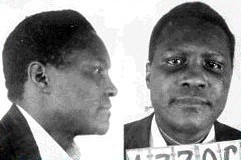
Forensic & Criminological Matrix
| Parameter | Forensic Detail |
|---|---|
| Forensic Heading / Aliases | N/A |
| Legal Identity | U. L. Holley |
| Confirmed Victims | 2 |
| Attributed / Indicted Victims | 2 |
| Active Timeline | 1944 |
| Jurisdiction / Area of Operations | Arizona, United States |
| Criminological Classification | Multiple Homicide |
| Forensic Modus Operandi | Lethal interpersonal violence |
| Weapon / Mechanism of Death | Not specified in primary sources |
| Motive / Behavioral Dynamics | Social conflict and behavioral instability |
| Judicial Outcome | Execution by gas chamber |
1. Background and Profile
U. L. Holley was an individual whose criminal activity peaked in Arizona during the 1940s. While biographical details prior to 1944 remain limited, judicial records suggest Holley underwent a behavioral breakdown that led to acts of extreme violence.
2. Criminal Career and Modus Operandi
In 1944, Holley committed the murder of two individuals. According to contemporary reports, the subject acted under a state of emotional instability, later describing his actions as an episode where he "ran amok."
3. Investigation and Arrest
The investigation was swift due to the nature of the events and the perpetrator's subsequent confession. There were no reports of evasion or prolonged concealment efforts.
4. Legal Proceedings and Outcome
Holley was apprehended and prosecuted by the Arizona judicial system. During the proceedings, he displayed an attitude of acceptance toward his fate, stating: "I know I did wrong and I am ready to pay my debt to God and society."
5. Forensic Assessment and Execution
On April 13, 1945, U. L. Holley was executed in the gas chamber at the Arizona State Prison. It was reported that he faced his death bravely, declining any stay of execution or help from his family, reaffirming his belief that he deserved to die for his crimes.