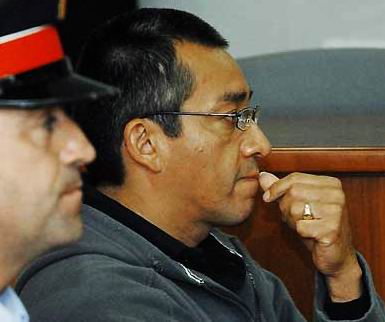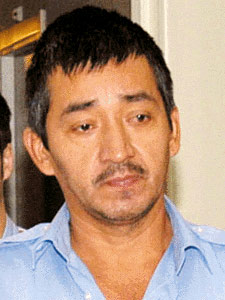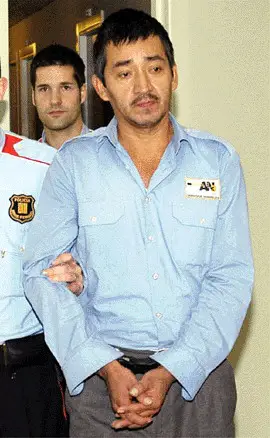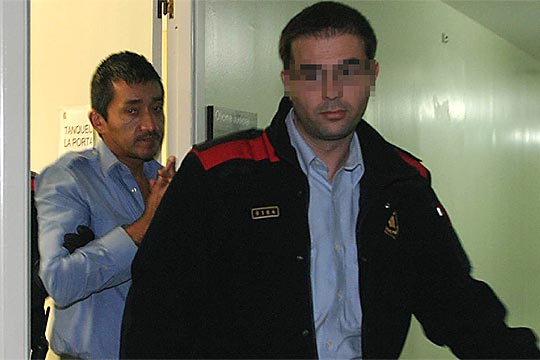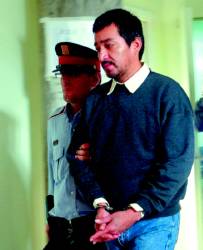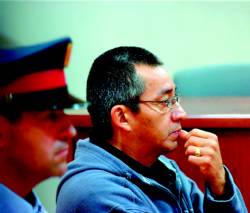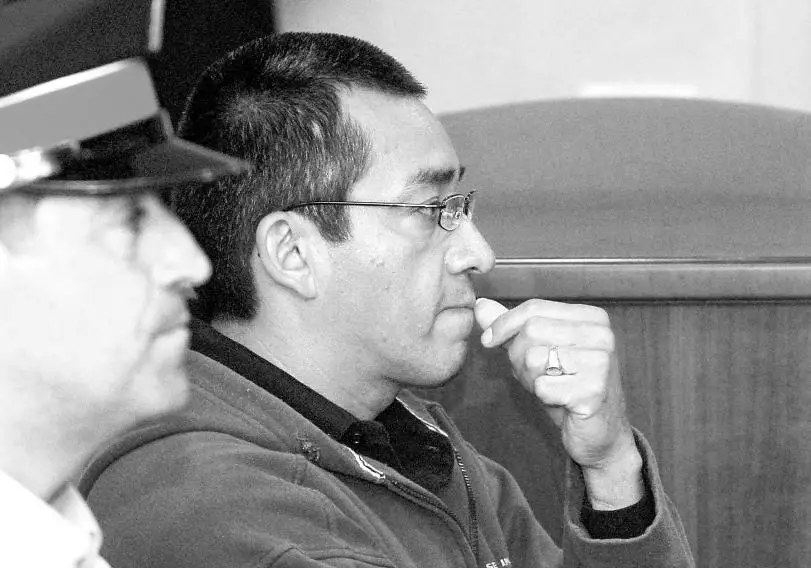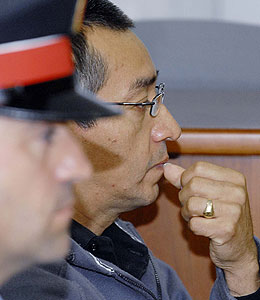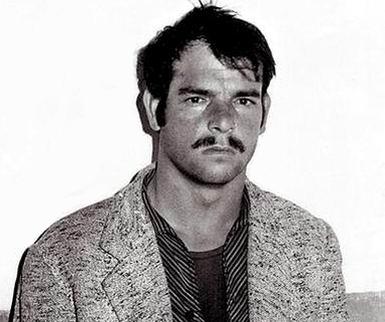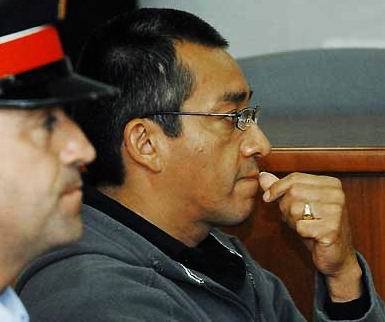





Forensic Profile Datasheet: Gilberto Chamba Jaramillo ("The Monster of Machala")
| Forensic Parameter | Evaluation Details |
|---|---|
| Full Legal Name | Gilberto Antonio Chamba Jaramillo |
| Public Monikers | The Monster of Machala (El Monstruo de Machala) |
| Date & Place of Birth | October 1, 1963 — Machala, El Oro Province, Ecuador |
| Current Penal Status | Incarcerated; serving a 45-year prison sentence at Quatre Camins Penitentiary (Barcelona, Spain) |
| Criminological Classification | Predatory sexual serial killer / Transnational recidivist predator |
| Confirmed Murder Victims | 9 judicial convictions: 8 young women in Ecuador (1988–1993) and María Isabel Bascuñana in Spain (2004) |
| Geographic Crime Scenes | Banana plantations of Machala (Ecuador) and the campus of the University of Lleida (Spain) |
| Primary Modus Operandi | Weaponized transit roles (unlicensed taxi driver, night watchman), predatory ambushes, rape, and manual/ligature strangulation |
| Definitive Forensic Evidence | Nuclear STR DNA match from seminal fluids recovered inside victim's vehicle in Lleida |
| Forensic Psychiatric Finding | Severe integrated psychopathy, predatory narcissism, manipulative camouflage, and absolute lack of remorse |
The Ecuadorian Serial Murders: The Monster of Machala (1988–1993)
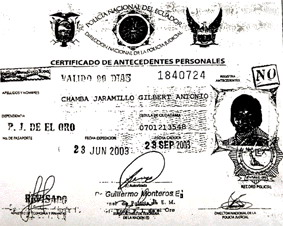
Gilberto Antonio Chamba Jaramillo was born in Machala, Ecuador, in 1963. Employed as an unlicensed taxi driver and rural transit van operator, he terrorized El Oro Province between 1988 and 1993.
Chamba targeted schoolgirls, female students, and young working women waiting at roadside transit stops. Diverting into remote banana plantations and sugarcane fields, he subjected his passengers to brutal sexual assaults. To prevent police reporting, he manually strangled them with their own undergarments or headscarves, concealing their remains beneath tropical vegetation.
Apprehended in November 1993, Chamba was tried in Machala and sentenced in 1995 to Ecuador's statutory maximum penalty of 16 years' imprisonment for eight proven homicides (seven of whom were minors), though authorities suspected his hand in over fourteen slayings. Capitalizing on early release statutes and good-behavior allowances, he secured parole in November 2000 after serving barely seven years.
Migration to Spain and the Campus Watchman Mask
Taking advantage of the fact that his Ecuadorian convictions were absent from international passenger immigration alerts, Chamba relocated to Spain in late 2000. Settling in Lleida, Catalonia, he married, fathered two daughters, and became an active congregant in an evangelical church.
In Lleida, Chamba cultivated a reputation as a quiet, polite, deeply religious, and subservient laborer. In 2003, a private security contractor employed him as the night watchman at the Faculty of Law and Economics at the University of Lleida (UdL). The position provided master keys, gate controls, and intimate knowledge of solitary students and staff in the university parking precinct.
The Slaying of María Isabel Bascuñana (November 2004)
On the evening of November 23, 2004, 23-year-old law student María Isabel Bascuñana finished studying at the campus library, walking to her car in the parking lot around 9:00 p.m.
Chamba, on active security patrol, ambushed her under the pretext of vehicle assistance. Overpowering her, he forced his way inside her car and drove to a desolate wasteland bordering the Segre River.
There, he subjected her to sexual assault before manually strangling her with sufficient force to fracture the hyoid bone. Covering her body on the back seat with plastic sheeting, he abandoned the automobile along a rural lane and calmly walked back to the university, punching his guard patrol clock as if on routine rounds.
Mossos d'Esquadra Investigation and Forensic DNA Match
The discovery of María Isabel's body the following morning ignited public fury across Spain. Forensic homicide teams from the Mossos d'Esquadra processed the vehicle for physical trace evidence.
Forensic science provided overwhelming proof:
- Seminal fluids and epithelial skin cells extracted from the victim yielded an unquestionable nuclear DNA match to Gilberto Chamba, who had been routinely interviewed as the security guard on duty.
- Cell phone tower telemetry placed Chamba's mobile device directly at the riverbank disposal site during the exact window of the murder.
- Checking his records through Interpol, Catalan detectives discovered that the quiet university security guard was Ecuador's infamous "Monster of Machala."
Trial and Conviction at Lleida Provincial Court
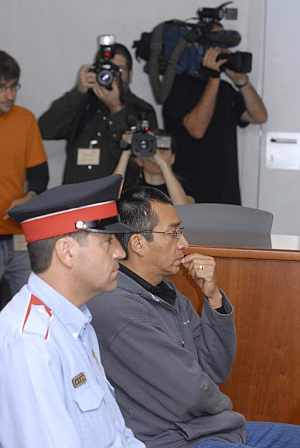
In November 2006, Chamba stood trial before a jury in Lleida. Despite asserting that police had framed him, the genetic match rendered his denial futile.
The court sentenced Gilberto Antonio Chamba to 45 years' imprisonment for aggravated murder and sexual assault.
Chamba remains incarcerated at Quatre Camins Penitentiary near Barcelona, representing one of the most alarming case studies in transnational serial predator recidivism in European forensic history.