



Forensic & Criminological Matrix
| Parameter | Forensic Detail |
|---|---|
| Forensic Heading / Aliases | The Good Samaritan Poisoner, The Angel of Death of Catawissa |
| Legal Identity | Bertha Alice Williams Graham Gifford |
| Confirmed Victims | 3 (forensically verified via toxicology) |
| Active Timeline | 1909 – 1928 |
| Jurisdiction / Area of Operations | Franklin County & Jefferson County, Missouri, United States |
| Criminological Classification | Domestic Serial Killer / Angel of Death / Arsenic Poisoner |
| Forensic Modus Operandi | Infiltration as a voluntary caregiver, administering toxic doses of arsenic disguised in food or medication |
| Weapon / Mechanism of Death | Arsenic trioxide (commercial rat poison) |
| Motive / Behavioral Dynamics | Munchausen syndrome by proxy / Pathological need for control, attention, and maternal dominance |
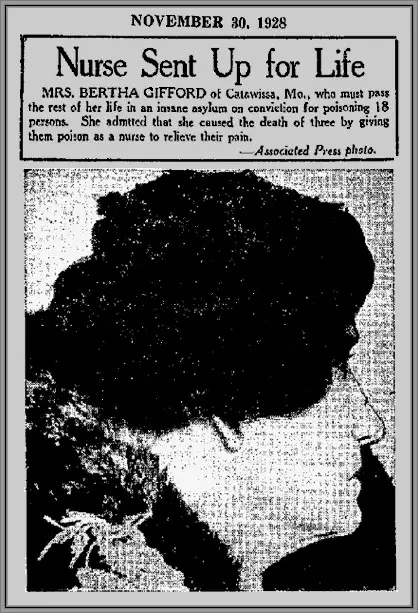
| Judicial Outcome | Found not guilty by reason of insanity (1928); committed indefinitely to a state psychiatric facility |
1. Background and Profile
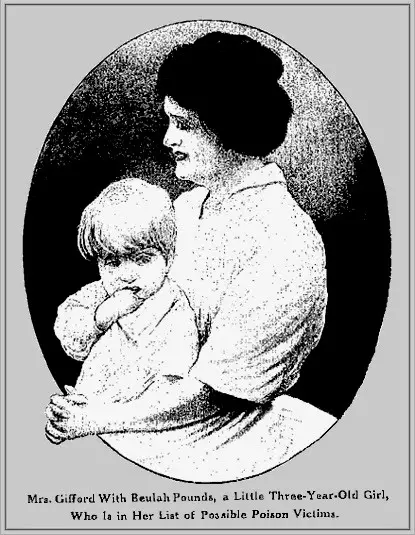
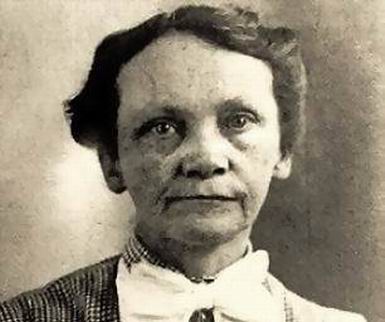
Bertha Alice Williams was born on October 18, 1871, in Grubville, Missouri, to William Poindexter Williams and Matilda Lee. Raised in a large rural household of ten children, she was widely recognized in her youth as one of the most attractive women in the Meramec Valley region. In December 1894, she married Henry Graham in Hillsboro, Missouri, and gave birth to a daughter named Lila.
Following Graham's sudden death in 1909—officially attributed to acute stomach cramps—Bertha remarried Eugene Gifford and relocated to a farm in Catawissa, near Morse Mill in Franklin County. Within her community, Gifford established an impeccable reputation as an extraordinary cook and a devoted neighbor. She frequently volunteered to nurse sick relatives and neighbors, donning a crisp white nurse's uniform and carrying a medical bag to the homes of the afflicted.
2. Criminal Career and Modus Operandi
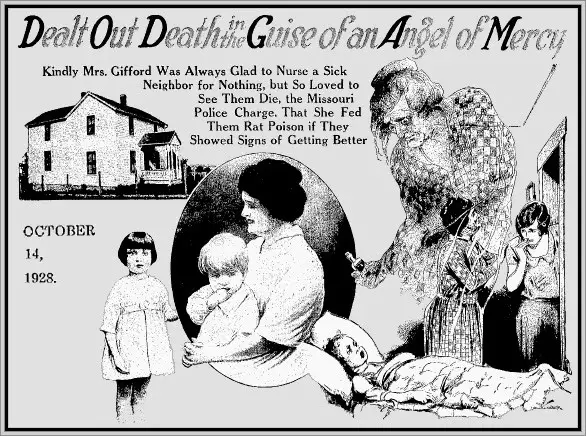
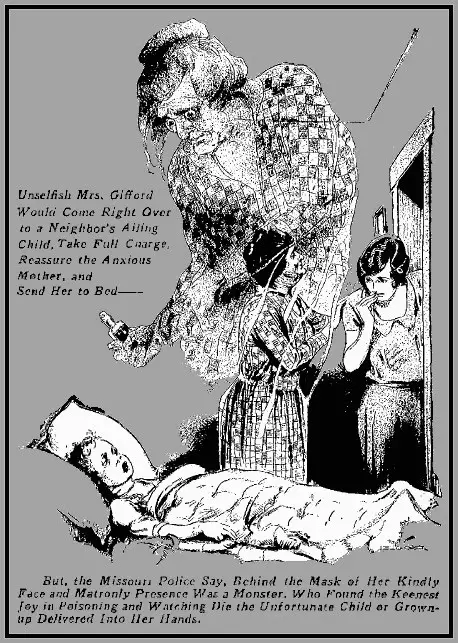
For nearly two decades, Gifford operated under the classic profile of an "Angel of Death." Whenever illness struck a local household, she insisted on taking charge of the sickroom. She routinely advised exhausted family members to retire for the night, leaving her in sole control of the patient.
Unobserved, Gifford mixed arsenic trioxide—purchased legally from local apothecaries under the guise of farm pest control—into liquids, gruel, or medicines given to her charges. The victims, many of whom were young children, suffered severe gastrointestinal distress, intractable vomiting, and dehydration. When local doctors visited the following morning, Gifford presented meticulous symptom charts, attributing the deterioration to "acute gastritis" or "ptomaine poisoning." Following their deaths, she organized funerals, wept openly alongside grieving parents, and on at least one occasion paid for the embalming procedures herself.
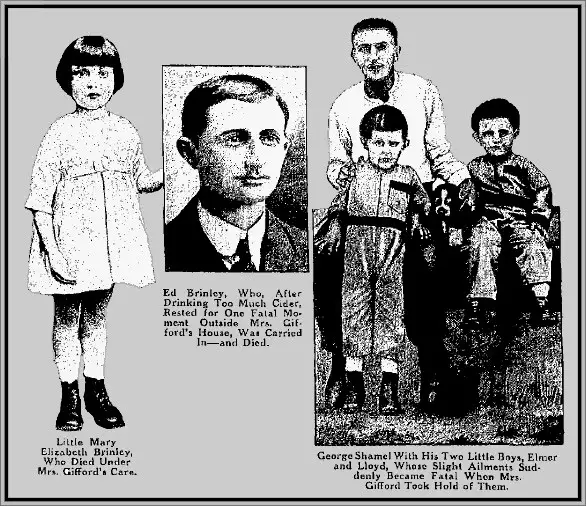
Suspected victims included her first husband Henry Graham (1909), her mother-in-law Emilie Gifford (1913), her 13-year-old brother-in-law James Gifford (1914), three children of the Stuhlfelder family, the young Schamel brothers (Lloyd and Elmer), Leona Slocum, and farmhand Edward Brinley.
3. Investigation and Arrest
In the late 1920s, local women began noticing a chilling pattern: patients cared for by Gifford almost never recovered. Suspicion peaked in 1928 following the rapid succession of deaths involving the Schamel boys and Edward Brinley, the ninth person to die inside Gifford's home.
Prompted by community complaints, Dr. James Stewart, State Health Commissioner of Missouri, ordered an audit of pharmacy ledger records across neighboring towns. Investigators discovered that Gifford had been purchasing large quantities of arsenic rat poison immediately prior to the onset of fatal symptoms in her patients. Authorities exhumed the bodies of Edward Brinley, Lloyd Schamel, and Elmer Schamel. Post-mortem toxicological examinations revealed lethal concentrations of arsenic in their vital organs.
4. Legal Proceedings and Outcome
Bertha Gifford was arrested in Eureka, Missouri, in August 1928. During police interrogation, she maintained her innocence, arguing that she had acted out of mercy and blaming rural dietary habits for the fatal gastritis outbreaks.
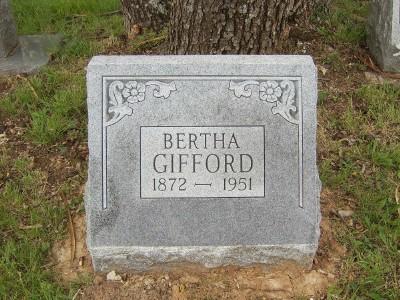
Indicted on three counts of first-degree murder, Gifford went on trial in Union, Missouri, in November 1928. After a three-day trial, psychiatric testimony convinced the jury that she suffered from severe mental defect and was legally insane at the time of the offenses. On November 23, 1928, she was declared not guilty by reason of insanity and committed to Missouri State Hospital #4 in Farmington, Missouri, where she resided until her death from natural causes on August 20, 1951.