





Forensic & Criminological Matrix
| Parameter | Forensic Detail |
|---|---|
| Forensic Heading / Aliases | Elizabeth Fenning (Eliza Fenning) |
| Legal Identity | Elizabeth Fenning |
| Confirmed Victims | 0 (Attempted poisoning charge with 4 surviving victims) |
| Active Timeline | March 1815 |
| Jurisdiction / Area of Operations | Chancery Lane, London, England, United Kingdom |
| Criminological Classification | Historical cause célèbre / Controversial domestic poisoning prosecution |
| Forensic Modus Operandi | Introduction of arsenic into yeast dumpling dough intended for employers |
| Weapon / Mechanism of Death | Arsenic trioxide (rodenticide) |
| Motive / Behavioral Dynamics | Alleged workplace vengeance following domestic reprimand (highly contested) |
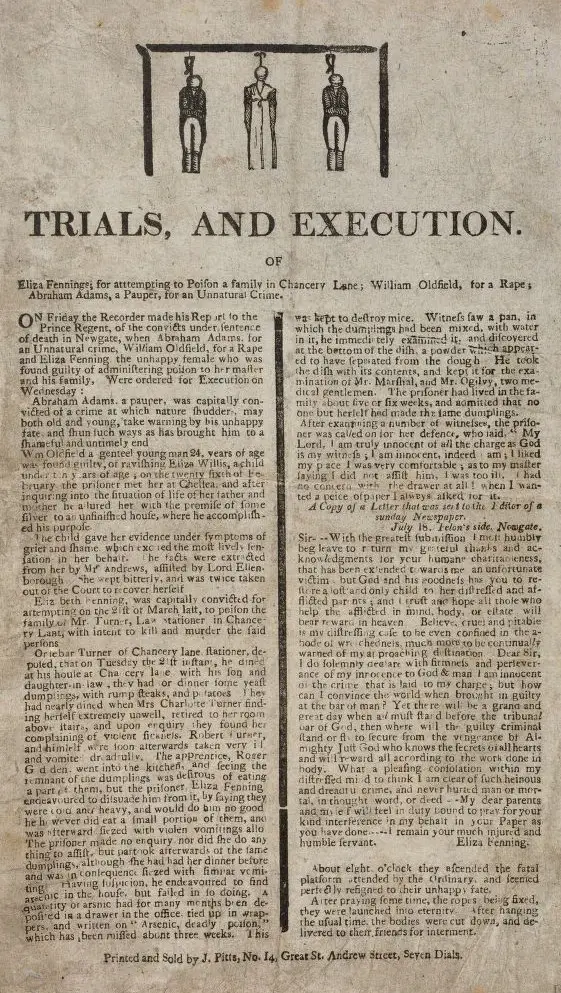
| Judicial Outcome | Death sentence by hanging at the Old Bailey (executed on July 26, 1815) |
1. Background and Psychopathy
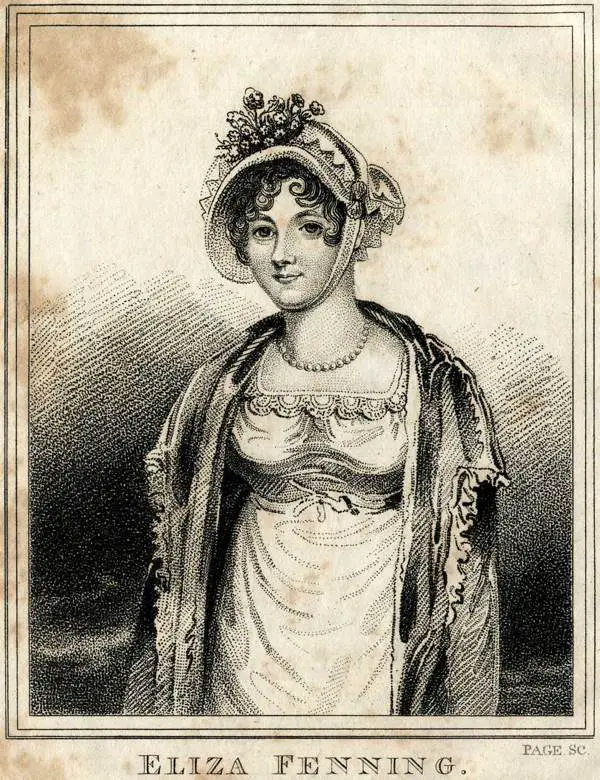
Elizabeth Fenning, widely known as Eliza, was born around 1792 into an impoverished family. From the age of fourteen, she worked in various domestic capacities across London. In late January 1815, she entered the employment of Orlibar Turner (also referred to in records as Robert Turner), a law stationer residing at 68 Chancery Lane, London, working in the capacity of cook. Her prior employment record was unblemished, supported by character witnesses attesting to her good nature and industriousness.
2. Crime Spree
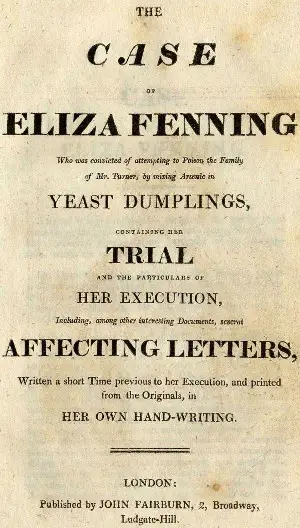
On March 21, 1815, members of the Turner family—Orlibar, his wife Charlotte, their son Robert, and Orlibar's father Haldebart—partook in a midday meal featuring yeast dumplings prepared by Fenning. Shortly after consumption, all diners suffered acute gastrointestinal distress, severe abdominal pain, and vomiting indicative of heavy metal poisoning. Fenning herself and an apprentice, Roger Gadsden, also fell violently ill after consuming portions of the food. Subsequent forensic examination of the cooking utensils by a local surgeon revealed white powder identified as arsenic, allegedly sourced from an unlocked office desk drawer used to store rodent poison.
3. Investigation and Forensic Pursuit
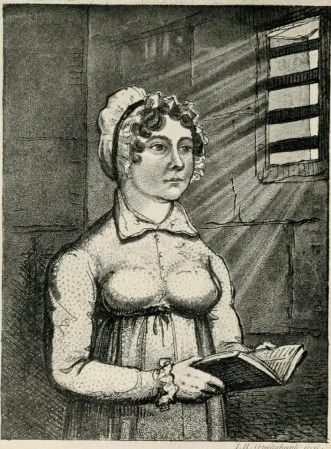
Law enforcement scrutiny immediately focused on the young cook due to her sole access to the kitchen during the preparation process. Days prior, mistress Charlotte Turner had discovered Fenning in the apprentices' quarters in a partially undressed state, resulting in a severe reprimand and lingering domestic tension. Arrested on March 23, 1815, and committed to Newgate Prison, Fenning was formally charged with feloniously administering poison with intent to murder, while circumstantial evidence bypassed alternative contamination hypotheses.
4. Trial and Judicial Proceedings
Fenning was tried before the Recorder of London at the Old Bailey on April 5, 1815. Operating without legal representation—standard practice for defendants in felony trials of that era—Fenning maintained her innocence, emphasizing that she had ingested the poisoned food herself and suffered identical toxic symptoms. The trial judge's summing-up heavily favored the prosecution, focusing on her sole custody of the kitchen and access to the poison. The jury returned a guilty verdict, resulting in a mandatory death sentence.
5. Psychiatric Assessment and Aftermath
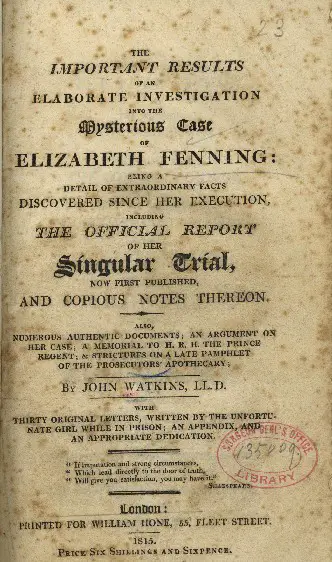
The case rapidly evolved into a national cause célèbre, sparking intense public debate regarding the reliance on circumstantial evidence and judicial fairness. Despite appeals and reviews convened by high-ranking officials including Lord Chancellor Eldon, executive clemency was denied. On July 26, 1815, Fenning was hanged alongside two other convicts, proclaiming her absolute innocence upon the scaffold. Her funeral procession drew an estimated 10,000 mourners, and later luminaries, including novelist Charles Dickens, advocated for her posthumous exoneration, cementing her case as a monumental miscarriage of justice.