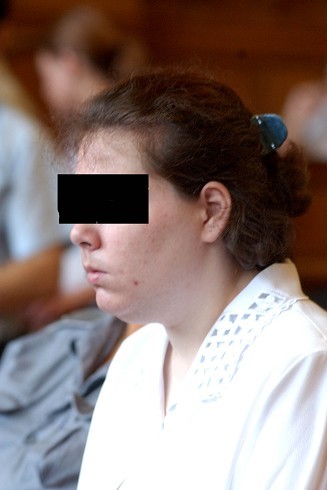






Forensic & Criminological Matrix
| Parameter | Forensic Detail |
|---|---|
| Forensic Heading / Aliases | The Black Angel (Fekete Angyal) |
| Legal Identity | Timea Faludi |
| Confirmed Victims | 3 (legally proven out of 7-8 suspected; confessed up to 40) |
| Active Timeline | May 2000 – February 2001 |
| Jurisdiction / Area of Operations | Gyula Nyírő Hospital, Budapest, Hungary |
| Criminological Classification | Healthcare serial killer / Angel of Death |
| Forensic Modus Operandi | Unauthorized and illegal administration of lethal intravenous injections of tranquilizers and heavy painkillers to terminally ill patients during night shifts |
| Weapon / Mechanism of Death | Lethal injection using central nervous system depressants (morphine, sedatives) |
| Motive / Behavioral Dynamics | Personality disorder featuring omnipotence delusions ("playing God"); alleged mercy killing (rejected by courts due to lack of patient consent) |
| Judicial Outcome | Sentenced on December 2, 2002, to 9 years in prison for repeated attempted murder and intentional endangerment of lives, coupled with a lifetime ban from nursing |
1. Background and Psychopathy
Timea Faludi was born in Hungary in 1977. She began her career as a nurse in 1994, eventually joining a specialized unit for terminally ill patients at the Gyula Nyírő Hospital in Budapest. A seemingly dedicated and professional staff member, Faludi possessed a complex psychological profile characterized by a severe lack of empathy coupled with delusions of omnipotence. Psychiatric experts testified during the trial that Faludi adopted a messianic role, interchanging the positions of physician and patient while deciding over life and death under the distorted belief that she alone knew what was best for them.
2. Crime Spree
Between May 2000 and February 2001, taking advantage of night shifts and the relative isolation of the hospital ward, Faludi began administering intravenous injections to seriously ill patients. Under Hungarian hospital regulations and internal protocols, nurses were strictly prohibited from administering intravenous medications without direct medical supervision, a rule that was frequently and tacitly bypassed. Faludi utilized cocktails of sedatives and strong painkillers to accelerate or induce the deaths of elderly and terminal patients. Because of her long dark hair and her habit of wearing black clothing during night shifts, colleagues eventually dubbed her the "Black Angel."
3. Crime Scene Investigation and Forensic Hunt
The investigation was triggered in early 2001 when the medical director of Gyula Nyírő Hospital noticed an unusually high death toll that systematically coincided with nurse Faludi's shifts. An internal audit of drug utilization revealed a significant shortage of tranquilizers. Once police were notified, authorities encountered a major forensic obstacle: the vast majority of the deceased patients had already been cremated, precluding post-mortem autopsies and toxicological analyses capable of proving the presence of lethal substances in tissues. Lacking direct material evidence, investigators relied on medical records, witness testimonies, and statistical mortality anomalies.
4. Arrest and Judicial Proceedings
Timea Faludi was arrested on February 19, 2001. During initial police interrogations, the nurse broke down and voluntarily confessed to killing approximately 40 elderly patients "out of mercy." However, upon the commencement of her trial in May 2002, she partially retracted her statements, claiming she had exaggerated or lied to make herself appear more interesting, and insisting her intention was never to kill, but to alleviate suffering.
The Budapest Municipal Court faced an exceptionally complex trial due to the cremation of the victims. Although it was established that she irregularly administered injections to seven patients who died shortly thereafter, the court could establish a direct, scientifically proven causal link in only three cases. The Hungarian judiciary categorically rejected the notion that her actions constituted euthanasia, noting that legal euthanasia requires an explicit and voluntary request from the patient—an element entirely absent in Faludi's cases.
5. Psychiatric Evaluation and Aftermath
On December 2, 2002, the court sentenced Faludi to nine years in prison on multiple counts of attempted murder and intentionally endangering lives, avoiding a conviction for completed murder due to the forensic impossibility of proving the precise cause of death without physical remains. Additionally, she received a permanent prohibition from ever working as a nurse again. The case shocked Hungarian society and prompted a nationwide government review of hospital security procedures and drug administration controls.