



Forensic & Criminological Matrix
| Parameter | Forensic Detail |
|---|---|
| Forensic Heading / Aliases | Peggy Facto |
| Legal Identity | Peggy Facto |
| Confirmed Victims | 1 (Her newborn infant) |
| Active Timeline | September 1824 |
| Jurisdiction / Area of Operations | Clinton County, New York, USA |
| Criminological Classification | Filicide / Infanticide |
| Forensic Modus Operandi | Strangulation using a garment cord, concealment, and partial destruction by fire in a wooded area |
| Weapon / Mechanism of Death | Dress cord (strangulation) and fire |
| Motive / Behavioral Dynamics | Concealment of illegitimate pregnancy and societal stigma |
| Judicial Outcome | Sentenced to death by hanging. Executed on March 18, 1825, in Plattsburgh |
1. Background and Psychopathy
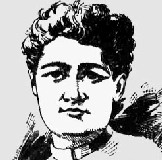
Peggy Facto was a young woman residing in Clinton County, New York, during the early 19th century. Historical records regarding her early life are scarce, leaving her legacy defined almost entirely by the tragic events of 1824 and her subsequent execution. Operating within a strict puritanical society where unwed mothers faced severe social ostracism and legal peril, Facto found herself trapped under intense psychological and social pressures regarding her illegitimate pregnancy.
2. Crime Spree
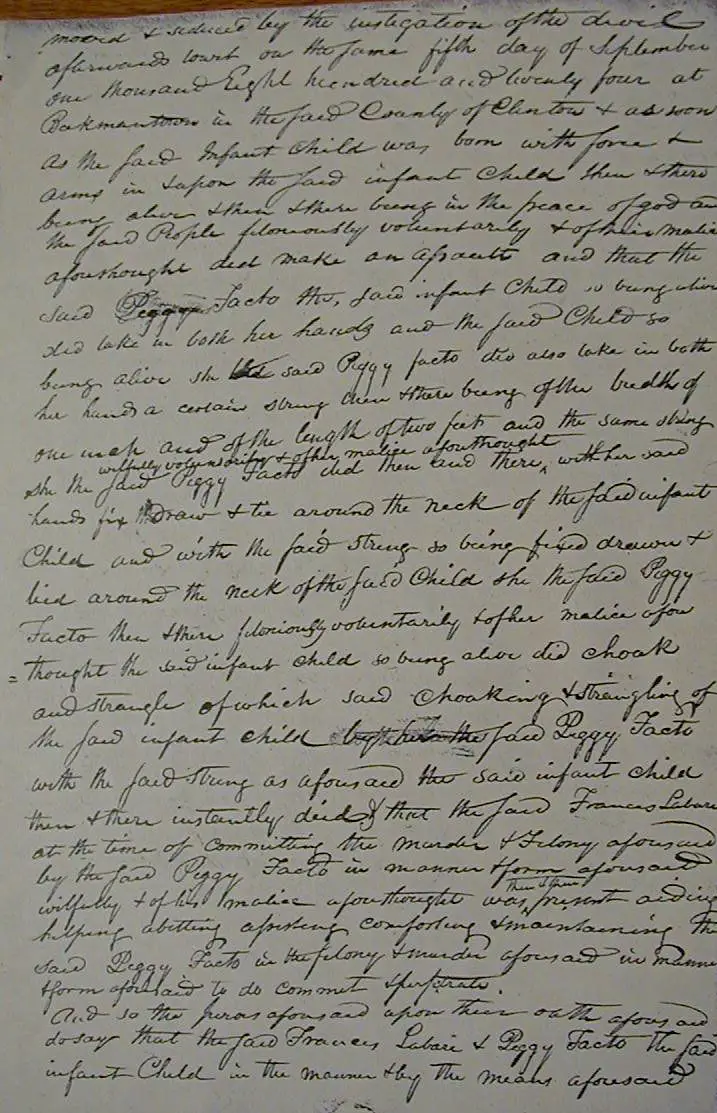
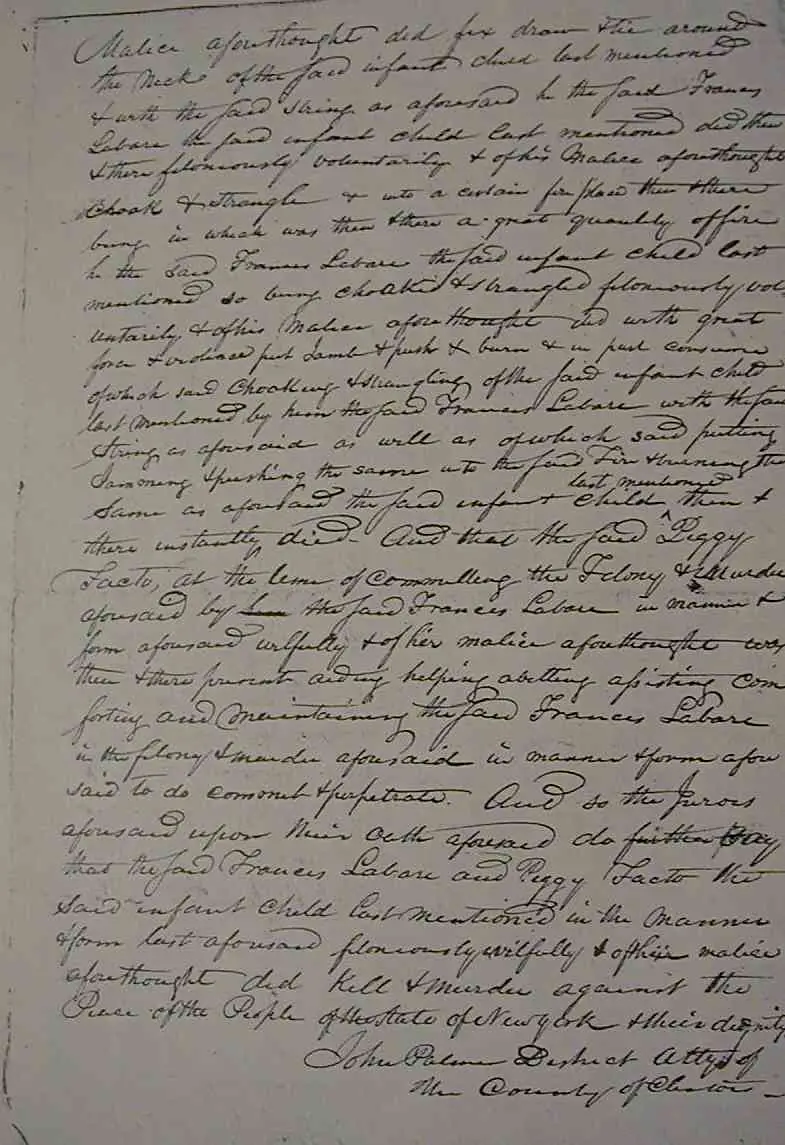
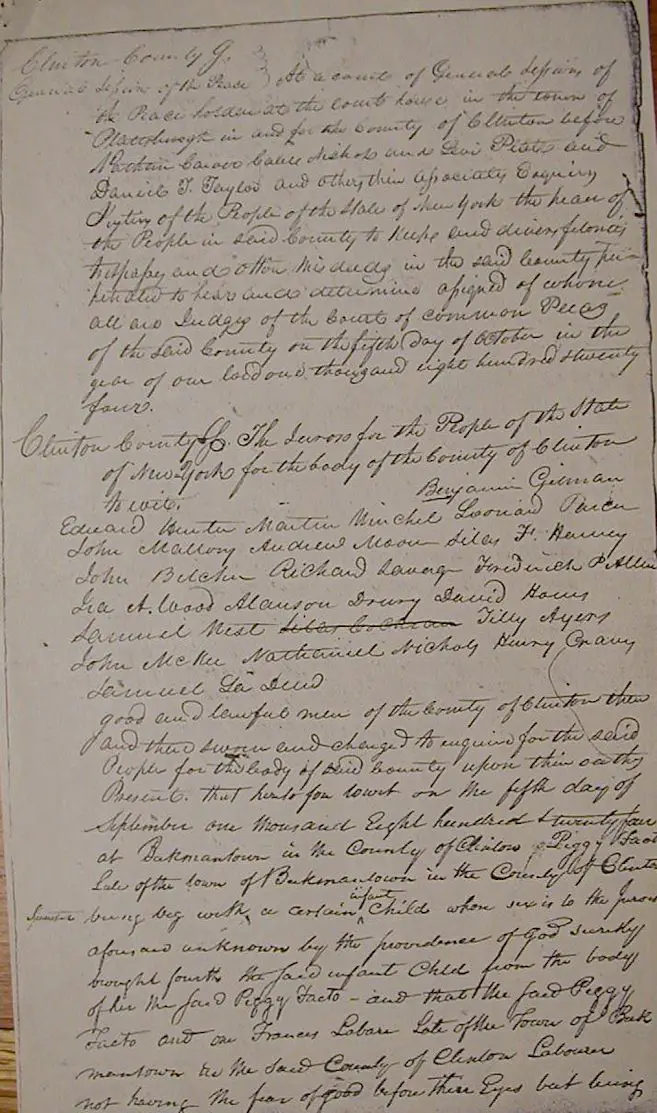
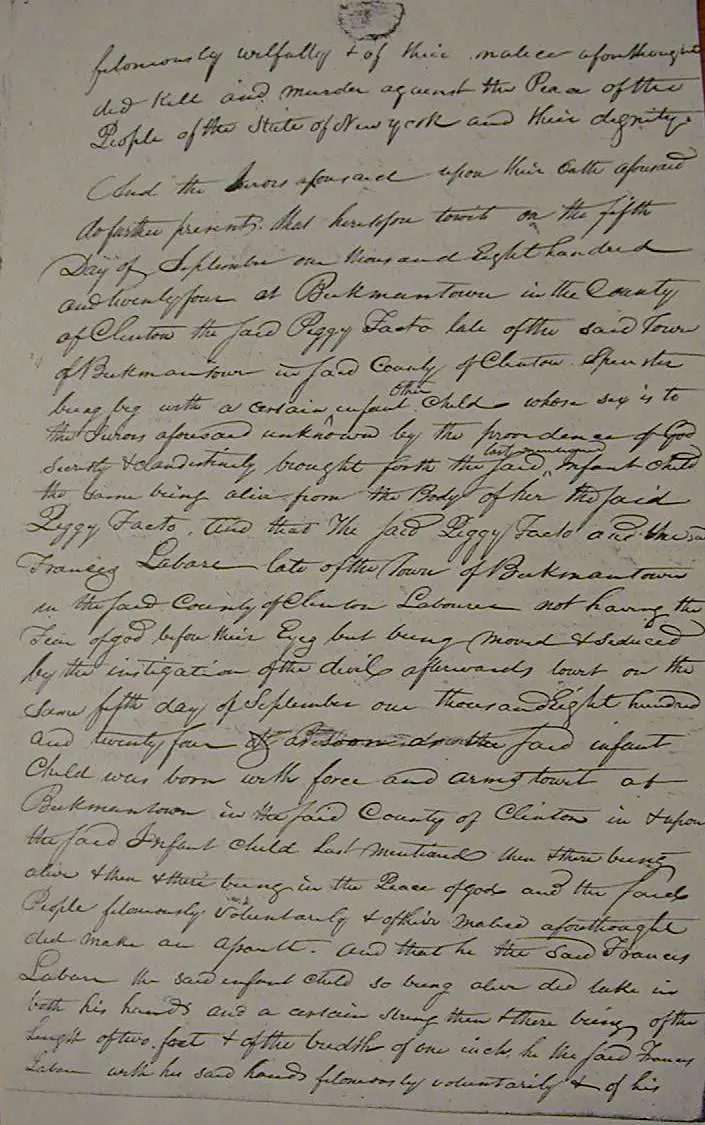
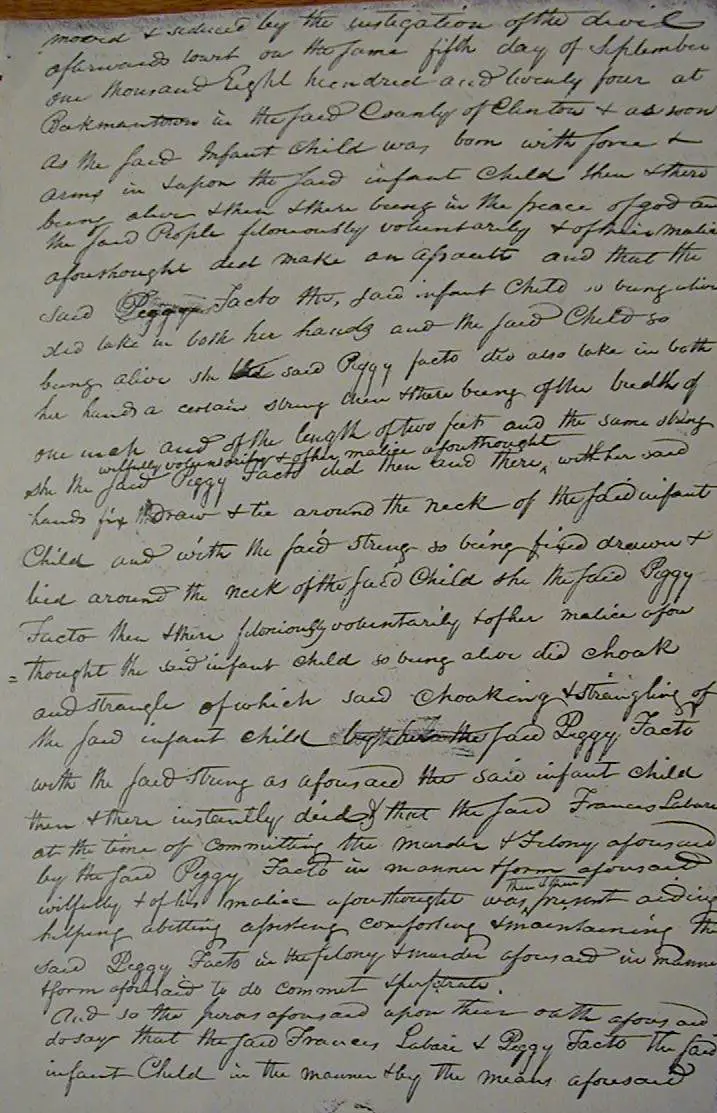
On September 15, 1824, a deceased newborn infant was discovered in a wooded area of Beekmantown, Clinton County. Forensic examination of the remains revealed distinct trauma: a dress cord tightly bound around the infant's neck, extensive thermal damage from fire, and blunt force trauma to the skull. The combination of ligature strangulation and attempted cremation pointed to a deliberate effort to terminate the infant's life and eradicate physical evidence.
3. Investigation and Arrest
The investigation was triggered by the accidental discovery of the infant's body roughly 12 to 14 rods away from Facto's residence. Local witnesses stepped forward, testifying to Facto's advanced pregnancy during the preceding weeks and physical signs indicating a recent delivery. Jailhouse testimonies, notably from Mary Chandreau, indicated that Facto confessed to using a cord from her own gown to bind the newborn's neck. Francis Labare was consequently arrested and co-indicted as an accomplice.
4. Legal Proceedings and Outcome
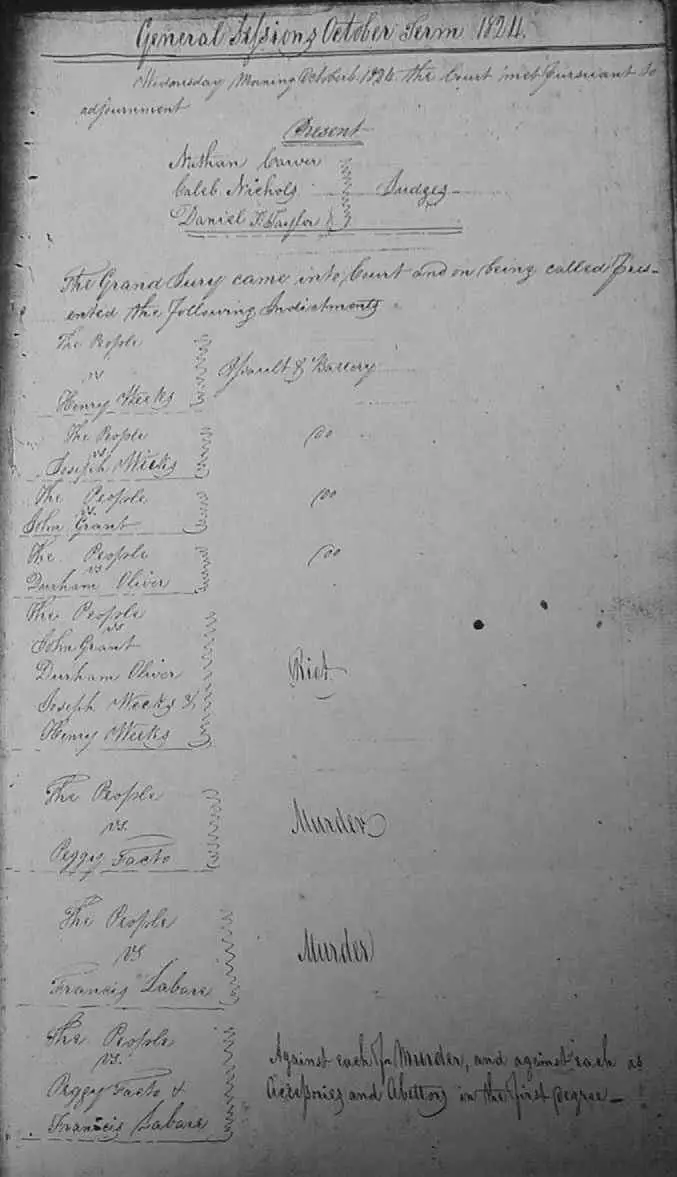
In October 1824, a Grand Jury indicted both Peggy Facto and Francis Labare for murder and conspiracy in the first degree. The trial commenced on January 19, 1825, before Circuit Court Judge Reuben H. Walworth at the Court of Oyer and Terminer in Plattsburgh. Tried separately on the same day, Facto was convicted swiftly by the jury based on overwhelming circumstantial and witness testimony. While co-defendant Francis Labare was acquitted, Facto was sentenced to death by hanging.
5. Psychiatric Assessment and Aftermath
Following the conviction, considerable public debate arose regarding the severity of the sentence. Prominent citizens petitioned Governor DeWitt Clinton for executive clemency, arguing for commutation or banishment. Judge Walworth himself later acknowledged the intense public backlash against the execution. Nevertheless, Governor Clinton rejected the clemency appeals on February 28, 1825, maintaining that pardoning Facto would undermine legal deterrence against infanticide. On March 18, 1825, Peggy Facto was hanged at the Broad Street arsenal lot in Plattsburgh, concluding one of the rarest capital punishment cases involving a female offender in early 19th-century New York.