



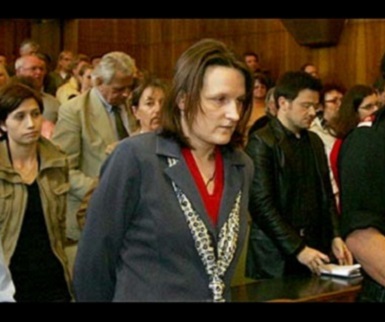
Forensic Profile Datasheet: Estíbaliz Carranza Zabala ("The Ice Cream Killer")
| Forensic Parameter | Evaluation Details |
|---|---|
| Full Legal Name | Estíbaliz Carranza Zabala |
| Public Monikers | The Ice Cream Killer, The Ice Cream Maiden, Eislady |
| Date & Place of Birth | September 6, 1978 — Mexico City, Mexico (Spanish-Mexican dual citizen) |
| Current Legal Status | Serving life imprisonment; incarcerated at Asten High-Security Psychiatric Prison (Austria) |
| Criminological Classification | Spousal serial killer / Instrumental dismemberment murderer |
| Confirmed Fatalities | 2 victims: Holger Holz (ex-husband, killed 2008) and Manfred Hinterberger (partner, killed 2010) |
| Operational Period | April 2008 – November 2010 |
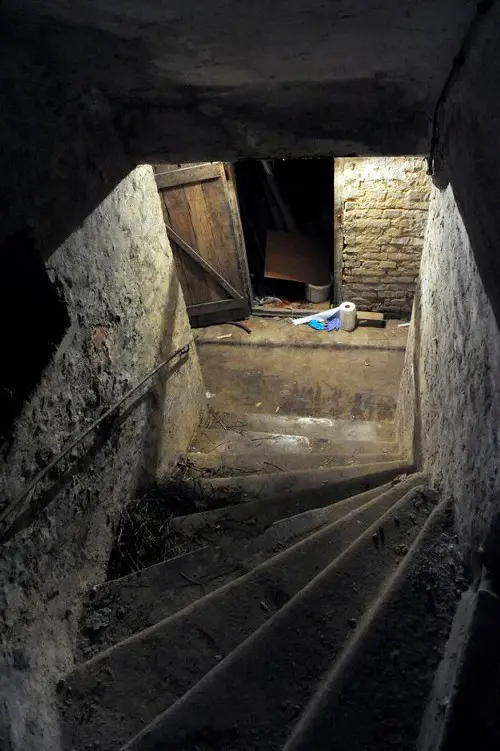
| Crime Scene | Basement cellar of the Schleckeria artisan ice cream parlor, Meidling district, Vienna, Austria |
| Weapons & Tools | Beretta .22 caliber semi-automatic pistol, motor chainsaw, circular angle grinder, fast-setting concrete |
| Medical Cause of Death | Gunshot wounds to the occipital/craniofacial region at point-blank range |
| Forensic Psychiatric Diagnosis | Severe multifaceted personality disorder (borderline, narcissistic, and histrionic traits); legally sane and criminally culpable |
Background and Early Trajectory
Estíbaliz Carranza Zabala was born on September 6, 1978, in Mexico City, the daughter of a Spanish university psychology professor and a Mexican schoolteacher. During her childhood, the family relocated permanently to Spain, settling in Barcelona. Carranza was raised in an intellectually affluent yet emotionally rigid and patriarchal environment, characterized by intense paternal pressure and perfectionist demands.
After discontinuing higher studies in business and marketing in Spain, Carranza moved to Germany, where she met Holger Holz, a German national whom she married in 2002. In 2005, the couple relocated to Vienna, Austria, securing personal bank loans to acquire and open an artisan ice cream parlor called «Schleckeria» in the city's 12th district (Meidling).
The marriage quickly deteriorated into mutual contempt, financial recriminations, and psychological friction. Even after an administrative divorce was granted, Holz refused to vacate the joint residence or contribute to the shop's escalating debts, belittling Carranza and treating her with open disrespect.
The First Slaying: Holger Holz (April 2008)
On April 27, 2008, following an intense domestic confrontation, Holz sat at a desktop computer with his back turned to Carranza. Seizing an unlicensed Beretta .22 caliber semi-automatic pistol, Carranza shot him three times point-blank into the back of his head.
Faced with a dead body and determined to evade prosecution, Carranza dragged the corpse into the cellar beneath the Schleckeria ice cream parlor. Recognizing she could not transport the heavy body out undetected, she visited a local hardware store, purchased an electric chainsaw and an angle grinder, and consulted instructional user guides. Over several days, she methodically dismembered Holz's body into manageable anatomical segments.
To mask the overpowering odor of organic decay, she saturated the remains with industrial air fresheners and fragrant oils, double-bagged the segments, froze them inside commercial deep-freezers, and subsequently embedded the body parts inside heavy plastic tubs filled with quick-dry concrete, which she concealed beneath a cellar subfloor. To family inquiries and regular customers, she claimed Holz had abandoned her to join a religious cult in India.
The Second Slaying: Manfred Hinterberger (November 2010)
Following Holz's disappearance, Carranza embarked on an affair with Manfred Hinterberger, a 48-year-old ice cream equipment sales representative. The relationship mirrored previous patterns of emotional dependence and escalating resentment. Carranza suspected Hinterberger was unfaithful, having discovered contacts on online dating portals, and felt humiliated by his refusal to marry her or start a family.
On the night of November 21–22, 2010, after returning from a local pub, Hinterberger fell into a deep alcohol-induced sleep. Carranza retrieved the .22 Beretta pistol and shot him four times in the back of the head.
Using the exact protocol established two years prior, she transported the body to the Schleckeria cellar, dismembered it with the chainsaw, mixed concrete batches in utility tubs, and sealed Hinterberger's remains alongside those of her former husband. She concealed the cement blocks beneath decorative flower gravel and told friends that Manfred had abruptly walked out on her after a lovers' quarrel.
Discovery, International Flight, and Capture (June 2011)
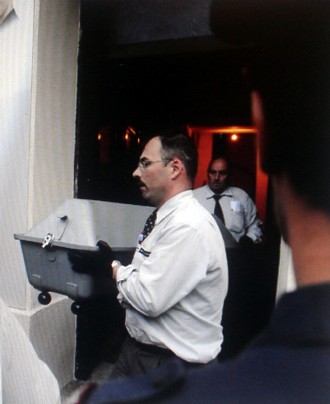
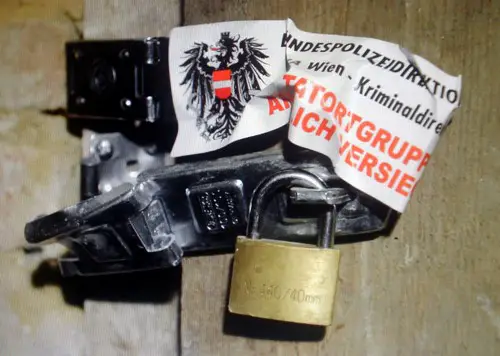
On June 6, 2011, building maintenance contractors entered the cellar shared by the Schleckeria building to repair a compromised central water pipe. While clearing partition debris and jackhammering concrete slabs, workers uncovered a rusted ice cream freezer releasing putrid odors, along with sealed buckets containing human bone fragments, mummified tissues, and two human skulls embedded in cured mortar.
Realizing the cellar graves had been exposed, Carranza immediately withdrew emergency cash, hailed a taxi, and fled Austria. Traveling across northern Italy, she sought refuge in Udine and Tolmezzo, posing as an expectant tourist under emotional distress (she had conceived a child with a subsequent partner and was two months pregnant).
On June 10, 2011, acting on an international Red Notice issued by Austrian authorities, Italian Carabinieri surrounded and arrested Carranza at Udine train station, extraditing her to Vienna shortly thereafter.
Trial, Psychiatric Findings, and Incarceration
Carranza's sensational trial opened in Vienna in November 2012, drawing global media scrutiny. Forensic court psychiatrist Dr. Heidi Kastner delivered a definitive diagnostic assessment after exhaustive clinical evaluations:
- Dr. Kastner ruled out psychosis or organic impairment, determining Carranza was fully sane and criminally culpable.
- She diagnosed a severe, polymorphous personality disorder exhibiting acute borderline, narcissistic, and histrionic traits. Carranza presented a surface persona of a delicate, helpless maiden requiring male rescue, but harbored profound hostility and manipulative aggression when men failed to validate her idealized self-image.
On November 22, 2012, an Austrian jury unanimously convicted Estíbaliz Carranza of two counts of premeditated murder, sentencing her to life imprisonment (Lebenslange Freiheitsstrafe) coupled with mandatory commitment to an institution for mentally abnormal offenders.
In 2017, due to management complexities and security assessments, Austrian prison authorities transferred Carranza from Schwarzau Women's Prison to the ultra-secure psychiatric detention facility in Asten (Upper Austria), an institution designed primarily for high-risk male criminal psychiatric inmates, cementing her status as one of Europe's most notorious criminal figures.