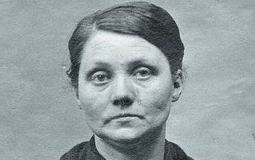
Forensic & Criminological Matrix
| Parameter | Forensic Detail |
|---|---|
| Forensic Heading / Aliases | The Linköping Poisoner |
| Legal Identity | Sofia Maria Ekwall |
| Confirmed Victims | 2 (Per Ludvig Ekwall, Maja Stina Forsberg) |
| Active Timeline | May - June 1845 |
| Jurisdiction / Area of Operations | Östergötland and Småland, Sweden |
| Criminological Classification | Parricide / Serial Poisoner |
| Forensic Modus Operandi | Surreptitious administration of arsenic trioxide in domestic meals and soups |
| Weapon / Mechanism of Death | Arsenic trioxide (procured from local apothecary under false pretenses) |
| Motive / Behavioral Dynamics | Paternal oppression, prohibition of marriage, and severe family dysfunction |
| Judicial Outcome | Sentenced to death; commuted by royal clemency to 28 days on bread and water followed by life imprisonment; released in 1876 |
1. Background and Psychopathy
Sofia Maria Ekwall was born in 1826 into an affluent family belonging to the Swedish minor nobility. Her father, Per Ludvig Ekwall, was a wealthy estate owner and the son of statesman Christopher Retzius Ekwall. He was characterized as a domestic tyrant with depressive tendencies, alcoholism, and an authoritarian grip over his household. In 1844, the family relocated to the Attarp manor in Småland, south of Linköping. The household environment was intensely oppressive, exacerbated by paternal financial controls and the outright refusal to permit Sofia Maria to marry her chosen fiancé. This protracted conflict generated deep-seated resentment within the young woman, eventually channeling into lethal behavioral dynamics.
2. Crime Spree
Ekwall's criminal strategy relied on arsenic, a lethal and virtually undetectable poison obtained from the local apothecary under the false pretext of needing it to remove stains from a silk dress. In late May 1845, estate owner Per Ekwall fell suddenly ill after consuming food prepared in the family kitchen. Although he initially showed signs of recovery, his health catastrophically deteriorated after ingesting a contaminated oat soup, resulting in his death on June 18, 1845. The forensic modus operandi demonstrated calculation: arsenic was covertly introduced into the patriarch's meals. Consequently, collateral casualties occurred; Maja Stina Forsberg, a young family maid, consumed leftovers from the pot and died the same night, while one of Sofia Maria's younger sisters survived only due to timely medical intervention and antidotes.
3. Investigation and Forensic Hunt
Initial police investigations were hindered by diversions and counter-accusations promoted by Hedvig Christina Ekwall, the victim's widow, who attempted to frame maidservant Hedda Thorman in an alleged infanticide cover-up. However, forensic analysis progressed through autopsies and toxicological examination of stomach contents, confirming acute arsenic poisoning. Law enforcement subsequently traced apothecary records revealing Sofia Maria's purchase of the toxic agent. Under interrogation and following an initial arrest alongside her brother Vilhelm (later exonerated), Sofia Maria broke under pressure, confessed to administering the poison, and eventually implicated her mother as an active accomplice.
4. Trial and Judicial Proceedings
19th-century Swedish society closely followed the Ekwall trial, marking it as one of the most prominent judicial cases prior to the Anna Månsdotter case. Sofia Maria was formally indicted for the parricide of her father and the murder of maid Maja Stina Forsberg. Despite Sofia Maria's shifting confessions pointing to maternal collaboration, the lack of definitive physical evidence linking Hedvig Christina—who maintained an unyielding denial throughout the proceedings—resulted in the mother's acquittal and release. Conversely, Sofia Maria Ekwall was found guilty on all murder charges and sentenced to capital punishment by decapitation.
5. Psychiatric Assessment and Outcome
Capital punishment for Sofia Maria Ekwall was ultimately averted due to royal clemency from the King of Sweden. Her death sentence was commuted to twenty-eight days on a strict diet of bread and water, followed by life imprisonment. Ekwall served a prolonged penal sentence in Swedish correctional facilities until her release in 1876. She lived out the remainder of her life quietly until her death in 1897, securing her place in Scandinavian criminological history as one of the most infamous poisoners of the 19th century.