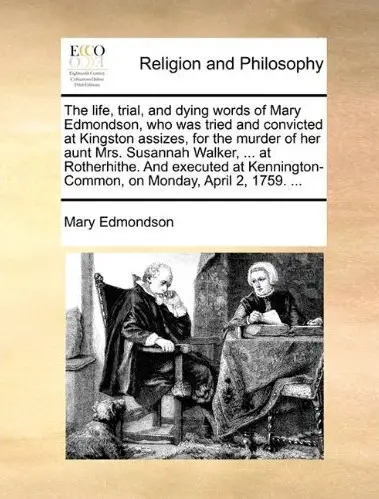
Forensic & Criminological Matrix
| Parameter | Forensic Detail |
|---|---|
| Forensic Heading / Aliases | Mary Edmondson |
| Legal Identity | Mary Edmondson |
| Confirmed Victims | 1 (Susanna Walker) |
| Active Timeline | February 23, 1759 |
| Jurisdiction / Area of Operations | Rotherhithe, London, United Kingdom |
| Criminological Classification | Homicide / Robbery-homicide |
| Forensic Modus Operandi | Throat slitting |
| Weapon / Mechanism of Death | Sharp-edged weapon (knife) |
| Motive / Behavioral Dynamics | Financial gain |
| Judicial Outcome | Executed by hanging |
1. Background and Psychopathy
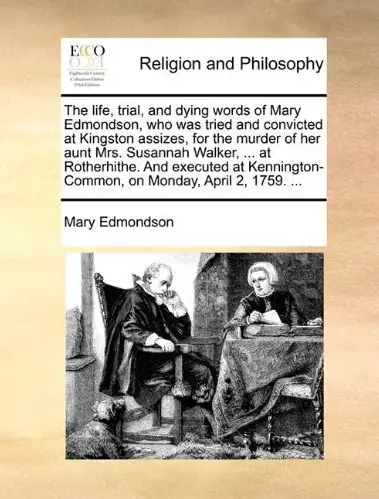
Mary Edmondson was a young woman from a farming family in Leeds, Yorkshire. She lived with her widowed aunt, Susanna Walker, in Rotherhithe for two years. She was noted for her religious devotion and orderly conduct, which made the subsequent violent crime appear highly anomalous to her contemporaries.
2. Crime Spree
On February 23, 1759, after escorting a guest out, Edmondson raised an alarm claiming four men had murdered her aunt. Neighbors discovered Mrs. Walker with her throat cut. Edmondson's account of the intruders was immediately questioned due to the lack of evidence of forced entry and the discovery of her own arm injury, which she claimed was sustained during the struggle.
3. Police Investigation and Forensic Hunt
Investigators conducted a thorough search of the premises. The items Edmondson claimed were stolen were discovered hidden beneath the floorboards of the privy. This discovery effectively dismantled her narrative of a robbery by external parties.
4. Arrest and Judicial Process
Edmondson was held in Kingston Prison and tried at the Surrey assizes. Despite her persistent claims of innocence, the circumstantial evidence—specifically the hidden valuables—led to a swift conviction for willful murder.
5. Psychiatric Assessment and Outcome
Mary Edmondson was executed at Kennington Common on April 2, 1759. She maintained her innocence until the end. Following her execution, her body was subjected to dissection at St. Thomas's Hospital, as mandated by the laws governing murderers at the time.