




Forensic & Criminological Matrix
| Parameter | Forensic Detail |
|---|---|
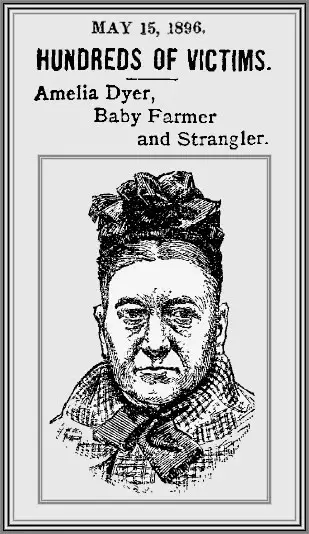
| Forensic Heading / Aliases | The Reading Baby Farmer |
| Legal Identity | Amelia Elizabeth Hobley |
| Confirmed Victims | 6 (estimated up to 400+) |
| Active Timeline | 1880 - 1896 |
| Jurisdiction / Area of Operations | Bristol, Reading, and London, England, United Kingdom |
| Criminological Classification | Lucrative Serial Killer (Baby Farming Predator) |
| Forensic Modus Operandi | Acquisition of illegitimate infants through fraudulent adoption promises for a lump sum, followed by ligature strangulation and river disposal. |
| Weapon / Mechanism of Death | Manual strangulation using white cloth tape (corset/tailoring ribbon) and severe premeditated neglect |
| Motive / Behavioral Dynamics | Extreme financial greed combined with underlying psychological instability |
| Judicial Outcome | Sentenced to death by hanging at Newgate Prison on June 10, 1896 |
1. Background and Psychopathy
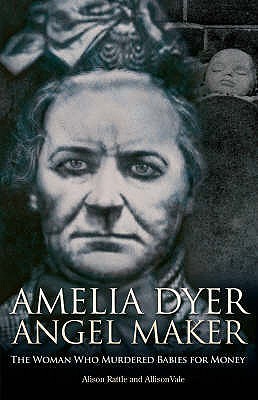
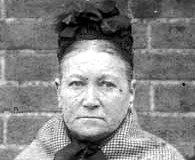
Amelia Elizabeth Hobley was born in 1838 in Pyle Marsh, near Bristol, to a respectable master shoemaker father. Unlike many contemporaries in Victorian England, she did not experience grinding poverty; she learned to read and write and developed an affinity for literature. However, her formative years were overshadowed by severe domestic trauma: her mother suffered a debilitating psychiatric disorder triggered by typhus, exhibiting violent episodes that young Amelia was forced to manage until her mother's death in 1848. Following this, she trained as a corset-maker and later as a nurse. This medical training provided her with foundational healthcare knowledge and exposure to institutional environments, assets she would later subvert for her criminal enterprise.
2. Crime Spree
During 19th-century England, the Poor Law Amendment Act of 1834 absolved fathers from financial responsibility for illegitimate children, creating profound social and economic hardship for single mothers. This socioeconomic vulnerability birthed the practice of 'baby farming', where intermediaries accepted fees to board and find adoptive homes for unwanted infants. Amelia Dyer recognized the immense financial potential of this unregulated market. Initially, she let infants starve to death through severe neglect and opiate sedation (such as Godfrey's Cordial). Over time, she streamlined her operations: shortly after receiving the infants and pocketing lump-sum payments ranging from £5 to £80, she murdered them directly to eliminate overhead costs and clear space for new victims.
3. Crime Spree & Forensic Investigation
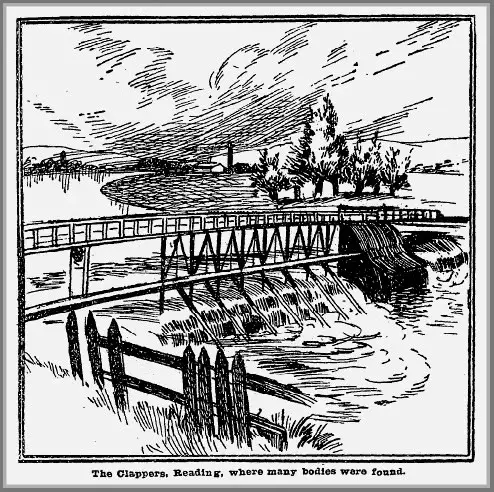
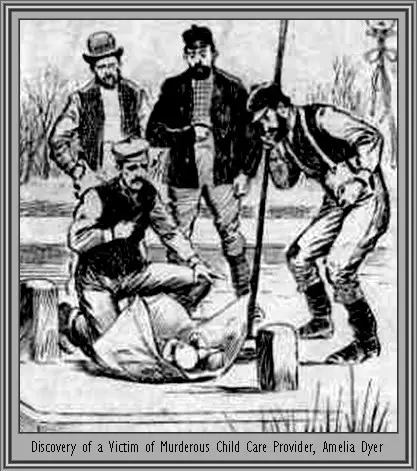
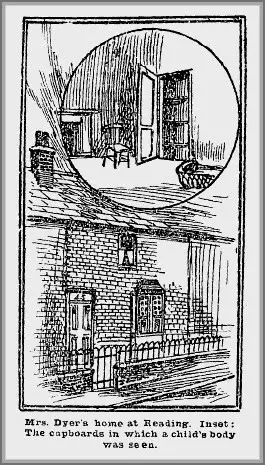
For years, Dyer evaded law enforcement due to systemic bureaucratic indifference toward illegitimate children and complacent doctors who signed fraudulent death certificates. The breakthrough occurred in March 1896 when a package containing the body of an infant, Helena Fry, was recovered from the River Thames in Reading. Partial address details on the wrapping paper led investigators directly to Amelia Dyer. A subsequent police search of her premises uncovered incriminating evidence, including adoption advertisements, desperate letters from mothers, and spools of white tape identical to the ligature used in the murders. Subsequent dredging of the Thames revealed additional infant remains tied and wrapped in a uniform manner.
4. Arrest and Judicial Proceedings
Amelia Dyer was arrested on April 4, 1896. While detained at the Reading police station, she made two suicide attempts. Confronted with overwhelming forensic and documentary evidence, she confessed, stating chillingly: "You'll know all mine by the tape around their necks." She stood trial at London's Old Bailey in May 1896. Her defense counsel attempted an insanity plea based on her history of mental instability and psychiatric hospitalizations; however, prosecutors demonstrated that her actions reflected calculated commercial efficiency driven entirely by greed. The jury deliberated for a mere five minutes before returning a guilty verdict.
5. Psychiatric Assessment and Aftermath
Criminological evaluations concluded that Dyer exhibited severe psychopathic traits devoid of empathy, compounded by early life trauma, yet remained legally sane and fully cognizant of her actions. She was condemned to death by hanging. The execution was carried out on June 10, 1896, at Newgate Prison by hangman James Billington. Although formally tried and convicted for the murder of a single infant (Doris Marmon), historical and police estimates suggest her true victim count may have reached several hundred over two decades of operation, cementing her status as one of Britain's most prolific serial killers.