




Forensic & Criminological Matrix
| Parameter | Forensic Detail |
|---|---|
| Forensic Heading / Aliases | Susanna Cox / The Berks County Servant |
| Legal Identity | Susanna Cox |
| Confirmed Victims | 1 (her newborn illegitimate son) |
| Active Timeline | February 14, 1809 |
| Jurisdiction / Area of Operations | Berks County, Pennsylvania, United States |
| Criminological Classification | Infanticide / Statutory Concealment Homicide |
| Forensic Modus Operandi | Concealment of pregnancy, clandestine parturition, and abandonment of the neonate in an outbuilding |
| Weapon / Mechanism of Death | Hypoxia / Exposure (asphyxia per initial medical examination) |
| Motive / Behavioral Dynamics | Fear of social dishonor, loss of employment, and destitution in rural servitude |
| Judicial Outcome | Condemned to death by hanging under inherited British statute; executed on June 10, 1809, in Reading |
1. Background and Psychopathy
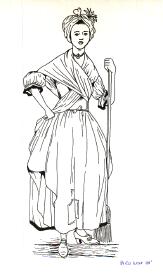
Susanna Cox was born in 1885 into an impoverished rural family in Pennsylvania. Around the age of thirteen, due to familial destitution, she was indentured into domestic service. For eleven years, she labored on the farm of Jacob Geehr in Oley Township, Berks County. Belonging to the Pennsylvania German immigrant community, Cox was illiterate and lacked formal education or religious instruction, yet she was characterized as hardworking, docile, and deeply attached to her employers' children.
2. Crime Spree
Isolated and devoid of moral guidance or institutional support, Cox concealed her pregnancy after being impregnated under obscure circumstances within her social sphere. In the early hours of February 14, 1809, she delivered a male infant alone in her quarters. Three days later, on February 17, Jacob Geehr discovered the frozen body of the newborn wrapped in an old coat inside a recess of a stone washhouse. While a local physician testified that the infant had been born alive and murdered, Cox consistently maintained that the child was stillborn.
3. Police Investigation and Forensic Hunt
Initial discovery of the infant's remains and questioning of the household staff led directly to Cox. She acknowledged placing the infant in the outbuilding but denied causing its death. Under the strict legal framework derived from English common law at the time, concealment of a bastard child's death without witnesses created a legal presumption of murder, effectively shifting the burden of proof and nullifying conventional standards of circumstantial evidence.
4. Arrest and Judicial Proceedings
Following her arrest, the community demonstrated immense sympathy, raising funds for a defense team composed of three prominent attorneys. Nevertheless, her trial on April 7, 1809, in Reading lasted only a single day, resulting in a guilty verdict and a mandatory death sentence. While imprisoned, she exhibited exemplary behavior and received religious instruction from Reverend Philip Pauli. Appeals for executive clemency were ultimately rejected by the governor.
5. Psychiatric Assessment and Aftermath
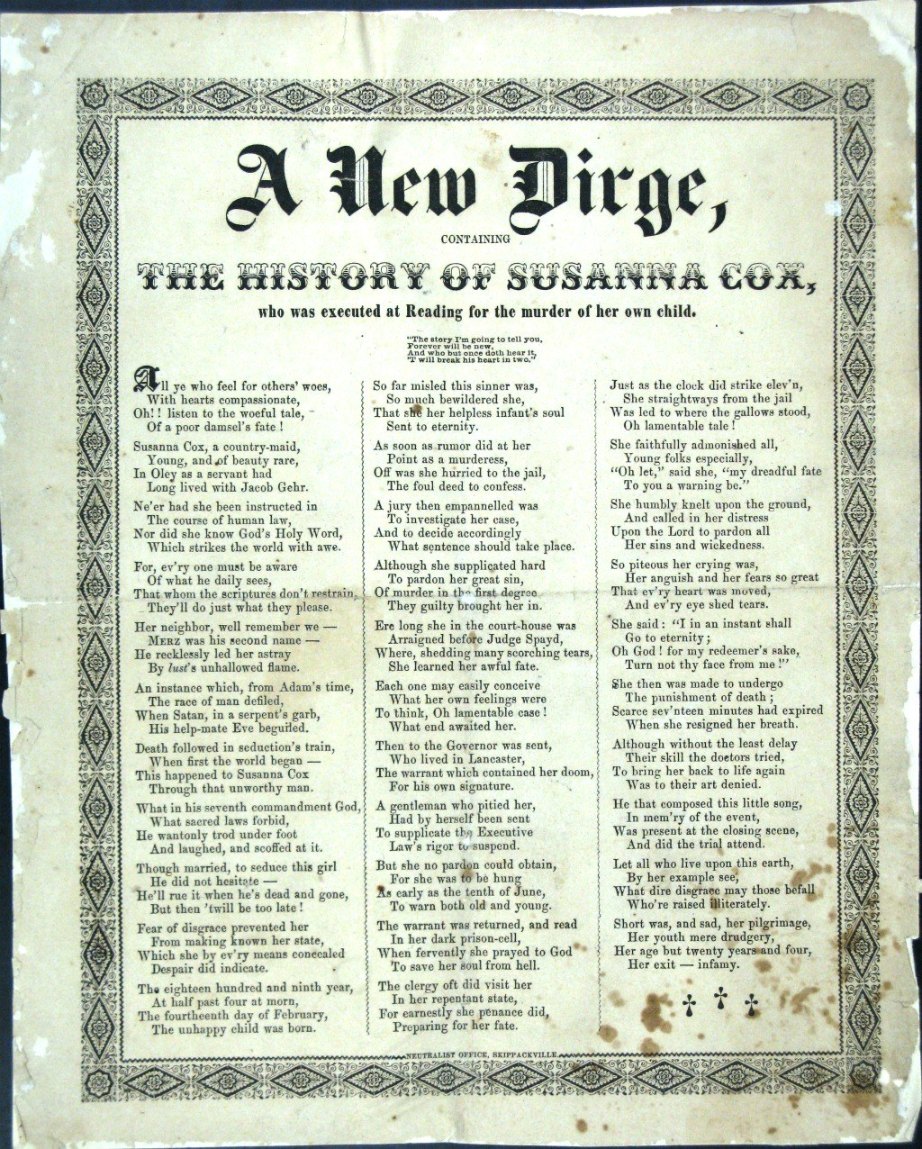
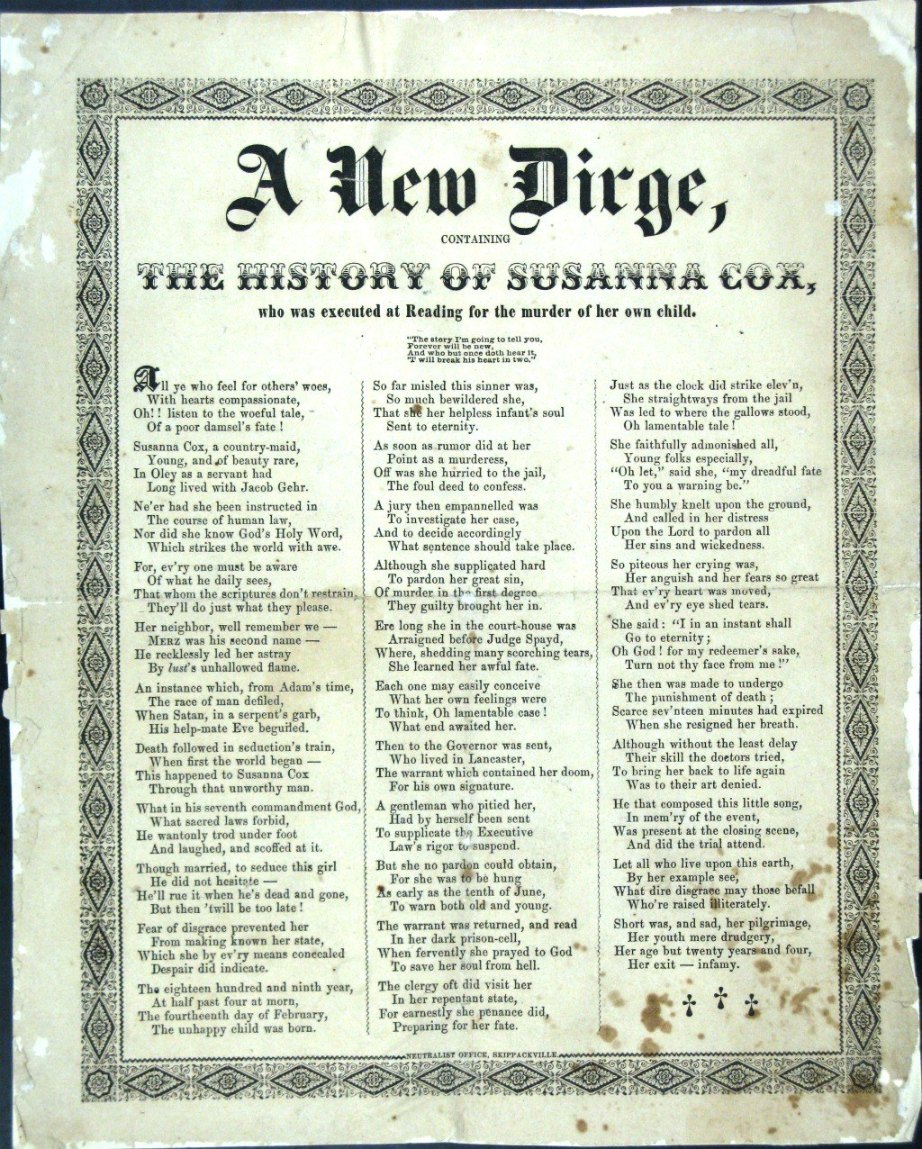
Public execution was carried out on June 10, 1809, at Gallows Hill in Reading before an unprecedented crowd of up to 20,000 spectators. The mechanical failure and prolonged agony of the hanging sparked widespread public outrage, leading to the physical assault of the executioner and profound institutional remorse—including the subsequent resignation of Judge Spayd and expressions of regret by Governor Simon Snyder. The tragedy spawned the famous broadside ballad ("Susanna Cox Lied"), remaining a watershed moment in Pennsylvania legal history and the final public execution of a woman in Berks County.