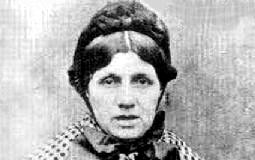





Forensic & Criminological Matrix
| Parameter | Forensic Detail |
|---|---|
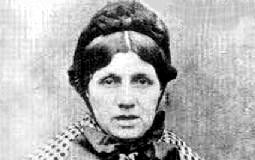
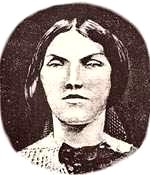
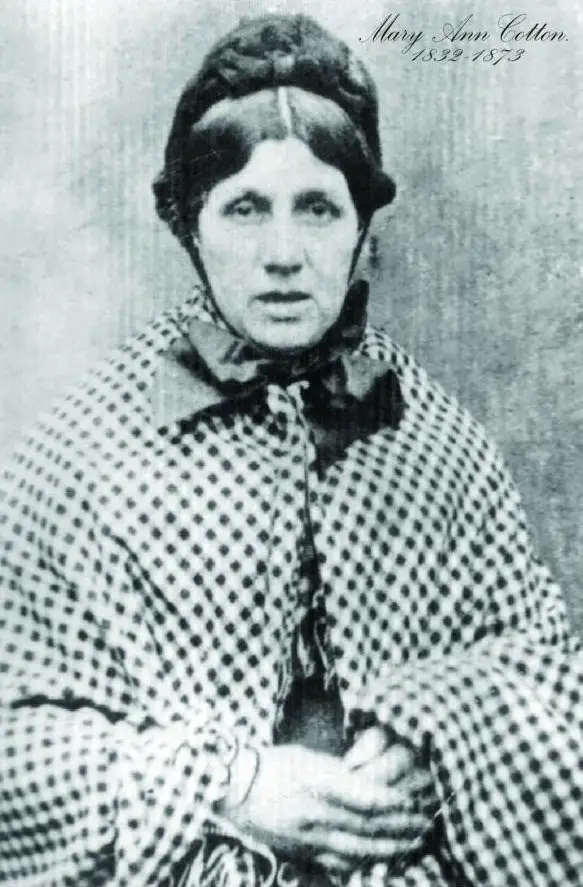
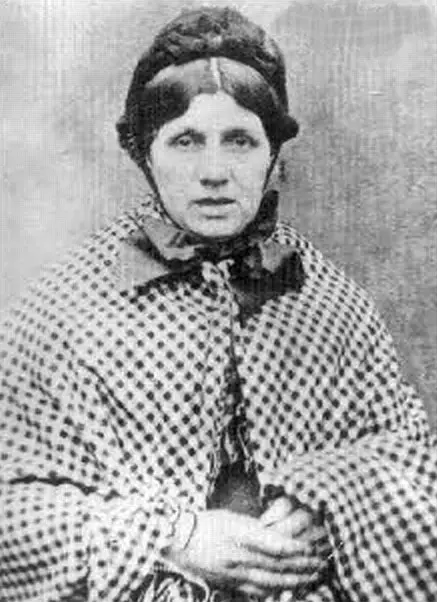
| Forensic Heading / Aliases | Mary Ann Cotton / The British Poisoner |
| Legal Identity | Mary Ann Robson (daughter of Michael Robson and Margaret Lonsdale) |
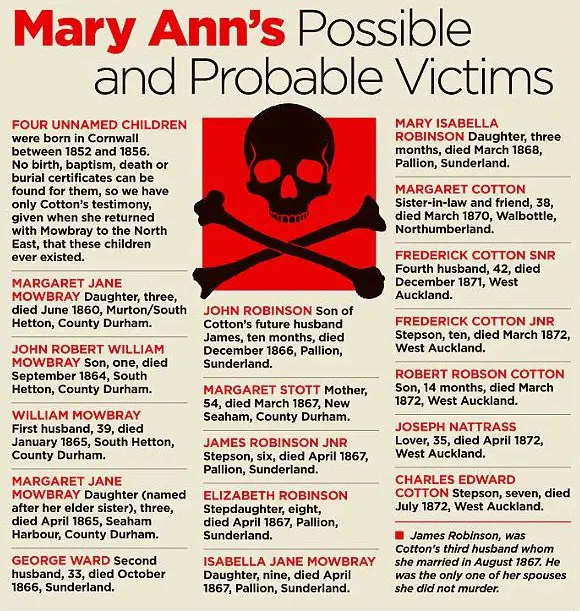
| Confirmed Victims | At least 13 (suspected up to 21) |
| Active Timeline | 1857 - 1872 |
| Jurisdiction / Area of Operations | County Durham, Tyne and Wear, England |
| Criminological Classification | Serial killer / Profit-driven poisoner |
| Forensic Modus Operandi | Surreptitious administration of arsenic in food or beverages, simulating symptoms of gastric fever or intestinal disorders to collect life insurance payouts |
| Weapon / Mechanism of Death | Arsenic (chemical toxin) |
| Motive / Behavioral Dynamics | Illicit enrichment, greed, and psychopathic control coupled with the elimination of familial obstacles |
| Judicial Outcome | Sentenced to death by hanging at Durham Prison (March 24, 1873) |
1. Background and Psychopathy
Mary Ann Robson was born in October 1832 in Low Moorsley, County Durham, England, the daughter of a strictly religious coal miner. Her childhood was disrupted at age eight when her father fell to his death down a colliery shaft. Following her mother's remarriage to George Stott, domestic friction intensified, leading Mary Ann to leave home at sixteen to work as a nurse in South Hetton and later train as a dressmaker. Her criminological profile developed beneath a facade of Victorian respectability, masking a methodical predator driven by financial gain through the systematic elimination of those closest to her.
2. Crime Spree
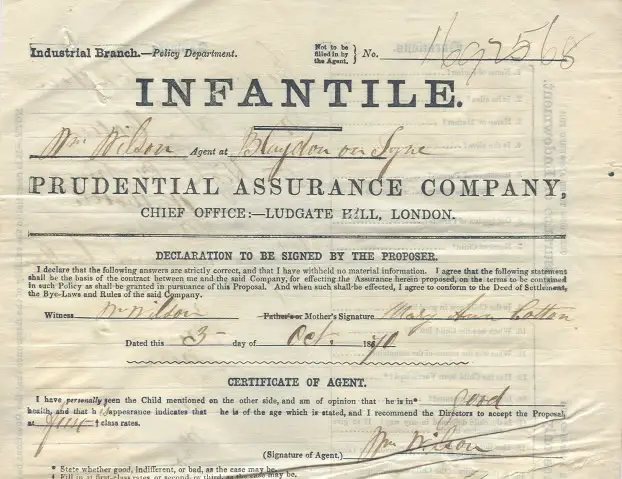
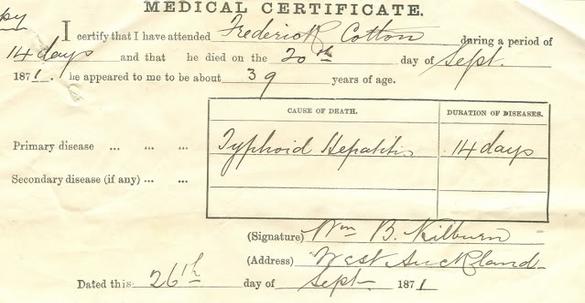
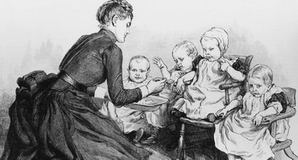
Cotton's modus operandi involved infiltrating family structures, marrying or cohabiting with widowed or employed men, and subsequently eradicating household members who represented financial burdens or obstacles. She utilized arsenic, a poison difficult to detect at the time, which induced vomiting, acute abdominal pain, and diarrhea, successfully mimicking common medical ailments such as gastric fever or gastroenteritis. Her victims included three husbands, numerous biological children and stepchildren, her mother, a lover, and a close friend, consistently motivated by life insurance policies she had compelled them to acquire.
3. Police Investigation and Forensic Hunt
Her downfall began in the summer of 1872 following the death of her stepson, Charles Cotton, in County Durham. Thomas Riley, a local government official and registrar who assisted with parish relief, grew suspicious due to the anomalous sequence of sudden deaths within Mary Ann's household, particularly after she remarked that the boy was "in the way" of her remarriage plans. When Cotton attempted to claim the child's life insurance, the company withheld payment and requested an official inquiry. The exhumation of Charles's remains yielded toxicological evidence of arsenic poisoning, prompting subsequent exhumations of other relatives that confirmed identical causes of death.
4. Arrest and Judicial Proceedings
Mary Ann Cotton was arrested and indicted for the murder of Charles Cotton. Her trial took place in March 1873 at the Durham Assizes. The defense argued that the deaths were accidental, attributing them to arsenic-laced wallpaper; however, the prosecution presented overwhelming evidence proving that Cotton had deliberately purchased large quantities of arsenic from local chemists prior to the fatalities, while documenting her persistent insurance fraud pattern. The jury returned a guilty verdict, and the judge condemned her to death by hanging.
5. Psychiatric Assessment and Aftermath
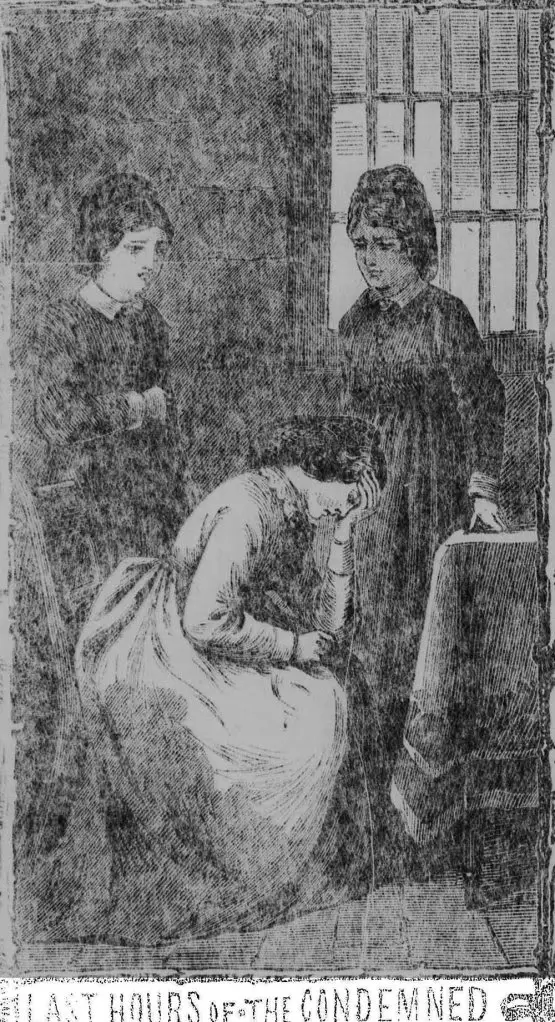
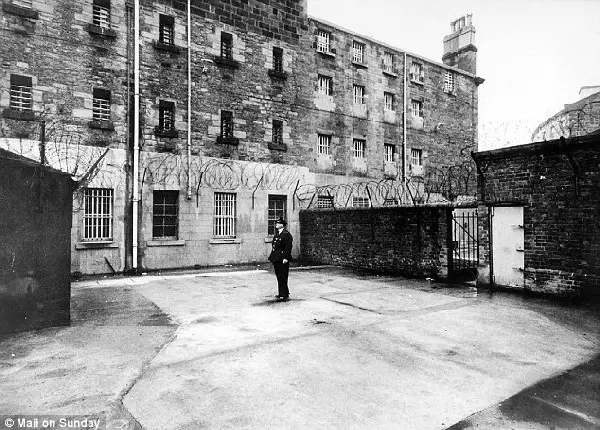
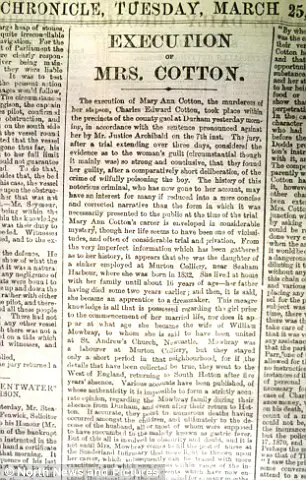
From a modern criminological standpoint, Mary Ann Cotton stands as the first documented female serial killer in British history, operating with calculated precision and chilling detachment. Her behavior demonstrated profound psychopathy, emotional coldness, and the thorough instrumentalization of domestic bonds for monetary acquisition. Her execution on March 24, 1873, at Durham Prison was botched due to an erroneous drop calculation; rather than dying instantly from cervical dislocation, she slowly strangled to death at the end of the rope, concluding the dark legacy of Victorian Britain's most prolific poisoner.