



Christiana Edmunds: «The Chocolate Cream Poisoner», the Brighton Erotomanic Delusion, and Broadmoor Asylum
Executive Summary
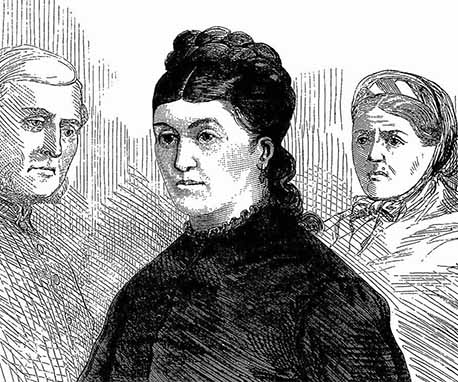
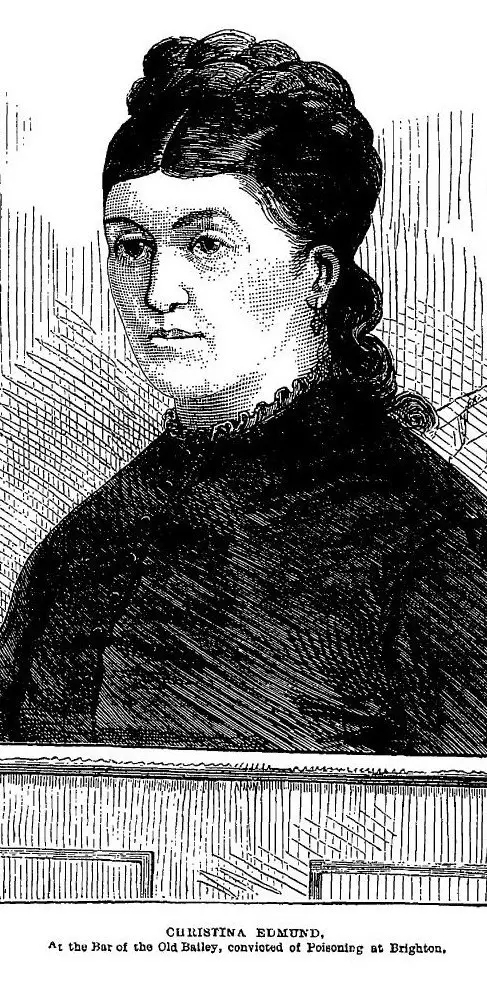
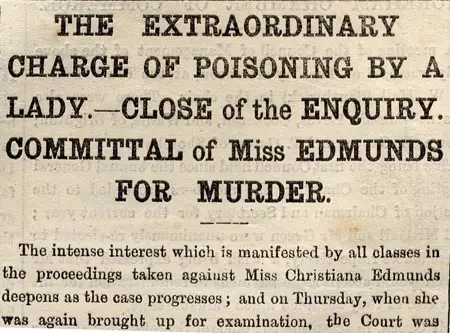
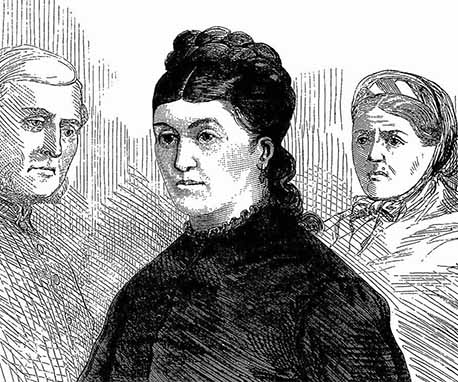
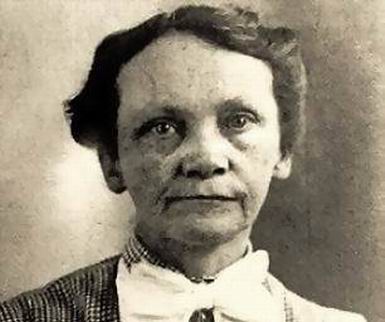
Christiana Edmunds (October 3, 1828 – September 19, 1907), known in Victorian British criminal chronicles as «The Chocolate Cream Poisoner» and «The Brighton Poisoner», was an affluent English gentlewoman responsible for a series of indiscriminate strychnine poisonings that terrorized the seaside resort of Brighton, Sussex, throughout 1871. Her actions caused the death of a four-year-old boy, Sidney Albert Barker, and resulted in the severe poisoning of dozens of residents and visitors.
The criminal spree arose from an erotomanic delusion and obsessive infatuation with her married physician, Dr. Charles Beard. Convinced that Dr. Beard reciprocated her affection and that his wife was the sole impediment to their marriage, Edmunds attempted to murder Emily Beard in March 1871 by offering her chocolate creams laced with strychnine. When Mrs. Beard became violently ill, Dr. Beard broke off relations, accusing Edmunds of attempted murder.
To divert suspicion and compel Dr. Beard to retract his accusation, Edmunds orchestrated an indiscriminate poisoning campaign to frame local confectioner John Maynard. She paid street children to purchase boxes of chocolate creams, injected liquid strychnine into the confections with a needle in her bedroom, and sent other children to return the candy alleging incorrect orders. Unaware of the tampering, the shopkeeper returned the poisoned chocolates to his display cases, leading to the death of young Sidney Barker and widespread poisonings across Brighton.
Tried at the Old Bailey in London in January 1872 before Baron Martin, the jury rejected her insanity defense and sentenced her to death. However, after medical inquiries confirmed a history of hereditary mental illness and disproved a claim of pregnancy (plea of pregnancy), Home Secretary Henry Bruce commuted her sentence to indefinite commitment at the Broadmoor Criminal Lunatic Asylum, where she resided until her death in 1907.
Forensic & Criminological Matrix
| Parameter | Forensic Detail |
|---|---|
| Legal Identity | Christiana Edmunds |
| Public Identity | Christiana Edmunds |
| Criminological Aliases | "The Chocolate Cream Poisoner" / "The Brighton Poisoner" |
| Date of Birth | October 3, 1828 (Margate, Kent, England, U.K.) |
| Date of Death | September 19, 1907 (Broadmoor Asylum, Crowthorne, Berkshire; aged 78) |
| Medical Cause of Death | Senility, heart failure, and arteriosclerosis |
| Criminological Classification | Serial Poisoner / Erotomanic Delusional Disorder with Paranoid Features |
| Confirmed Fatalities | 1 child deceased (Sidney Albert Barker, aged 4); dozens severely poisoned |
| Lethal Agent Employed | Strychnine crystals obtained from vermin poisons |
| Modus Operandi | Needle injection of strychnine into chocolate creams returned to shops or left in public spaces |
| Crime Scene | Maynard's Confectionery, West Street, and public spaces in Brighton, Sussex |
| Trial Court | Central Criminal Court (Old Bailey), London (presided over by Baron Martin) |
| Original Sentence | Capital punishment by hanging (January 1872) |
| Sentence Commutation | Commuted to indefinite detention on grounds of insanity (Guilty but Insane) |
| Custodial Institution | Broadmoor Criminal Lunatic Asylum |
Lineage, Familial Mental Illness, and Dr. Beard (1828–1870)
Christiana Edmunds was born in Margate, Kent, into an educated middle-class family. Her father, William Edmunds, was a prominent architect who designed the Margate lighthouse. However, both sides of her family had extensive psychiatric histories:
- Her father developed degenerative dementia with violent rages, dying in a mental asylum in 1847.
- Her brother Arthur suffered from epilepsy and developmental disabilities, dying at Earlswood Asylum in 1866.
- Her sister suffered acute psychiatric crises and died by suicide, while maternal relatives were committed for paranoid disorders.
Following her father's death, Christiana moved with her mother, Ann Edmunds, to 16 Gloucester Place in Brighton. Around 1870, aged forty-two, Edmunds consulted Dr. Charles Beard, a respected married practitioner:
- Edmunds interpreted ordinary medical consultations as a passionate romantic affair, dispatching dozens of letters addressed to "Caro mio" ("My dear") and signed "Dorothea."
- Seeking to diffuse the situation, Dr. Beard introduced her to his wife, Emily Beard, welcoming Edmunds into their social circle.
The Attempted Poisoning of Emily Beard (March 1871)
Believing that removing Emily Beard would pave the way for marriage, Edmunds acted in March 1871:
- She visited the Beard home carrying a box of chocolate creams purchased from John Maynard's confectionery on West Street.
- She urged Mrs. Beard to sample a chocolate, pressing it to her lips.
- Mrs. Beard tasted an intense metallic bitterness and spat out the candy. Shortly after Edmunds departed, Mrs. Beard suffered severe vomiting, abdominal cramps, and muscle spasms.
- Informed by his wife, Dr. Beard confronted Edmunds at Gloucester Place, barring her from his home and terminating their medical relationship.
Edmunds suffered an erotomanic crisis, vowing to prove her innocence by showing that Maynard's chocolates were inherently contaminated.
The Brighton Poisoning Campaign (1871)
To clear her name, Edmunds launched a systematic campaign of poison distribution:
- Acquiring Strychnine: She visited chemist Isaac Garrett on Queen's Road, requesting strychnine to kill stray cats. When the sale was refused under the 1868 Pharmacy Act, she paid a local youth to sign the poison register as a witness, securing pure strychnine crystals.
- Purchasing Chocolates: She approached neighborhood children, giving them pennies to buy chocolate creams from John Maynard's shop.
- Contaminating Confections: In her bedroom, Edmunds punctured the chocolate shell with a needle, injected dissolved strychnine into the cream filling, and resealed the confections in original shop paper.
- Returning Contaminated Stock: She hired a different child to return the chocolates to Maynard's shop, claiming an incorrect order. The clerk accepted the return, placing the chocolates back into the display cases.
- Public Distribution: Edmunds also left poisoned chocolates on park benches, in railway carriages, and sent anonymous packages of candy to prominent local families.
The Death of Sidney Albert Barker
On June 1, 1871, four-year-old Sidney Albert Barker, visiting Brighton from London with his uncle Charles Miller, ate a chocolate cream purchased from Maynard's shop:
- Within twenty minutes, the child suffered severe tetanic convulsions, arching of the spine (opisthotonos), respiratory failure, and died.
- The coroner's autopsy established death from acute strychnine poisoning.
- At the coroner's inquest, shopkeeper John Maynard testified he could not explain the contamination, burning his entire stock. Edmunds testified as a voluntary witness, claiming she had also been poisoned by Maynard's confections, leading the jury to return an initial verdict of "accidental death."
Edmunds subsequently stepped up anonymous mailings of poisoned candy to local households.
Arrest and the Old Bailey Trial (1872)
Edmunds's campaign led to her undoing:
- Dr. Beard noticed that handwriting on anonymous letters matched the "Dorothea" letters in his possession, and reported his suspicions to Sussex Police.
- Police inspected chemist Isaac Garrett's register, discovering Edmunds's repeated strychnine purchases.
- Fleeing to London in July 1871, Edmunds was arrested by Scotland Yard detectives at a boarding house in Richmond.
Her trial began on January 8, 1872, at the Central Criminal Court (Old Bailey) in London:
- Crown prosecutor Sir Harry Poland established her purchases of poison and resentment toward Dr. Beard.
- Defense counsel Mr. Serjeant Ballantine argued an insanity defense, presenting her mother to detail the family's extensive history of psychiatric illness.
- The jury convicted her of murder. Following the death sentence, Edmunds claimed pregnancy (pleaded her belly), but an immediate examination by a jury of matrons disproved the claim.
Following protests by medical authorities, Home Secretary Henry Bruce ordered an evaluation by Crown alienists, who determined Edmunds suffered from erotomanic psychosis and moral insanity. On January 21, 1872, Queen Victoria commuted the death sentence to indefinite detention during Her Majesty's pleasure.
Life at Broadmoor Asylum (1872–1907)
Edmunds was admitted to the female wing of the Broadmoor Criminal Lunatic Asylum in Crowthorne, Berkshire. Over thirty-five years, she became a quiet resident, spending her time painting watercolors and embroidering in the asylum gardens.
On September 19, 1907, aged 78, Christiana Edmunds died at Broadmoor and was buried in the asylum cemetery.
Nominal Forensic Register
| Victim Identity | Age | Description / Association | Date / Scene of Crime | Cause of Death and Toxicological Findings |
|---|---|---|---|---|
| Sidney Albert Barker | 4 | Visiting child from London | June 1, 1871; West Street, Brighton | Acute strychnine poisoning ingested via chocolate cream; tetanic seizures, opisthotonos, and asphyxial cardiac arrest |